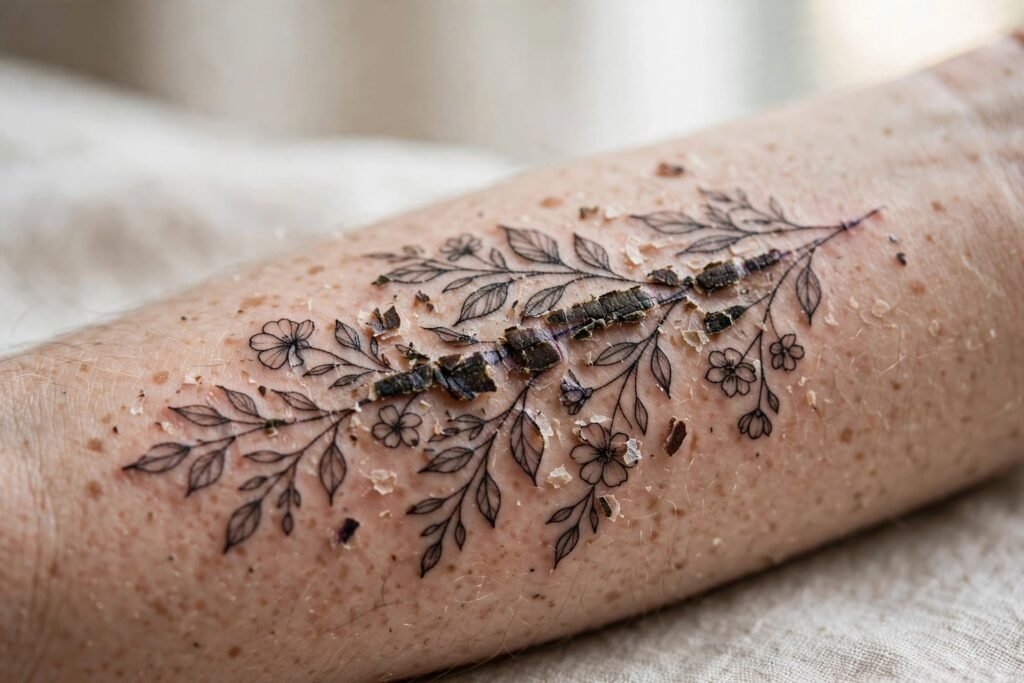
Some scabbing on a healing tattoo is completely normal. A thin layer of dried plasma and skin forming over the tattooed area is part of how the body protects a wound while it repairs itself. What catches people off guard is when the scabbing goes beyond that, thick, raised crusts forming over the ink, large pieces of scab covering significant portions of the tattoo, or scabbing that seems heavier than what friends or online resources suggested was normal.
Heavy scabbing is worth paying attention to because it directly affects how the tattoo heals and how the ink looks once everything settles. Understanding why it happens and what to do about it is more useful than just waiting and hoping for the best.
Why Scabs Form on Tattoos
Before getting into why some tattoos scab more than others, it helps to understand what a scab actually is. When the skin is wounded, the body sends platelets to the area to stop bleeding and plasma to begin the repair process. As that plasma dries on the surface, it forms a protective crust, a scab. Underneath that crust, new skin is forming and the repair process is underway.
On a tattoo, this process happens across the entire tattooed area simultaneously. The needle has created thousands of small punctures, and the body responds to all of them at once. A thin, even layer of scab forming across the tattoo is the expected result. Problems arise when that scabbing becomes thick, uneven, or significantly raised above the skin surface.
The Most Common Reasons for Heavy Scabbing
Not Moisturizing Enough
Dry skin scabs more heavily than moisturized skin. This is the single most common reason people end up with excessive scabbing on a healing tattoo, and it’s the most preventable.
When the skin is not kept hydrated during healing, the plasma and damaged skin cells at the surface dry out rapidly and form thick, dense crusts rather than the thin protective layer that heals cleanly. The drier the environment, both the external climate and the skin’s own moisture level, the more aggressive the scabbing tends to be.
Applying a thin layer of aftercare balm or fragrance-free lotion two to three times daily from the first day of aftercare keeps the skin moist enough to heal without forming heavy scabs. Consistency matters more than the specific product, skipping applications for a day or two during the peak healing period is enough for the skin to dry out significantly and start forming thicker scabs than necessary.
Using the Wrong Products
Product choice affects scabbing more than people realize. Anything that dries the skin out, products containing alcohol, products with fragrance that cause mild irritation, or petroleum-based ointments that block airflow and trap bacteria, can contribute to heavier scabbing than well-formulated aftercare would produce.
Petroleum jelly is worth mentioning specifically because it’s been used on tattoos for decades and is still recommended in some circles. While it does moisturize, its occlusive nature creates a sealed environment that traps excess moisture and bacteria in a way that can cause the skin surface to react poorly. The result is sometimes heavier, more inflamed scabbing than a breathable, well-formulated balm would produce.
Over-Moisturizing
Going in the other direction causes problems too. Applying too much product too frequently keeps the skin wet in a way that doesn’t allow it to breathe and can cause an over-moisturized condition where the skin becomes waterlogged and the surface stays soft and vulnerable rather than healing properly.
Over-moisturized skin sometimes produces a different kind of scabbing, softer, almost slimy in texture, sometimes with a slightly greenish tint. This is not a normal healing response and typically indicates that the skin needs less product and more airflow, not more moisture.
The Tattoo Was Heavily Worked
How the tattoo was applied has a direct effect on how much it scabs during healing. Sessions that involved multiple passes over the same area, heavy color packing, dense shading, or aggressive technique cause more tissue trauma than lighter, more efficient work. More trauma means a more significant healing response, which means more scabbing.
This is not necessarily a reflection of the artist’s skill, some styles and designs require more work to execute properly. Black and grey with heavy shading, neo-traditional with dense color packing, and coverup work all tend to produce more scabbing during healing than simpler line work or lighter pieces. Knowing this going into a session with heavy work means you can be more diligent about aftercare from day one.
Tattoo Placement
Certain body areas scab more than others as a baseline. Areas that flex and move constantly, hands, feet, inner elbows, backs of knees, experience more mechanical disruption during healing, which triggers a more active scabbing response. The skin in these areas also tends to dry out faster because of the constant movement.
Areas with thinner skin can also scab more heavily because there’s less tissue between the surface and the structures below, which means the healing response is more concentrated at the surface.
Environmental Factors
Dry climates and low humidity pull moisture from healing skin faster than humid environments. People healing tattoos during winter months in cold, dry conditions often find they scab more than during warmer, more humid weather. Air conditioning and heating systems reduce indoor humidity, which has the same effect.
Being aware of the environment during healing means you can compensate, applying moisturizer more frequently in dry conditions, keeping the tattoo covered in cold weather to protect it from the drying effect of cold air.
Why Heavy Scabbing Is a Problem
The reason heavy scabbing matters is its effect on the ink underneath. A thick scab sitting over a tattoo is attached to the skin below it. As that scab dries, contracts, and eventually lifts, it pulls at the surface it’s attached to. When it comes off, whether on its own or because it gets knocked off prematurely, it takes ink with it.
The ink that gets pulled out with a heavy scab leaves gaps, light spots, and uneven areas in the healed tattoo. Lines can look patchy or broken. Filled areas can have spots where the color didn’t hold. The overall effect is a tattoo that looks like it healed poorly, which it did, not because anything was wrong with the application, but because the scabbing disrupted the ink before it had fully settled.
This is the direct line between heavy scabbing and the fading, patchiness, and uneven healing that leads people to need touch-ups.
What to Do When Heavy Scabbing Has Already Started
If the scabbing is already heavier than expected, the approach shifts to damage limitation.
Keep Moisturizing Without Overdoing It
If the scabbing started because of insufficient moisture, increasing the frequency of aftercare applications helps prevent additional scab buildup. Keep applications thin, the goal is hydrated skin, not wet skin. Two to three times a day is appropriate for most people, with an additional application if the skin feels tight or dry between sessions.
Do Not Pick, Pull, or Soak
This cannot be overstated. Heavy scabs are more tempting to pick at than thin ones because they’re more visible and more uncomfortable. Picking off a thick scab before it’s ready to detach on its own causes significant ink loss. Soaking the tattoo, in a bath or pool, softens the scabs and causes them to lift prematurely with the same result.
Let the scabs come off on their own timeline. Pat the area gently when washing rather than rubbing. Keep clothing loose over the area to avoid fabric catching on raised scabs.
If Something Looks Infected
Heavy scabbing that is accompanied by spreading redness, warmth that increases rather than decreases over days, thick or discolored discharge, or fever is not just heavy healing, it may indicate infection. In that case, seeing a doctor is the appropriate next step rather than continuing to manage it at home with aftercare products.
After the Scabs Clear
Once the heavy scabbing resolves, assess the tattoo once the skin has fully settled, typically six to eight weeks after the session. Some areas that looked patchy under the scabbing heal more evenly than expected once the surface is clear. Others may need a touch-up to fill in areas where ink was lost.
Wait for full healing before booking a touch-up. Going back in too early on skin that is still repairing at the dermal level complicates things further. Give it the time it needs, keep moisturizing consistently, and protect it from the sun while the skin continues to heal underneath.