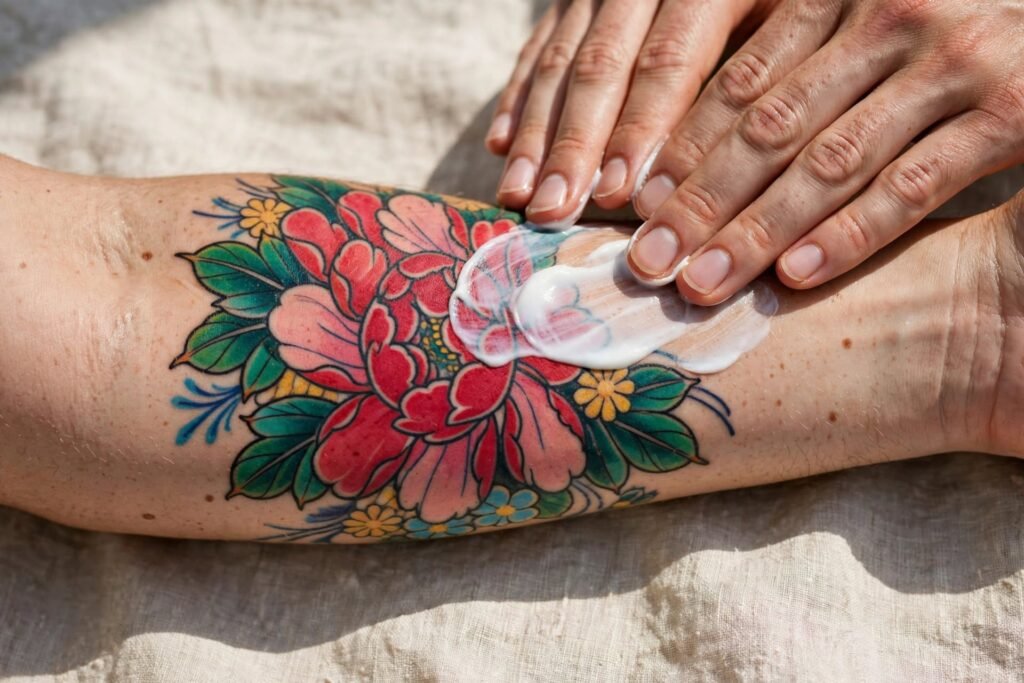
Long-term tattoo maintenance gets talked about less than healing aftercare, even though the choices made over years affect how a tattoo looks far more than what happens in the first two weeks. Moisturizing habits specifically, how often, what product, how it’s applied, are the foundation of skin care that keeps ink looking good over time.
This is not about a complicated skincare routine. It’s about building a few consistent habits that work with how tattooed skin actually functions and applying them regularly enough to make a real difference.
Why Moisturizing Matters More Than Most People Think
Tattooed skin loses moisture through the surface at a slightly higher rate than untattooed skin. The tattooing process permanently alters the skin’s barrier function to a small degree, and the result is skin that tends toward dryness more readily than the surrounding untattooed areas.
Dry skin affects how tattoo ink looks from the outside in a way that’s more significant than most people account for. The ink in a tattoo sits in the dermis, but what you actually see is that ink through the layers of skin above it. When those skin layers are well-hydrated, they have a quality that lets ink appear clear and defined. When they’re dry and neglected, the ink below looks flat, muted, and more faded than it actually is.
Consistent moisturizing maintains the skin condition that lets ink look its best, and over years, the cumulative difference between consistently moisturized tattooed skin and neglected skin is visible and significant.
The Right Frequency for Healed Tattoos
Once a tattoo is fully healed, the intensive two to three times daily aftercare routine is no longer necessary. For most people in most conditions, once daily is sufficient to maintain good skin hydration over tattooed areas.
The best time to apply is after showering. Clean, slightly damp skin absorbs moisturizer more effectively than completely dry skin because the water present at the surface helps the moisturizer integrate rather than sitting on top. Pat the skin dry after your shower, leave it slightly damp rather than fully dry, and apply the moisturizer while it’s still in that state.
For people in dry climates, during winter months when indoor heating pulls moisture from the air, or for those with naturally dry skin types, twice daily may work better. Morning after showering and evening before bed is a practical schedule that maintains hydration levels consistently through the day and overnight.
What Product to Use
Product choice for long-term tattoo maintenance doesn’t need to be elaborate, but it does need to avoid the ingredients that cause problems over time.
Fragrance is the first thing to look for and avoid. Daily application of a fragranced product over months and years adds up to significant cumulative exposure to one of the most common skin irritants. On intact, healed skin this rarely causes acute reactions, but chronic low-level irritation from fragrance can affect skin quality and sensitivity over time.
Alcohol in moisturizers, used as a preservative or texture modifier in some products, works against what you’re trying to achieve. It dries the skin rather than hydrating it, which is counterproductive in a product being used specifically for moisture maintenance.
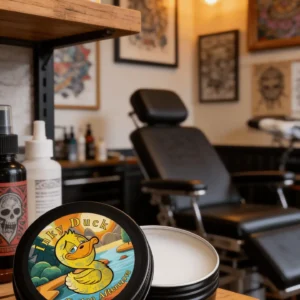
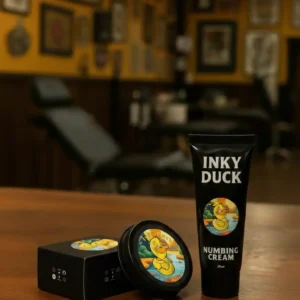
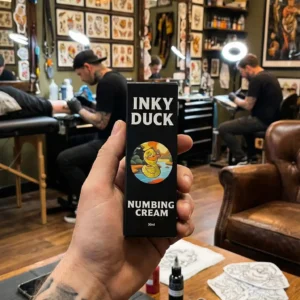
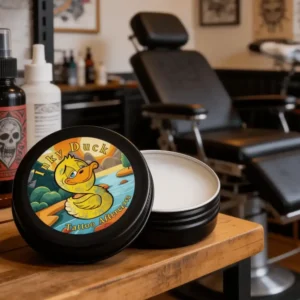
A tattoo-specific balm built around natural oils and butters, the kind Inky Duck produces, with shea butter and jojoba oil as core ingredients alongside vitamin E, continues to be useful beyond the healing period as a daily maintenance product. The same qualities that make these ingredients good for healing skin make them good for maintaining healed tattooed skin long-term: they absorb well, support the skin’s barrier function, and don’t introduce unnecessary ingredients that serve the formula rather than the skin.
Plain fragrance-free body lotion also works for daily maintenance. The main filter is the ingredient list, no fragrance, no alcohol, no active skincare ingredients that aren’t relevant to basic hydration.
Application Technique
How you apply moisturizer affects how well it works. Rubbing it in too aggressively creates friction on the skin surface and doesn’t improve absorption. Applying a thin, even layer with gentle circular motions and letting it absorb naturally is more effective.
Thin applications consistently beat heavy applications occasionally. The skin can only absorb so much product at once, flooding the skin with moisturizer doesn’t provide more hydration than a thin layer would, and excess product just sits on the surface without being absorbed. A small amount applied correctly once daily does more than a large amount applied irregularly.
Combining Moisturizing With Sun Protection
Moisturizing and sun protection work together rather than one replacing the other. Moisturizing handles the skin’s hydration and condition. Sun protection handles the UV damage that drives the most significant long-term changes in tattoo appearance.
Some moisturizers include SPF, which can simplify the routine for people who find managing two products difficult. If using a moisturizer with SPF, make sure it’s broad-spectrum and SPF 30 or higher to provide real UV protection rather than just a nominal rating. Apply it as the final step after the moisturizer has had a moment to absorb, or use a combined product that handles both in one application.
For tattoos on areas that aren’t regularly sun-exposed, a plain moisturizer without SPF in the morning and sun protection applied when needed is a practical approach. For tattoos on forearms, calves, shoulders, and other areas with consistent daily sun exposure, combining SPF into the morning routine makes the most sense.
What Consistency Actually Looks Like
The most common reason moisturizing habits don’t produce the results people are looking for is inconsistency. Moisturizing daily for a week, stopping for two weeks, then starting again doesn’t maintain skin hydration, it creates a cycle where the skin is constantly adjusting rather than maintaining a stable, well-hydrated state.
Building the habit into an existing routine, attaching it to showering, which most people do consistently, is the most reliable approach. It takes about thirty seconds. The payoff over years is visible in how tattoos hold their appearance compared to those that go without consistent care.