Showering after getting a new tattoo is one of those things that feels more complicated than it should be. You know water isn’t great for fresh ink, but you also have to live your life. The good news is that you don’t have to choose between basic hygiene and protecting your tattoo. You just need to know what to avoid and why.
Yes, You Can Shower, With Some Adjustments
A normal shower is fine from day one. The concern with water and fresh tattoos isn’t getting them wet at all, it’s prolonged exposure, high pressure, and submersion. A short, careful shower does none of those things and poses minimal risk to a healing tattoo.
What you want to avoid is anything that keeps the tattoo in contact with water for an extended period or directs strong water pressure straight at the area. Once you understand the reasoning behind those two rules, the rest follows naturally.
Why Water Affects a Healing Tattoo
A fresh tattoo is an open wound. The outer layers of skin have been punctured repeatedly, and the skin barrier, the thing that normally keeps moisture in and bacteria out, is compromised. In that state, the skin is more vulnerable to what it comes into contact with.
Prolonged water exposure causes the skin to soften and swell slightly. On a healing tattoo, that swelling can loosen the outer layers and allow ink to seep out before it’s fully settled into the dermis. Standing water, like in a bath or pool, also introduces bacteria at levels that are genuinely risky for an open wound.
Running water from a shower is much cleaner and much less exposure time, which is why it’s fine with the right approach.
How to Shower Without Damaging Your Tattoo
Keep the Shower Short
The longer the shower, the more time the tattooed skin spends exposed to steam, heat, and water. A ten to fifteen minute shower is enough to get clean without putting the tattoo through extended exposure. You don’t need to rush through it, but this isn’t the time for long, leisurely showers either.
Use Lukewarm Water
Hot water opens pores, softens skin faster, and increases inflammation, none of which are helpful for a healing tattoo. Hot water can also cause ink to bleed out of the wound before it’s settled. Lukewarm water cleans just as effectively without those added issues.
Don’t Aim Water Directly at the Tattoo
Let water flow over the tattoo indirectly rather than directing the stream straight at it. The pressure of a showerhead hitting a fresh tattoo can irritate the surface and disturb the healing skin. Let it rinse naturally from above as you move through the rest of your shower.
Wash It With Your Hands
When it’s time to clean the tattoo, use your fingertips with a small amount of mild, fragrance-free soap. No washcloths, no loofahs, no sponges, these have too much texture for broken skin and carry more bacteria than clean hands. Light, gentle circular motions are all you need.
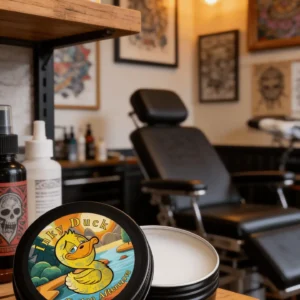
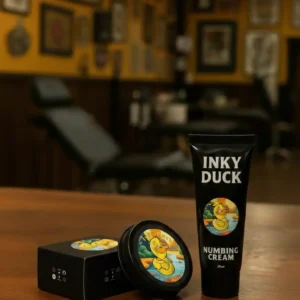
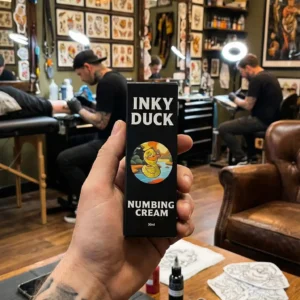
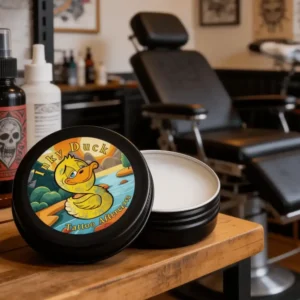
Aftercare brands like Inky Duck often recommend washing with a plain, unscented soap during the healing period before applying their balm afterward. The routine is simple: clean gently, pat dry, moisturize. Keeping that sequence consistent makes a real difference in how the skin heals.
Pat Dry With a Paper Towel
After the shower, pat the tattooed area dry with a clean paper towel. Cloth towels hold bacteria and have a texture that can catch on peeling skin. A paper towel is more hygienic and gentler on the surface. Let the tattoo air dry for another couple of minutes before applying any aftercare product.
What to Avoid Completely Until the Tattoo Heals
Baths
Soaking in a bath keeps the tattoo submerged in standing water for an extended period. Even a short bath exposes the tattoo to far more water contact than a shower does, and bathwater accumulates bacteria from your skin as you sit in it. Baths are off the table until the tattoo has fully healed at the surface.
Swimming Pools & Hot Tubs
Pools contain chlorine, which is harsh on healing skin and can affect how ink settles. Hot tubs are warm, bacteria-rich environments that pose a real infection risk for open wounds. Ocean swimming exposes the tattoo to salt water and whatever else is in the water. Most artists recommend waiting a minimum of two to four weeks before swimming anywhere, and some suggest waiting until full surface healing before getting in any body of water.
Saunas & Steam Rooms
Intense heat and prolonged steam exposure keep the skin wet and cause heavy sweating over the tattooed area. This is too much moisture for too long during the healing period. Avoid these until the surface has fully healed.
If Your Artist Used a Second-Skin Bandage
If you left the studio wrapped in a medical adhesive bandage like Saniderm or Tegaderm, you can shower with it on. These bandages are waterproof and designed for normal daily activity. Just avoid directing water pressure at the edges where the bandage meets the skin, since that can start to lift the seal.
Once the bandage comes off, usually after 24 hours to a few days depending on your artist’s instructions, you move into standard shower care from that point forward.
After the Surface Has Healed
Once the tattoo has healed on the surface, usually around the three to four week mark, you can return to your normal shower habits. Water temperature, pressure, and duration are no longer a concern at that point.
What stays relevant after surface healing is sun protection. UV rays affect tattoo ink even after the skin has closed, and consistent sun protection, either covering the tattoo or applying a broad-spectrum sunscreen when you’re outdoors, is one of the better habits to build during this period.
Showering with a new tattoo really comes down to a few adjustments: shorter, cooler, gentler. None of it is complicated, and it makes a real difference in how cleanly the tattoo heals.