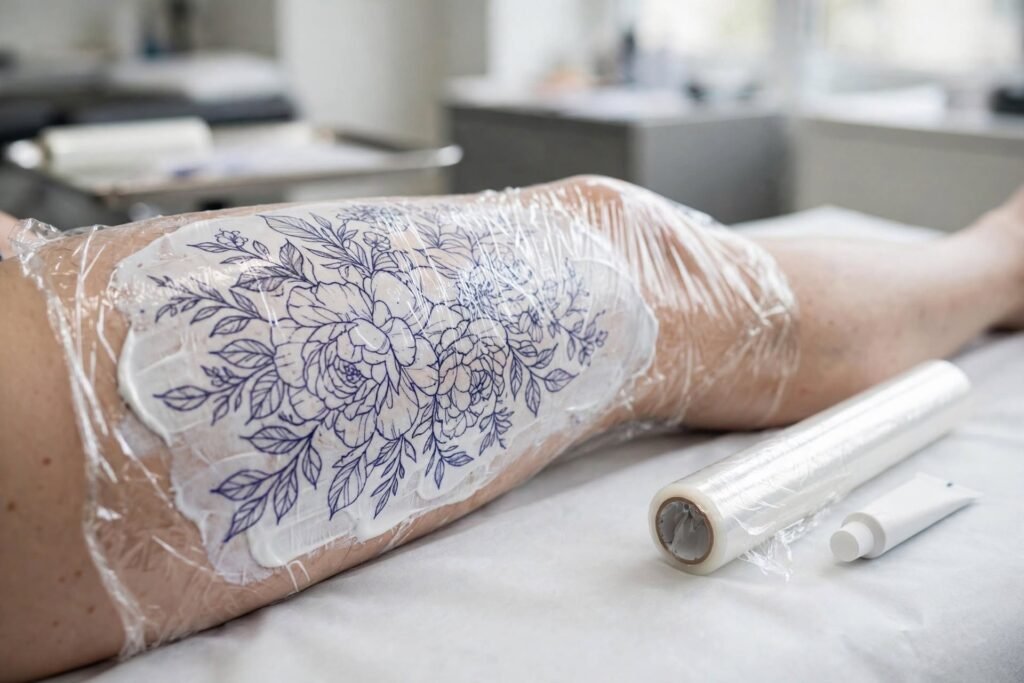
Large tattoo sessions are a different experience from shorter ones. Sitting for four, six, or eight hours while someone works on your skin is physically and mentally demanding even for people with high pain tolerance. Numbing cream changes the equation for a lot of people, but using it for a long session comes with its own set of considerations that don’t apply when you’re sitting for a two-hour piece.
If you’re planning a large session and thinking about using numbing cream, here’s what to actually expect, from application through the end of the session.
What Counts as a Large Session
For this conversation, a large session means anything running three hours or longer. This includes full-day sessions, half-day sessions, and multi-hour sittings for large-scale work like back pieces, sleeves, chest panels, and thigh pieces. These are sessions where the numbing cream’s duration becomes a real planning factor rather than a minor detail.
Shorter sessions, under two hours, are straightforward. Apply the cream, wait the recommended time, sit for the session, done. The numbing effect from a single application usually covers the whole thing without much thought required.
Longer sessions require more planning because a single pre-application of numbing cream will not stay effective for the entire duration. Knowing this going in prevents the unpleasant surprise of the numbing wearing off halfway through a six-hour back piece.
How Long One Application Actually Lasts
A standard lidocaine-based numbing cream at 4 to 5 percent concentration provides meaningful numbing for roughly one to three hours during an active tattoo session. The wide range accounts for individual variation in how quickly people metabolize lidocaine, the placement being worked, and how aggressively the area is being tattooed.
The tattooing process itself accelerates how quickly the lidocaine clears from the tissue. The needle causes vasodilation, blood vessels in the area widen as part of the body’s healing response, and that increased blood flow washes the anesthetic out faster than it would leave on its own. The heavier the work being done, the faster this happens.
For a four-hour session, realistic expectations are that you’ll have solid numbing for the first one to two hours and progressively less after that. Planning around this reality rather than hoping the cream holds for the whole session leads to a much better experience.
Strategies for Managing Numbing Over a Long Session
Phased Application on Large Pieces
One of the most effective approaches for large-scale work is applying numbing cream in phases, with each phase covering the section the artist plans to work on next. This requires coordination with your artist but is straightforward when planned in advance.
If the session is working across a large back piece in sections, for example, the cream for the next section can be applied and covered with wrap while the artist is finishing the current section. By the time the artist moves to the new area, the cream has had time to work properly. This keeps the numbing effect active and at full strength for each new section rather than trying to stretch a single application across hours of work.
This approach works best for pieces where the artist has a clear plan for the order of work. Discuss it before the session starts so both you and your artist are on the same page about timing and re-application points.
Taking Planned Breaks
For very long sessions, planned breaks serve multiple purposes. They give your body time to rest, give your artist a chance to step back and assess the work, and can provide a window to re-apply numbing cream to areas that will be worked in the next segment.
The break needs to be long enough for re-applied cream to take effect, at least 45 minutes to an hour with the area wrapped. Some artists build longer breaks into full-day sessions specifically for this reason. Discussing this with your artist when booking a long session means the timing can be factored into the overall plan rather than improvised mid-session.
Being Realistic About Coverage
For some placements and session lengths, maintaining full numbing throughout is not achievable with topical cream alone. A realistic expectation is that numbing cream reduces overall discomfort and makes the session more manageable, not that it eliminates sensation entirely for eight hours straight.
People who go into long sessions with that mindset tend to handle the experience better than those expecting complete pain elimination. The first few hours feel significantly different with numbing cream. The later hours feel more like a normal tattoo session, but with the edge taken off by whatever lidocaine is still present in the tissue.
What Your Skin Goes Through in a Long Session
Beyond the numbing cream logistics, it’s worth knowing what a long tattoo session does to the skin, because this affects both how you feel during the session and how you need to care for the tattoo afterward.
Skin Fatigue
Extended tattooing in one area causes the skin to become increasingly reactive as the session goes on. The inflammatory response builds up over time, and skin that has been worked for several hours is significantly more swollen, tender, and sensitive than it was at the start. This is sometimes called skin fatigue, and it affects how the needle interacts with the tissue in the later stages of a session.
Experienced artists recognize skin fatigue and adjust their technique accordingly, lightening their hand, changing needle configurations, or suggesting a stopping point when the skin stops responding well. Numbing cream doesn’t prevent skin fatigue, but it does reduce how much discomfort you feel as it develops.
Post-Session Recovery
The aftercare requirements after a large session are more intensive than after a shorter one simply because more surface area has been worked. More skin has been traumatized, more healing is required, and the body’s resources are spread across a larger area.
This is where having a good aftercare product ready matters. Brands like Inky Duck make tattoo aftercare balms specifically designed to support healing skin without harsh additives, the kind of product that becomes important when you’re managing a large healed area through the peeling and itching stages. Having it on hand before the session ends means you’re not scrambling to find something appropriate when the adrenaline wears off.
Communicating With Your Artist Throughout
Long sessions require more communication between client and artist than shorter ones. Pain tolerance shifts over hours. Skin condition changes. Energy levels drop. Artists working long sessions appreciate clients who speak up when they need a break rather than pushing through to the point of distress.
If the numbing is wearing off faster than expected and the discomfort is becoming difficult to manage, say so. Your artist can adjust the pace, suggest a break, or modify the plan for the remaining work. Trying to silently endure the second half of a six-hour session while the cream wears off is not a strategy that benefits anyone.
Before the Session — Preparation That Matters
Going into a long session physically prepared makes a difference in how well you hold up over hours of work.
Eat a proper meal before you go. Blood sugar drops during long sessions and contributes to feeling faint, nauseous, or mentally foggy. Bring snacks and water for breaks. Wear comfortable, loose clothing that gives easy access to the area being tattooed without requiring complicated adjustments mid-session.
Apply numbing cream at the right time, not too early, not too late. Work backward from your session start time and factor in travel so the cream has had the full recommended application window by the time you sit down, but hasn’t been on so long that skin texture issues become a factor.
Large sessions are demanding, and numbing cream is a tool that makes them more manageable when used correctly. Plan around the duration, communicate with your artist, and go in knowing what to expect rather than hoping for the best.