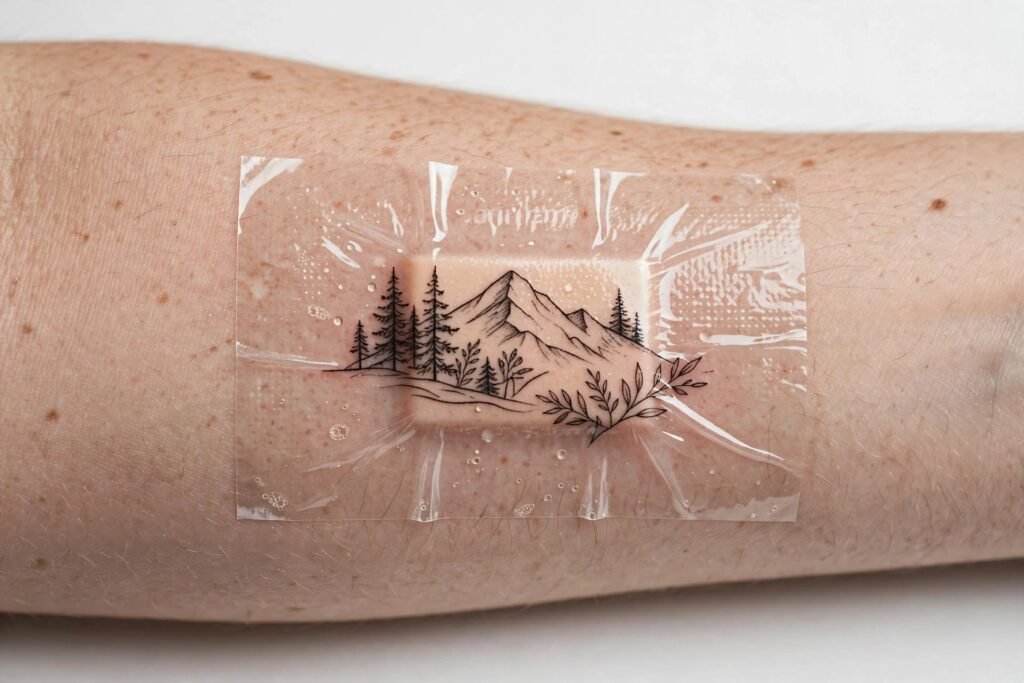
If you have gotten a tattoo in the last few years, there is a good chance your artist wrapped it in something that looked more like medical-grade film than the traditional plastic wrap and tape setup. That film is called second skin, and it has changed the way a lot of artists and clients approach the healing process.
It is not a gimmick. The science behind it is straightforward, and the results for most people are noticeably better than the older approach. But second skin also comes with its own rules, and using it incorrectly can cause problems that would not have come up with conventional aftercare. Here is what you actually need to know.
Second skin is a thin, adhesive, semi-permeable film made from polyurethane. The brand name Saniderm is the most commonly used version in tattoo shops, though Tegaderm and several others work on the same principle. Artists use it as a wound dressing that creates a controlled environment over the fresh tattoo.
The semi-permeable part is what makes it work. The film blocks outside bacteria, dirt, and friction from reaching the wound, while still allowing a small amount of oxygen to pass through and letting moisture vapor escape. This is different from wrapping the tattoo in plastic, which traps everything including the fluids the skin is releasing.
Under the second skin wrap, the tattoo stays moist with its own plasma and ink. This creates a wet healing environment, which research on wound healing consistently shows produces faster, cleaner results than a dry healing environment. The skin does not form the kind of thick, hard scabs that dry healing produces, and as a result the ink tends to stay more evenly in place.
In the first several hours after a tattoo session, the skin releases plasma, excess ink, and a small amount of blood. Under a second skin wrap, these fluids pool between the film and the skin and create a liquid layer that can look alarming if you have not seen it before.
That pooling is normal. It is not a sign that the wrap has failed or that something is going wrong. The fluid under the wrap is doing exactly what it is supposed to do, keeping the wound moist and protected while the skin begins to repair. As long as the edges of the wrap are sealed and no air is getting in, the cloudy or slightly discolored appearance of the fluid is expected.
What is not normal is a strong smell, significant warmth spreading beyond the tattoo, or fluid that looks green or white. Those are signs that bacteria have found a way in, and the wrap should come off immediately if any of those things are present.
Most artists recommend leaving the initial wrap on for 24 hours, though some prefer to leave it up to 72 hours depending on the size of the piece and how the skin responds. After removing the first wrap, some artists apply a second piece of second skin that stays on for another three to five days.
The total wear time in a two-stage approach is usually around four to six days. At that point, the skin has done enough healing that conventional aftercare, with a good aftercare balm applied consistently, takes over for the remainder of the healing process.
Instructions vary by artist, and their recommendation should always take priority. Some artists prefer a single wrap, some prefer the two-stage approach, and some adjust based on placement. Knees, elbows, and hands are areas where second skin has more trouble staying adhered because of constant movement and flexing.
Removing second skin incorrectly is one of the most common ways people accidentally cause problems with an otherwise well-healing tattoo. Pulling the film off dry and fast is a mistake. It can lift skin that is not yet ready to separate from the adhesive and cause damage to the healing surface.
The right way to remove it is slowly and in the shower. Warm water softens both the adhesive and the skin, and peeling the film back parallel to the skin rather than pulling it straight up dramatically reduces the resistance. Work slowly from one edge across the piece, keeping the film low and close to the skin as it releases.
Once the wrap is off, wash the area gently with fragrance-free soap and lukewarm water, pat it dry, and apply a thin layer of aftercare balm. The skin underneath will likely look very fresh and may feel tender, which is normal after days under the wrap.
Second skin works well for most people, but there are situations where it is not the right choice.
People with adhesive allergies or sensitive skin that reacts to medical tape should discuss this with their artist before committing to a second skin wrap. The adhesive used in these films is generally skin-safe, but reactions do happen, and a reaction to the adhesive on top of a fresh tattoo can cause significant irritation.
Very large pieces that cover a lot of surface area can be harder to keep fully sealed, especially across joints or in areas with a lot of natural creasing. If the film lifts at the edges and air gets underneath, the controlled environment breaks down and the benefits are reduced.
Heavily saturated areas with a lot of pooling fluid may also cause the wrap to lose adhesion faster. This is more common with large, filled pieces than with outline or fine-line work.
The biggest shift is in the early days. With conventional aftercare, the first several days involve washing the tattoo multiple times a day and applying balm frequently to keep the skin from drying out. With second skin, most of that work happens automatically under the wrap.
Once the wrap comes off, the aftercare routine is similar to conventional healing but often at a later, more advanced stage. The skin has usually already moved past the most vulnerable phase, and the focus shifts to keeping the skin moisturized and protected from sun exposure while it finishes settling.
Peeling is typically lighter and less dramatic with second skin healing than without it, because the skin has not had the chance to form the thick surface layer that comes off in visible flakes with dry healing. This is one of the reasons collectors who have tried both approaches tend to prefer second skin for larger or more detailed pieces.