
Miami’s tattoo scene is as active as the city itself. With a mix of locals who collect serious work and visitors who want to mark the experience with something permanent, the demand for tattooing in Miami stays high year-round. What makes Miami different from most cities is the environment a fresh tattoo has to heal in: heat, humidity, strong sun, and a lifestyle that revolves around the beach and the water. Getting tattooed here means committing to a more careful aftercare approach than you might need in a cooler, drier city. Inky Duck Tattoo makes aftercare products formulated specifically for tattooed skin, including a tattoo aftercare balm and a 4% lidocaine numbing cream for pre-session use. Here is what proper tattoo aftercare looks like in Miami.
Miami presents a specific set of challenges for healing tattoos. The combination of heat, humidity, sweat, strong UV exposure, and constant access to the beach and pools creates conditions that work against the healing process at almost every point.
Miami's climate is warm year-round, with summer temperatures regularly in the upper 80s and low 90s, and winter temperatures in the mid-70s to low 80s. The humidity stays consistently high throughout the year, which means the humidity regularly pushes feels-like temperatures even higher than the actual thermometer reading. Heat causes sweating, and sweat on a healing tattoo is a consistent problem, especially during Miami's warmer months. In a city where sustained heat is unavoidable for much of the year, managing this requires more active attention to cleanliness than in a temperate climate. Humidity adds another layer. Unlike dry climates where the skin loses moisture to the air and the primary aftercare concern is keeping the skin hydrated enough, Miami's humid air means the skin is already retaining more moisture than it would elsewhere. Applying aftercare products too heavily in a humid environment can tip a healing tattoo into over-saturation, leading to bubbling and disrupted healing.
Florida sun is among the most intense in the country, and UV exposure is one of the primary causes of tattoo fading over time. A fresh tattoo is especially exposed because the outer skin layer is still rebuilding and UV rays reach the ink with less resistance. During the healing period, the tattooed area should be kept entirely out of direct sun. Once healed, a consistent broad-spectrum SPF routine is essential for anyone spending significant time outdoors in Miami.
Miami's lifestyle is built around water. The beach and the pool are not occasional activities here, they are part of the daily routine for a large portion of the population. A healing tattoo cannot be submerged in saltwater, pool water, or ocean water for any period. The combination of bacteria, chemicals, and UV exposure that comes with beach and pool time is directly harmful to healing skin. This is one of the more significant lifestyle adjustments that Miami residents and visitors need to make while a tattoo is healing.
The foundation of aftercare in Miami is the same as anywhere else, but the climate demands more consistent attention.
Wash the tattoo once or twice a day with lukewarm water and a gentle, fragrance-free soap. Pat it dry rather than rubbing. Apply a thin layer of aftercare balm after washing. In Miami’s humidity, thin application is important. You do not need as much product as you might use in a dry climate, and over-applying in a humid environment creates more problems than it solves.
Stay out of the heat as much as possible during the first week, particularly avoiding situations that cause heavy sweating around the tattooed area. If you do sweat, clean the tattoo and reapply balm once the skin is dry.
Keep the tattoo covered or in the shade whenever you are outdoors. Loose, breathable clothing protects the healing skin from sun and reduces friction at the same time.
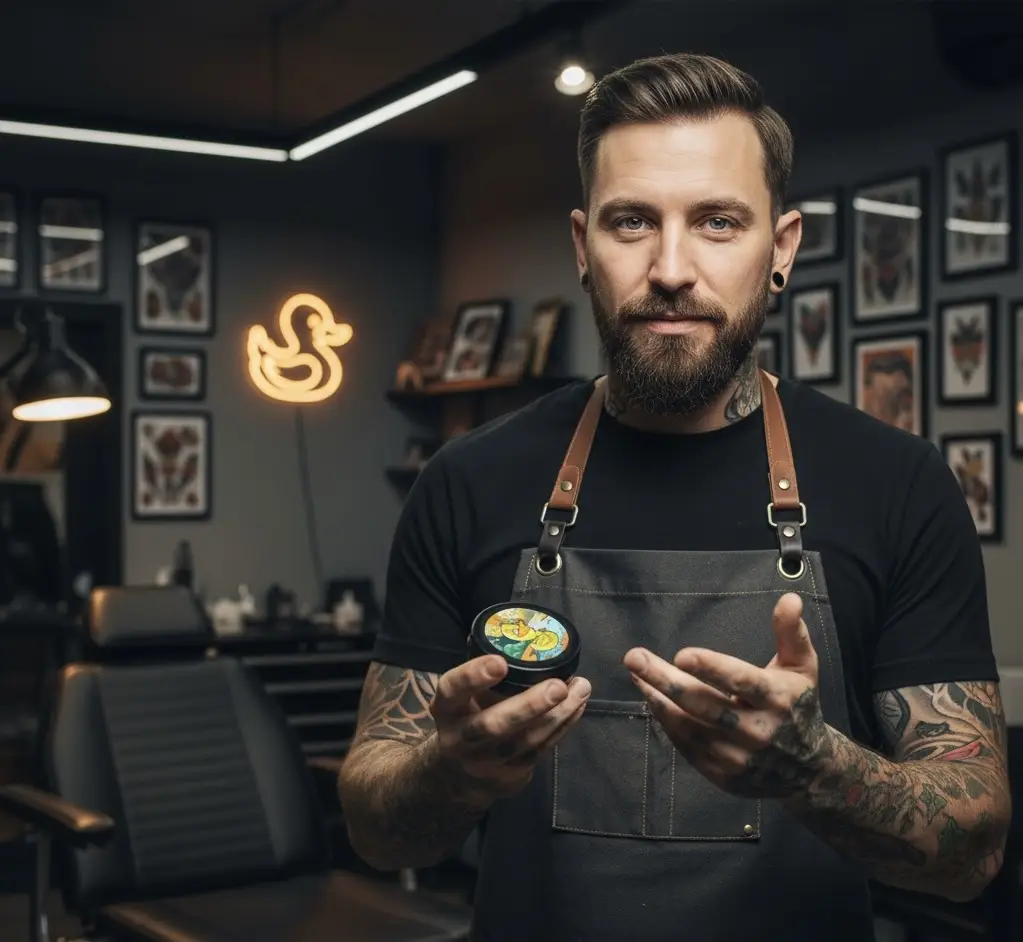
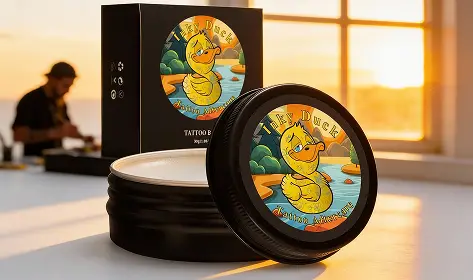
A good aftercare balm for Miami’s conditions needs to moisturize without being heavy or greasy. The Inky Duck Aftercare Tattoo Balm is formulated with this balance in mind. It hydrates the healing skin without leaving a thick residue that would feel uncomfortable in Miami heat or trap sweat and heat against the skin.
The formula uses intentional ingredients without synthetic fragrances or unnecessary fillers. In a city where the skin is already managing heat and humidity, a clean formula without extra variables is the right call. The balm works on fresh tattoos during the healing window and on older ink as a daily conditioning product.
Available as a single tin at $16.99 or a pack of two at $27.99.
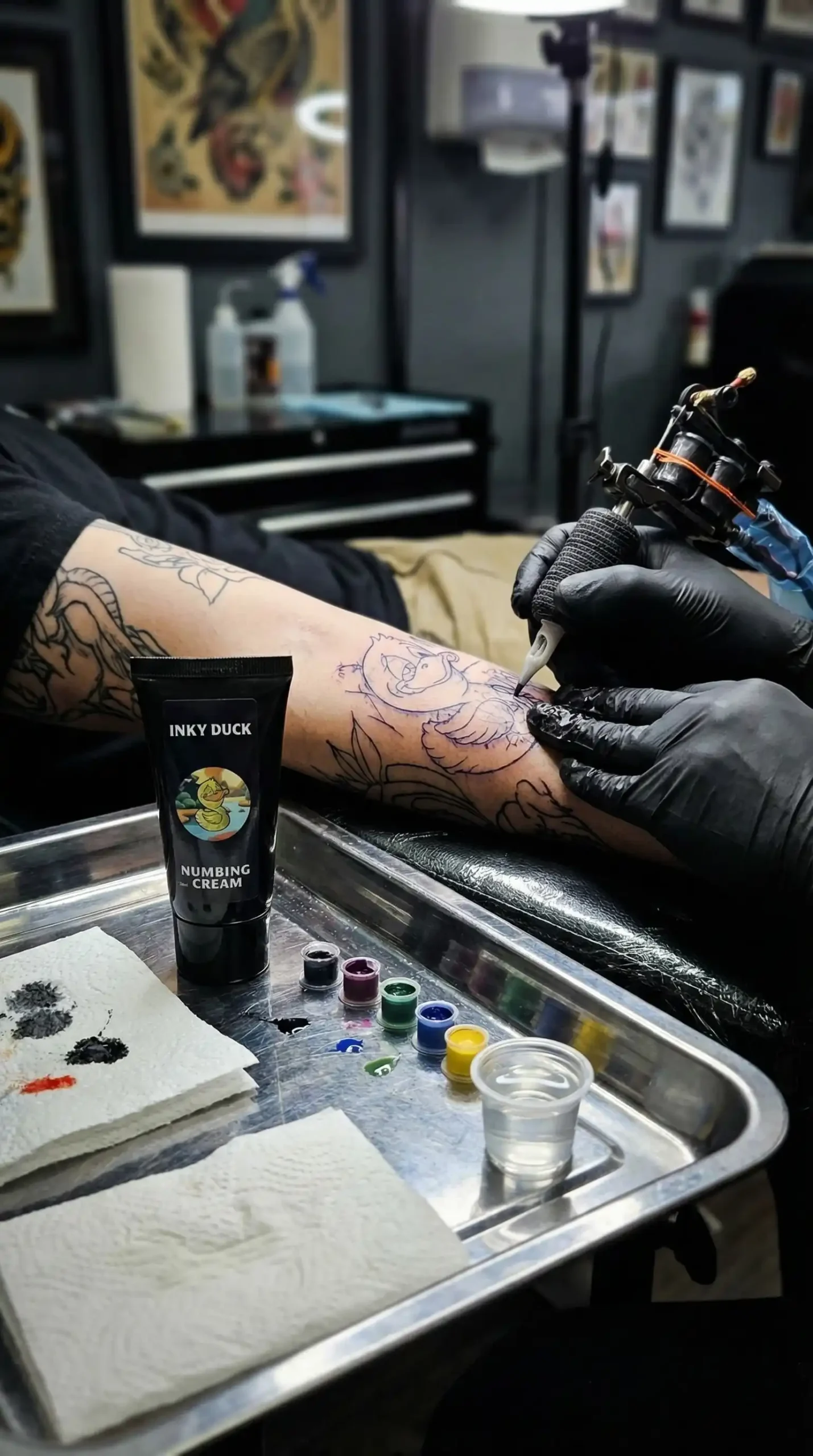
The Inky Duck Numbing Cream uses 4% lidocaine for topical pain reduction before a tattoo session. For Miami clients managing longer sessions or sensitive placements, applying the cream approximately 45 to 60 minutes before the appointment under occlusion and removing it before the artist begins provides real comfort management. The tube format is compact and easy to travel with. At $26.99, it is a practical addition for anyone wanting more control over their session experience.
The Comfort + Aftercare Bundle includes both the numbing cream and the aftercare balm at $32.99, covering the full experience from pre-session preparation through the healing period. For Miami clients, this bundle offers everything needed to manage the tattooing process comfortably and heal properly in Florida's heat and humidity.
This question comes up constantly in Miami, and the answer is straightforward: not while the tattoo is healing. The beach introduces multiple risks at once, and none of them are minor.
Ocean water carries bacteria that can infect a healing wound. Saltwater is an irritant that disrupts the healing surface. Sand abrades the skin and introduces particles that should not be near an open wound. And the beach means direct sun exposure, which is harmful to fresh ink regardless of what else is happening.
The same applies to pool water. Chlorine is an irritant, and public pool environments introduce bacteria even in properly maintained water.
The timeline for full healing is typically four to six weeks. That is the window to stay out of the water. After that, beach and pool activities can resume normally. Waiting feels frustrating in Miami, but going too early genuinely affects how the tattoo heals and how it looks long-term.
Follow your artist’s healing instructions, which may specify a different or more conservative timeline depending on the size and placement of the piece.
Swimming too early is the most common and most damaging mistake Miami tattoo clients make. The pull of the beach and the pool is real, but the wait genuinely matters for healing outcomes.
Excessive sweating without cleaning the tattoo afterward allows bacteria and sweat to sit on healing skin longer than it should. If you cannot avoid sweating, make cleaning and reapplying balm part of the routine.
Direct sun on a healing tattoo accelerates fading and disrupts the healing process. Cover the area whenever you are outdoors during the healing period.
Scratching or picking at peeling and scabbing skin is always a mistake. In Miami’s heat, itchiness during healing can feel worse than in cooler climates, but the same rule applies: let the skin shed naturally.
Over-applying balm in a humid climate creates over-saturation conditions that slow healing and can cause bubbling. In Miami specifically, less product more consistently is the right approach. For a detailed explanation of how over-moisturizing disrupts healing and what to watch for, see the guide on tattoo bubbling and over-moisturizing.
Once the tattoo is fully healed, the long-term approach in Florida is straightforward but requires consistency.
Apply a broad-spectrum SPF 30 or higher to the tattooed area before any outdoor activity. Florida’s UV index stays high year-round, and UV damage to tattoo ink compounds over time. Reapply every two hours during extended outdoor time.
Moisturize regularly with an aftercare balm. Well-hydrated skin maintains tattoo appearance better than dry skin, and in Florida’s climate where air conditioning dries the skin indoors while heat and humidity work on it outdoors, maintaining consistent moisture levels is an ongoing consideration.
Stay consistent with both habits. The collectors who maintain the sharpest tattoos over years are the ones who treat SPF and moisturizing as daily routines rather than occasional steps.
Inky Duck Tattoo products are made specifically for tattooed skin. The aftercare balm supports healing through the active phase and continues to work as a conditioning product for healed ink. The non-greasy formula is designed for warm climates like Miami, providing moisture without the discomfort of heavy residue or trapped heat against healing skin.
The numbing cream provides real pre-session pain management with 4% lidocaine in a formula built to work cleanly with the tattooing process. The packaging is compact and travel-friendly. Ingredients are chosen with purpose, and synthetic fragrances and unnecessary fillers are left out. Inky Duck is veteran-owned, and that commitment to doing things with intention runs through everything the brand produces.
A tattoo-specific balm applied in thin layers consistently through the healing period, combined with strict sun avoidance during healing and SPF after, is the most effective approach for Miami. In the heat and humidity, applying less product more often is better than heavy application that saturates the skin.
High humidity means the skin is already retaining more moisture than in drier climates. This makes over-moisturizing a more significant risk. Apply aftercare balm in thin layers and give the tattoo regular airflow rather than keeping it constantly covered.
Not until the tattoo is fully healed, which typically takes four to six weeks. Ocean water, pool water, sand, and direct sun are all harmful to a healing tattoo. Follow your artist’s specific healing instructions, as timelines can vary by piece.
During healing, physical coverage with loose, breathable clothing is the only option since sunscreen should not be applied to a fresh wound. Once fully healed, apply a broad-spectrum SPF 30 or higher to the tattooed area before any outdoor exposure and reapply every two hours.
Surface healing typically takes two to four weeks. Full healing takes four to six weeks. Miami’s heat and humidity can make the healing period feel more intense, which is why following a consistent aftercare routine matters especially in this climate.
Yes. Regular use of aftercare balm on healed tattoos keeps the skin conditioned and supports the long-term appearance of the ink. In Florida’s climate, where outdoor time and UV exposure are high year-round, consistent moisturizing is a worthwhile daily habit.
Avoid swimming, direct sun exposure, heavy sweating without cleaning afterward, tight clothing over the tattooed area, picking or scratching the healing skin, and applying too much aftercare product. These are the habits that most reliably lead to healing problems in Miami’s environment.