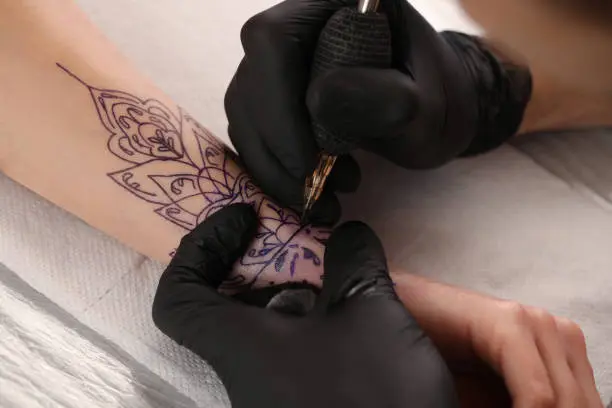
Getting the ink is only half the process. What happens in the days and weeks after determines how the work settles, how the color holds, and how the skin recovers. Aftercare for tattoo healing is not something to guess at or skip over. The approach you take from day one shapes the final result.
This guide covers what to do, what to avoid, and how products like a tattoo healing balm fit into a routine that supports both short-term recovery and long-term color retention.
What Happens to the Skin After a Tattoo
A tattoo deposits ink into the second layer of skin. The body responds to this process with inflammation, redness, and fluid at the surface. Over the next few weeks, the outer layer peels and regenerates while the ink settles into place beneath it.
During this window, the skin is open and sensitive. Proper aftercare for tattoo recovery helps the barrier rebuild without infection, scarring, or pigment loss. Without a plan, the skin dries out, cracks, and pulls ink with it as it sheds.
Aftercare for Tattoo Healing: The First 24 Hours
Leave the bandage on for the time your artist recommends. Most will say between two and six hours, though some modern wraps are designed to stay on longer.
When you remove the bandage, wash the area with lukewarm water and a mild, fragrance-free soap. Pat it dry with a clean paper towel. Do not rub.
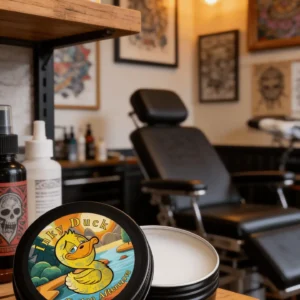
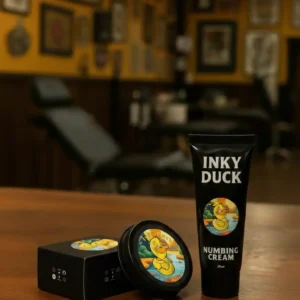
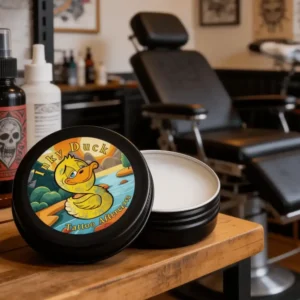
Apply a thin layer of a tattoo healing balm once the area is clean and dry. The goal at this stage is to keep the skin hydrated without suffocating it.
Week One: The Most Sensitive Phase of Aftercare for Tattoo Recovery
This is when the skin is at its most reactive. Redness, swelling, and warmth are all part of the body’s response. Here is what matters during this stage.
Cleaning the Tattoo
Wash the tattoo two to three times per day with clean hands and mild soap. Pat dry each time. Do not use cloth towels during this phase. Disposable paper towels are the safest option.
Applying a Tattoo Healing Balm
Apply in thin layers after every wash. Thick application traps heat and moisture, which can cause breakouts or slow the healing process. A tattoo healing balm with shea butter, jojoba oil, and coconut oil supports recovery without clogging pores.
What to Avoid During Week One
Do not submerge the tattoo in water. Avoid pools, baths, hot tubs, and oceans.
Do not scratch, pick, or peel any flaking skin. Let it shed on its own.
Avoid direct sunlight on the area. UV exposure during this phase can cause fading and damage before the ink has settled.
What Does Tattoo Balm Do During the Healing Process
A tattoo healing balm serves a few purposes at once. First, it keeps the skin hydrated so the surface does not crack or dry out during recovery. Dry, tight skin pulls ink and leads to patchy spots once healed.
Second, ingredients like shea butter, jojoba oil, and coconut oil support the skin barrier as it rebuilds. This helps the body hold onto pigment instead of pushing it out during the shedding phase.
So what does tattoo balm do that a regular lotion does not? Balms are formulated without fragrances, dyes, or alcohols that can irritate open skin. They also tend to absorb faster and sit lighter on the surface, which matters when the area is still tender.
A good balm does not just moisturize. It supports recovery, reduces redness, and helps the ink settle with clarity and consistency.
Weeks Two Through Four: Peeling and Settling
This is when the outer layer of skin begins to flake. It may look dull or cloudy during this phase. That is normal. The color underneath is still developing.
How to Care for a Peeling Tattoo
Continue applying your tattoo healing balm as needed to keep the area from drying out. At this point, you can reduce the frequency to once or twice a day depending on how the skin feels.
Avoid tight clothing over the tattooed area. Friction can pull flaking skin prematurely and damage the surface.
Keep the area out of direct sunlight. If you need to be outside, cover the tattoo with loose clothing rather than applying sunscreen over healing skin.
Long-Term Aftercare for Tattoo Preservation
Once the tattoo is fully healed, aftercare does not stop. Ink fades over time due to sun exposure, dehydration, and general wear on the skin. A continued routine helps maintain what was built during the healing phase.
Daily Maintenance for Healed Tattoos
Apply a tattoo healing balm or aftercare balm to the area regularly, especially after sun exposure or dry conditions. Keeping the skin moisturized supports color retention and keeps the lines looking defined.
Wear sunscreen over healed tattoos when spending time outdoors. UV rays are the leading cause of tattoo fading over time.
Stay hydrated. Skin that is well-hydrated from the inside holds onto ink with more consistency than skin that is dehydrated.
Aftercare for Tattoo Healing: Common Mistakes That Slow Recovery
Using petroleum-based products that trap heat and block airflow.
Applying too much product at once, which leads to clogged pores and irritation.
Picking or scratching at peeling skin, which pulls ink and creates uneven spots.
Using scented lotions or soaps that contain alcohol or dyes.
Exposing the tattoo to direct sunlight before the surface has fully recovered.
Submerging the tattoo in water during the first few weeks.
What to Look for in a Tattoo Healing Balm
Not every product is built for aftercare. Look for a balm that checks these boxes.
Key Ingredients
Moisturizing oils like jojoba, shea butter, sweet almond, or coconut oil.
Botanical extracts that calm redness and soothe irritation.
Formula Standards
Fragrance-free and free of synthetic dyes or alcohol.
Absorbs without leaving a greasy layer on the surface.
Supports the skin barrier without clogging pores.
Safe for use on new and healed tattoos.
A tattoo healing balm that meets these standards helps the skin stay calm, conditioned, and protected throughout the recovery process and beyond.
Why Aftercare for Tattoo Healing Sets the Standard
The work your artist puts in deserves a recovery plan that matches. Aftercare for tattoo healing is not a one-day task. It is a commitment that starts the moment the wrap comes off and continues for the life of the piece.
A solid routine built around gentle cleansing, consistent hydration, and a quality tattoo healing balm gives the ink the best chance to heal with clarity, color accuracy, and long-term durability.