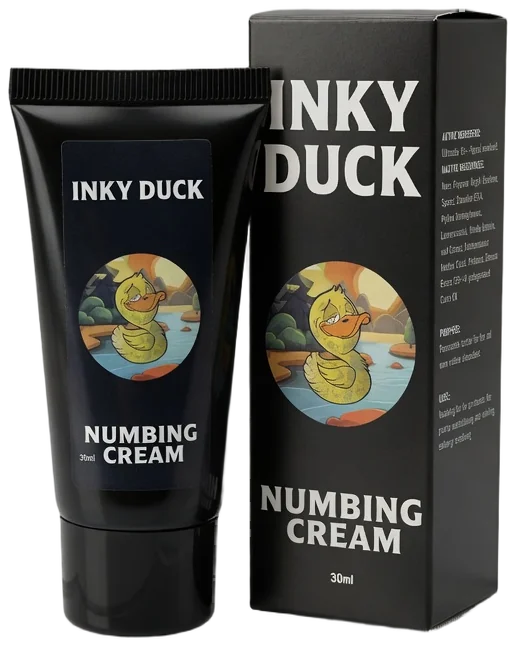
Aftercare Balm
$16.99
Add to cartProudly Veteran Owned & OperatedFree U.S. Shipping on Every Order
 INKY DUCKTATTOO AFTERCARE
$0.00 Cart
March 10, 2026 · Numbing Cream

Sitting for a tattoo takes commitment. Depending on placement, size, and detail, sessions can run for hours. Discomfort is part of the process, but it does not have to control the experience. A numbing cream for tattoos gives you a way to manage that discomfort so you can sit longer, stay still, and let the artist work without interruption.
This guide covers how numbing creams work, what to look for, and how to use a tattoo numbing cream the right way.
Numbing creams contain a topical anesthetic, most commonly lidocaine, that temporarily blocks nerve signals at the surface of the skin. When applied before a session, the cream dulls the sensation of the needle so the client feels less during the process.
The effect is temporary and localized. It does not eliminate all feeling, but it reduces discomfort to a level that most people can manage without difficulty.
A numbing cream for tattoos with 4% lidocaine sits at the top end of over-the-counter strength. Products at this level provide noticeable relief without requiring a prescription.
Not every numbing product is designed for use before tattoo work. Here is what separates a tattoo numbing cream from a general topical anesthetic.
Look for a product with 4% lidocaine. Lower concentrations may not deliver enough relief for longer sessions. Higher concentrations typically require a prescription and medical oversight.
A numbing cream for tattoos needs to absorb into the skin and take effect before the session starts. Products that sit on the surface without sinking in waste time and produce inconsistent results.
The cream should be non-greasy and should not leave a film on the skin. Residue can interfere with stencil application and the way ink enters the skin.
Botanical extracts like mentha arvensis, chrysanthemum, and portulaca oleracea help calm the skin and reduce redness alongside the lidocaine. These additions support the numbing effect and help keep the area balanced.
Fragrance and synthetic additives can irritate skin that is about to go through a long session. A tattoo numbing cream should be clean, simple, and free of anything that causes a reaction.
Start with clean, dry skin. Wash the area with mild soap and pat it dry before application.
Apply a generous layer of the numbing cream for tattoos over the entire area that will be worked on. Spread it evenly so no spots are missed.
Cover the area with plastic wrap to help the cream absorb into the skin. This also prevents the product from drying out before it takes effect.
Leave the cream on for the amount of time listed on the product. Most numbing creams need 30 to 60 minutes to reach full effect.
Remove the wrap and wipe the area clean before the session begins. The artist should be working on a clean surface free of any residue.
Some areas of the body are more sensitive than others. A tattoo numbing cream is especially useful for work on high-sensitivity zones.
Ribs and chest, where the skin sits close to bone.
Inner arms and wrists, where nerve density is higher.
Feet and ankles, where the skin is thin and reactive.
Behind the ear and along the neck.
Hands and fingers, where the tissue is tight and the sensation is sharp.
For clients sitting through their first tattoo or returning for a session in a sensitive area, a numbing cream for tattoos takes the edge off so the focus stays on the art.
Most products with 4% lidocaine provide relief for one to two hours after application. The duration depends on the person’s skin type, the amount applied, and the area being worked on.
For longer sessions, some artists allow reapplication during breaks. Check with your artist beforehand, as preferences vary from studio to studio.
Keep in mind that the numbing effect fades gradually. You may begin to feel more sensation toward the end of the window, which is a normal part of the process.
When comparing products, prioritize these factors.
4% lidocaine or equivalent topical anesthetic strength.
Non-greasy texture that absorbs without leaving residue.
Supporting botanicals that calm redness and cool the skin.
No fragrance, no synthetic dyes, and no alcohol in the formula.
Reviews from tattoo clients and artists who have used the product during real sessions.
A tattoo numbing cream should work with the tattooing process, not against it. The right product keeps the skin calm, the client comfortable, and the artist able to focus on the work.
For anyone evaluating a numbing cream without an artist’s direct recommendation, the label provides the information that matters.
The active ingredient section lists what’s doing the numbing work and at what concentration. This is the first thing to check. If lidocaine isn’t listed at 4 percent or above, the product is unlikely to produce meaningful results for tattoo sessions.
The inactive ingredients list tells you what else is in the formula. Fragrance in a numbing cream applied to skin that is about to be tattooed adds unnecessary irritation risk. Alcohol as a preservative works against the moisture-supporting role the formula should play on healing skin. Clean, minimal inactive ingredients are a marker of a product formulated with skin function in mind rather than shelf appeal.
The most common reason numbing cream underperforms is application error, not product failure. Artists who talk to clients about their numbing experiences consistently find the same issues: cream applied too close to the appointment time, not covered with wrap, or applied in too thin a layer to produce meaningful lidocaine concentration in the tissue.
The timing issue is the most significant. Most products require 45 to 90 minutes of application time under occlusion to reach effective concentration in the dermis. Clients who apply the cream 20 minutes before leaving for the studio, because they didn’t read the instructions carefully or left less time than they thought, get a fraction of the numbing effect the product is capable of delivering.
Artists who stock numbing cream in their studios and walk clients through the application protocol at the time of purchase see significantly better reported results than those who simply recommend a product without that conversation.
Tattoo discomfort does not have to dictate the experience. A numbing cream for tattoos gives you control over how the session feels, especially in areas where sensitivity runs high. When applied correctly and paired with an artist who supports its use, a tattoo numbing cream makes longer sittings manageable and keeps the process focused on results.
Inky Duck