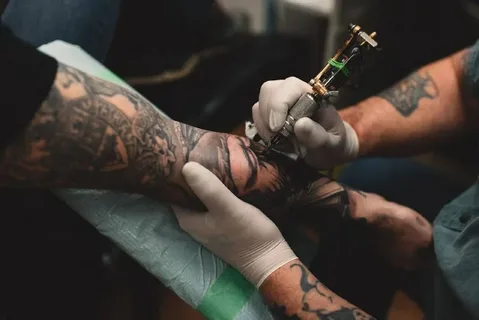
Tattoos lose their sharpness over time. Sun exposure, dehydration, friction, and the natural aging of skin all play a role in how ink looks months and years after the session. That is where products like a tattoo brightening cream or a tattoo brightening balm come in. Both claim to restore color and clarity, but they work in different ways and suit different needs.
This guide breaks down how each one functions, what ingredients matter, and which option makes the most sense for your skin and your ink.
Why Tattoos Lose Their Sharpness Over Time
Before comparing products, it helps to understand what causes tattoos to dull. Ink sits in the dermis, the second layer of skin, and the epidermis above it acts as a window. When that outer layer becomes dry, rough, or damaged, the tattoo underneath appears faded even if the ink itself has not changed.
Common Causes of Tattoo Fading
UV exposure breaks down pigment molecules over time.
Dehydration makes the surface layer opaque, which dims the color below.
Dead skin buildup creates a barrier that mutes contrast and definition.
Friction from clothing or daily activity wears down the outer layer unevenly.
Any product that claims to restore color needs to address one or more of these factors at the surface level.
What Is a Tattoo Brightening Cream
A tattoo brightening cream is a topical product formulated to refresh the appearance of settled tattoos. These creams typically contain exfoliating agents, antioxidants, or light-reflecting particles that help the surface of the skin look smoother and clearer.
Some tattoo brightening cream formulas include mild chemical exfoliants that remove dead skin buildup. Others rely on vitamins like C or E to support skin tone and reduce dullness at the surface. The goal is to clear the “window” above the ink so color appears brighter.
Pros of a Tattoo Brightening Cream
Helps remove dead skin buildup that makes tattoos look dull.
May contain antioxidants that support the health of the outer skin layer.
Can deliver fast results in terms of surface appearance.
Cons of a Tattoo Brightening Cream
Exfoliating ingredients can irritate sensitive or recently tattooed skin.
Some formulas contain fragrances, dyes, or alcohols that dry the surface out.
The effect may be temporary without a consistent moisturizing routine to back it up.
Not all tattoo brightening cream products are designed with tattoo-specific needs in mind. Some are repackaged skincare products with a new label.
What Is a Tattoo Brightening Balm
A tattoo brightening balm takes a different approach. Instead of removing buildup, a balm conditions and hydrates the skin so the surface becomes smoother and more translucent on its own. This lets the ink underneath show through with more contrast and definition.
Balms typically contain oils and butters like shea, jojoba, sweet almond, and coconut that soften the outer layer and support the moisture barrier. Some also include botanical extracts that reduce redness and calm irritation, which helps the overall tone of the skin look more even.
A tattoo brightening balm does not strip or exfoliate. It works by feeding the skin what it needs to stay clear and conditioned long-term.
Pros of a Tattoo Brightening Balm
Hydrates and conditions the skin barrier, which supports color clarity over time.
Safe for use on both new and settled tattoos.
Oils like jojoba and shea butter protect against dryness and environmental wear.
Non-irritating and typically free of fragrance, dyes, and alcohol.
Supports the health of the outer layer without removing it.
Cons of a Tattoo Brightening Balm
May not produce the same instant surface-level result as a cream with exfoliants.
Needs consistent use to maintain the effect.
Tattoo Brightening Cream vs Tattoo Brightening Balm: Key Differences
The main difference comes down to approach. A tattoo brightening cream tends to focus on clearing the surface, while a tattoo brightening balm focuses on conditioning it.
Short-Term Results vs Long-Term Care
A cream may give faster short-term results for settled tattoos that have built up a dull outer layer. But a balm offers a safer, more sustainable method for maintaining color and clarity over time.
Skin Sensitivity
For anyone with sensitive skin, healing tattoos, or concerns about irritation, a tattoo brightening balm is the more reliable option. It works with the skin instead of stripping it.
Using Both Together
For people who want both, some use a tattoo brightening cream occasionally to clear dead skin and then follow with a tattoo brightening balm to lock in moisture and keep the surface conditioned between uses.
What to Look for in a Tattoo Brightening Product
Ingredients That Matter
Moisturizing base ingredients like shea butter, jojoba oil, or coconut oil.
Botanical extracts that calm redness and support comfort.
What to Avoid
Fragrance, alcohol, or synthetic dyes.
Products not tested or formulated for use on tattooed skin.
Textures that leave residue or shine on the surface.
Choosing Between a Tattoo Brightening Cream and a Tattoo Brightening Balm
If your tattoo looks dull because of dry, rough skin and you want to restore clarity safely, a tattoo brightening balm is the stronger long-term choice. It supports color retention, protects the skin barrier, and keeps the surface smooth without introducing irritants.
If you want an occasional boost in surface clarity and your skin tolerates exfoliation well, a tattoo brightening cream can work as a short-term option alongside a balm.
For long-term results, the approach that keeps skin moisturized, calm, and protected is the one that keeps your ink looking the way it did when it first settled.