Sensitive skin and tattoo aftercare is a combination that makes a lot of people nervous. If your skin already reacts to half the products on the market, the idea of applying something new multiple times a day to an open wound is not exactly comforting. The concern is valid, but it doesn’t mean sensitive skin types are stuck with bad options.
The right tattoo balm, chosen carefully, works well on sensitive skin. The wrong one can cause real problems. Knowing what to look for and what to avoid makes the difference between a smooth healing experience and one that involves unnecessary irritation on top of an already-sensitive situation.
What Sensitive Skin Actually Means in This Context
Sensitive skin is not one single thing. It covers a range of skin behaviors, some people react to fragrance, some to specific preservatives, some to certain plant extracts, some to synthetic dyes. Some people have skin conditions like eczema or rosacea that make their skin more reactive across the board. Others just have skin that tends to flush, itch, or break out in response to products that most people tolerate fine.
What all of these have in common is a skin barrier that is either structurally more permeable or more prone to inflammatory responses than average. That matters a lot for tattoo aftercare because a fresh tattoo involves a compromised barrier by definition. The skin has been punctured repeatedly, the outer layers are damaged, and the barrier function that normally keeps irritants out is working at reduced capacity.
Sensitive skin going through tattoo healing is dealing with two things at once: the natural vulnerability of a healing wound and the pre-existing tendency to react. That combination means the ingredient list of whatever you apply needs more scrutiny than it would for someone without skin sensitivities.
The Ingredients Most Likely to Cause Problems
For sensitive skin specifically, there are a handful of ingredients that show up in tattoo aftercare products and cause reactions more often than others.
Fragrance
Fragrance is the most common skin irritant in personal care products across all skin types, and it’s significantly more problematic on sensitive skin. It can cause contact dermatitis, redness, itching, and swelling, all things you do not want on a healing tattoo. Fragrance serves no therapeutic purpose in an aftercare product. It’s there for sensory appeal, and it’s not worth the risk on sensitive skin.
Any product listing “fragrance” or “parfum” in the ingredients is worth avoiding entirely during healing, and worth being cautious about even for long-term use on sensitive tattooed skin.
Essential Oils
This one surprises people because essential oils are natural and often assumed to be gentle. Some are, but many are potent enough to cause reactions on sensitive skin even at low concentrations. Tea tree oil, lavender, peppermint, and citrus-derived oils are among the more common offenders. On intact skin they might be fine. On healing tattooed skin with already-sensitive tendencies, they can cause contact reactions that are hard to distinguish from infection at first glance.
A balm that uses essential oils for scent or antimicrobial effect is not automatically a bad product, but it’s worth patch testing before applying it to a fresh tattoo if you know your skin reacts to these.
Alcohol
Alcohol in any form dries skin out and disrupts the skin barrier. For sensitive skin types, it also commonly triggers irritation and redness. It has no place in an aftercare product for healing tattooed skin regardless of skin type, but the reaction on sensitive skin is usually faster and more pronounced.
Synthetic Preservatives & Dyes
Parabens, methylisothiazolinone, and artificial colorants are all worth avoiding for sensitive skin. These ingredients are present in many mainstream skincare and aftercare products, and they’re among the more common causes of contact sensitivity reactions. They don’t contribute to healing and they add unnecessary risk.
What Sensitive Skin Does Well With
The ingredient list for a sensitive-skin-friendly tattoo balm is actually not complicated. Shorter is generally better, and the core ingredients that support healing without common irritation triggers are well established.
Shea butter is one of the most broadly tolerated moisturizing ingredients available. It absorbs well, has mild anti-inflammatory properties, and rarely causes reactions even on reactive skin types. Jojoba oil is similarly well-tolerated, its structural similarity to the skin’s natural sebum means it integrates without triggering the barrier response that foreign ingredients sometimes cause.
Beeswax is gentle and provides the protective layer that a good balm needs without occlusion or irritation. Vitamin E at reasonable concentrations is generally safe for sensitive skin and contributes antioxidant support to the healing process.
Calendula extract is worth looking for specifically for sensitive skin. It has a long history of use in gentle wound care and is well-regarded for its ability to soothe reactive skin without causing further irritation.
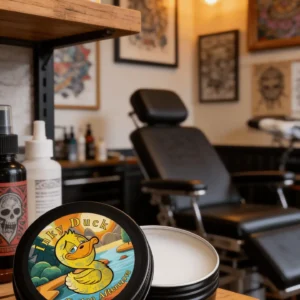
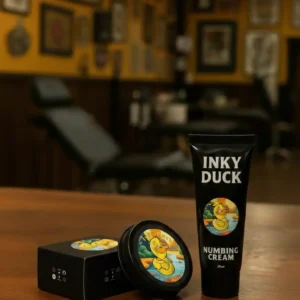
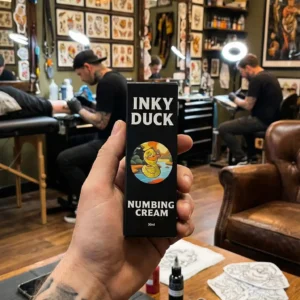
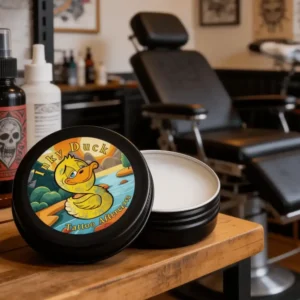
Inky Duck’s tattoo aftercare balm is formulated without synthetic fragrance, alcohol, or harsh additives, which makes it a reasonable starting point for people with sensitive skin. The ingredient approach is simple and focused on what healing skin needs rather than on adding extras that serve the product’s marketing rather than the skin’s recovery.
Patch Testing Before You Apply
For sensitive skin types, patch testing before applying any new product to a fresh tattoo is a practical step worth taking. Apply a small amount of the balm to an area of intact skin, the inside of the wrist or the crook of the elbow work well, and leave it for 24 hours. If there’s no redness, itching, or reaction, the product is likely safe to use on the healing tattoo.
Ideally this test happens before you get tattooed so you’re not scrambling to find an alternative in the first 24 hours of healing. Having your aftercare product ready and tested before your appointment removes one variable from an already-sensitive situation.
Managing Reactions if They Happen
If you apply a balm and notice increased redness, itching beyond what’s normal for healing, swelling, or a rash developing around the tattooed area, stop using the product. Clean the tattoo gently with mild soap and water, let it air dry, and switch to something with a simpler ingredient list.
A reaction to an aftercare product can look similar to the early signs of infection, so it’s worth knowing the difference. A reaction to a product typically develops shortly after application and improves once the product is removed. An infection tends to develop more gradually, gets worse over days rather than hours, and may involve discharge or systemic symptoms like fever.
If you’re unsure which you’re dealing with, seeing a doctor is the right call. An infection left untreated causes lasting damage to both the skin and the tattoo.
The Bottom Line for Sensitive Skin
Sensitive skin doesn’t disqualify you from using tattoo balm during healing. It just means you need to be more selective about which one you use. Fragrance-free, alcohol-free, short ingredient lists built around well-tolerated natural moisturizers are the starting point. Patch test before applying to fresh skin. Pay attention to how your skin responds and adjust if needed.
The goal is the same as it is for any skin type, keep the healing tattoo clean, moisturized, and protected. Sensitive skin just requires a little more care in choosing the product that gets that job done.