Pain is one of the most common reasons people hesitate before getting a tattoo. The needle, the placement, the length of the session, all of it factors into how much discomfort someone expects to sit through. Numbing creams have become a standard part of the conversation around tattoo preparation, and lidocaine is the ingredient that does most of the actual work in nearly every product on the market.
Understanding how lidocaine works helps you use numbing cream more effectively, set realistic expectations for what it can and can’t do, and make a more informed decision about whether it’s the right choice for your session.
What Lidocaine Is
Lidocaine is a local anesthetic that has been used in medical settings for decades. It shows up in dental procedures, minor surgical work, skin biopsies, and a wide range of other clinical applications where localized pain reduction is needed. It’s one of the most well-studied anesthetic compounds available, with a long track record of safe use across different concentrations and delivery methods.
In tattoo numbing creams, lidocaine is typically present at concentrations between 4 and 5 percent for over-the-counter products. Higher concentrations exist but are generally only available through prescription or clinical settings. At 4 to 5 percent, lidocaine provides meaningful pain reduction for most people when applied correctly.
How Lidocaine Blocks Pain
The mechanism behind lidocaine is specific and worth understanding because it explains both why it works and why it has limits.
Nerve Signals & Sodium Channels
Pain is not generated at the site of an injury, it’s generated by the nervous system. When tissue is damaged, such as when a tattoo needle punctures the skin, nerve endings in the area detect that damage and send electrical signals toward the brain. The brain processes those signals and produces the sensation of pain.
Those electrical signals travel along nerve fibers through a process that depends on the movement of sodium ions through channels in the nerve cell membrane. These sodium channels open in sequence along the nerve fiber, allowing sodium to rush in and creating the electrical impulse that carries the pain signal toward the brain.
Lidocaine works by binding to those sodium channels and blocking them. When lidocaine molecules attach to the sodium channels in the nerve fibers near the application site, sodium can no longer move through them. Without sodium movement, the electrical signal cannot be generated or transmitted. The nerve is still there and the tissue is still being affected, but the signal that would produce pain never reaches the brain.
What That Feels Like in Practice
When lidocaine is working effectively, the tattooed area feels numb or significantly dulled. Most people describe it as a reduction in the sharp, stinging quality of the needle rather than a complete absence of sensation. Pressure is often still felt because pressure signals travel through different nerve fiber types that lidocaine affects less effectively than the pain-carrying fibers. The buzzing sensation from the tattoo machine may also still be noticeable.
The result is typically a more manageable experience rather than a completely pain-free one, which is a realistic expectation to set before going into a session with numbing cream applied.
How It Gets Into the Skin
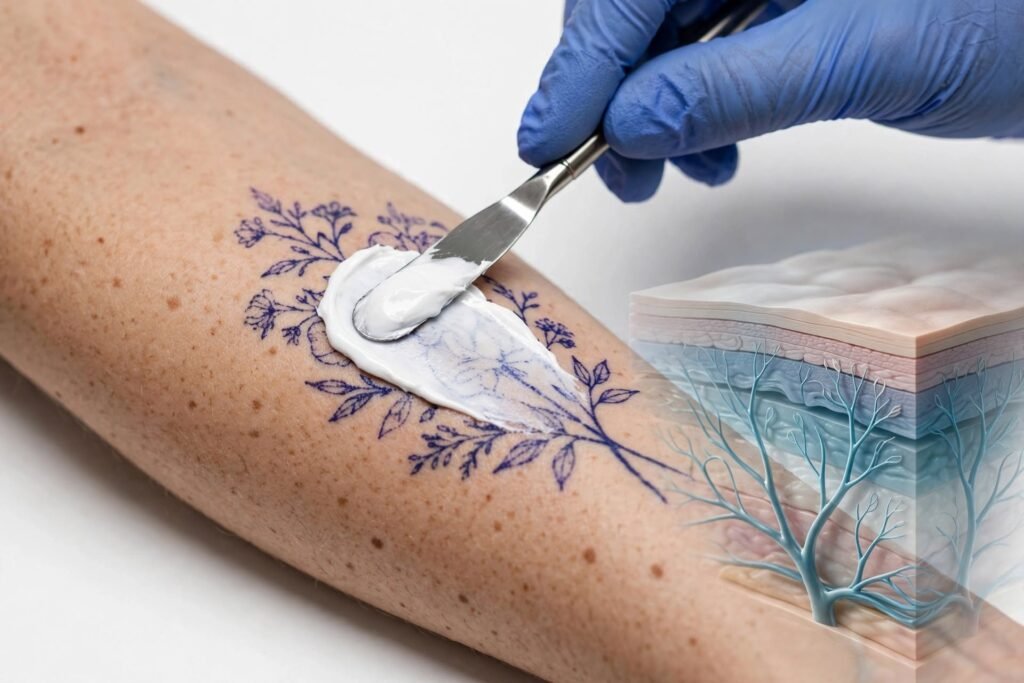
Lidocaine in a cream formulation needs to penetrate through the outer layers of the skin to reach the nerve endings in the dermis where it can take effect. This is where application technique and timing become important.
The Role of Occlusion
Applying numbing cream and then covering it with plastic wrap, a technique called occlusion, significantly improves how deeply the lidocaine penetrates. The wrap creates a warm, sealed environment that increases absorption through the outer skin layers. Most numbing cream instructions recommend this approach for tattoo preparation specifically because the skin needs to be numbed at a depth that the needle will reach.
Without occlusion, the lidocaine absorbs more slowly and may not reach sufficient depth or concentration in the nerve-rich layers of the dermis to produce strong numbing. The difference in effectiveness between occluded and non-occluded application is significant enough that skipping the wrap step often leads to disappointing results.
Timing & Absorption
Lidocaine takes time to reach effective concentration in the target tissue. Most tattoo numbing creams require between 45 minutes and one hour of application time before the session begins, with some formulations recommending up to 90 minutes for optimal effect on certain body areas.
Thicker skin, like on the outer thigh or upper arm, takes longer for the lidocaine to penetrate than thinner skin on areas like the inner wrist or ribcage. Body areas with more subcutaneous fat between the skin surface and the nerve-rich dermis may also require longer application times.
Why Numbing Cream Wears Off During Sessions
One of the most common experiences people report is that numbing cream works well at the start of a session but becomes less effective as the session goes on. This is expected and has a physiological explanation.
Vasodilation & Clearance
Tattooing causes local vasodilation, the blood vessels in the area widen as part of the inflammatory response to the needle. Increased blood flow to the area accelerates the clearance of lidocaine from the tissue. The same circulatory response that starts the healing process also starts washing the anesthetic out of the area faster than it would leave on its own.
This is why longer sessions feel the numbing effect diminish more noticeably than shorter ones. The lidocaine concentration in the nerve tissue drops as the session continues, and once it falls below the threshold needed to effectively block sodium channels, pain signals start getting through again.
Re-application During Sessions
Some artists are comfortable with re-application of numbing product during a session, typically using a gel or spray formulation that can go on broken skin. Not all artists work this way, and it’s worth discussing with your artist before the appointment. Applying cream formulations to already-broken skin during a session is generally not recommended since the skin’s barrier is compromised and absorption becomes less controlled.
What Lidocaine Cannot Do
Lidocaine is effective at reducing pain signal transmission, but it has limits that are worth knowing about going in.
It does not eliminate all sensation. Pressure, vibration, and heat can still be felt because these sensations travel through nerve fiber types that lidocaine affects differently than pure pain fibers. Some people find the pressure of the needle actually feels more noticeable when the sharp pain component is reduced.
It does not work the same way on every body area. Areas with thicker skin, more subcutaneous tissue, or naturally higher nerve density respond differently. Some placements are notoriously difficult to numb effectively regardless of product quality or application technique.
It does not last indefinitely. The window of effective numbing from a single pre-session application is typically between one and three hours depending on the individual, the concentration of the product, and how well the application was executed.
Understanding what lidocaine does and how it does it takes the guesswork out of using numbing cream. Apply it correctly, time it properly, set realistic expectations for what the experience will feel like, and it becomes a genuinely useful tool for getting through sessions that would otherwise be difficult to sit through.