Sun and fresh tattoos are a combination that comes up constantly in aftercare conversations, and for good reason. Most people know they’re supposed to keep a new tattoo out of the sun, but the specifics of why, how much exposure is actually harmful, and what happens if you don’t follow that advice are less commonly understood.
The short answer is yes, sun exposure can absolutely ruin a healing tattoo. But understanding the mechanics of why helps you take it more seriously than a vague warning on an aftercare sheet.
What UV Radiation Does to Skin
To understand why sun exposure is particularly damaging to healing tattoos, it helps to know what UV radiation does to skin in general.
Sunlight contains ultraviolet radiation in two primary forms that reach the skin, UVA and UVB. UVB rays are the ones responsible for sunburn. They damage the outer layers of the skin and cause the inflammatory response most people associate with too much sun. UVA rays penetrate more deeply into the dermis and are responsible for longer-term structural damage to skin tissue, including the breakdown of collagen and the degradation of pigment.
Both types cause oxidative damage to skin cells. The body responds by producing melanin, the pigment that creates a tan, as a protective response. Chronic UV exposure accumulates damage over time that goes beyond what the skin’s repair mechanisms can fully address.
Why a Healing Tattoo Is Especially Vulnerable
A fresh tattoo has none of the normal defenses that intact skin relies on. The outer layer of the epidermis, which normally acts as the first line of protection against UV radiation, has been disrupted by the tattooing process. The skin’s barrier function is compromised, and the new skin forming underneath is more permeable and reactive than established skin.
UV radiation hitting a healing tattoo reaches the dermis more easily than it would on intact skin. The ink deposited in the dermis is directly exposed to the degrading effect of UV rays at a point when the surrounding tissue is still in the middle of repairing itself.
The result is damage that happens faster and more aggressively than UV damage on healed skin. A healing tattoo that gets burned by the sun in the first two weeks can experience significant fading, color distortion, and surface damage that affects the final healed result in ways that no amount of aftercare can reverse.
The Specific Ways Sun Damages a Healing Tattoo
Fading & Color Loss
UV radiation breaks down tattoo ink pigment molecules. On healed skin this is a gradual process that accumulates over years. On healing skin where the barrier is compromised, pigment breakdown happens faster and more dramatically. Colors that were saturated when you left the studio can look washed out within weeks if the tattoo heals through significant sun exposure.
Black ink is more resistant to UV fading than colored pigments, but it’s not immune. Colored inks, particularly lighter colors like yellow, pink, and light blue, are the most vulnerable. Red pigments also fade relatively quickly under UV exposure. A single significant sunburn on a healing colored tattoo can cause color loss that a touch-up won’t fully address because the skin has also been damaged, not just the ink.
Delayed & Disrupted Healing
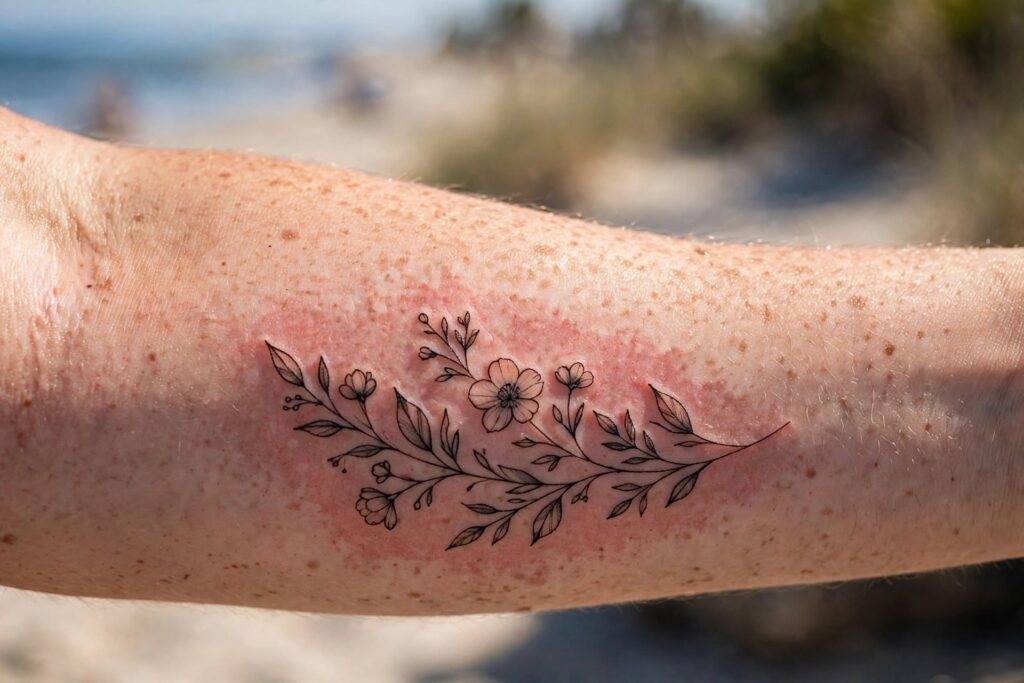
Sunburn on healing tattoo skin is sunburn on top of an already-damaged wound. The body now has two healing demands competing for the same resources, the tattoo healing process and the UV damage response. The inflammatory response to sunburn adds swelling, fluid, and surface damage to skin that was already working to repair itself.
This extends the overall healing timeline and increases the risk of complications like heavy scabbing, blistering, and ink loss. Blistering over a tattoo from sunburn is particularly damaging, blisters sitting over fresh ink disrupt the skin surface in a way that can pull ink out and leave permanent scarring.
Long-Term Surface Damage
UV damage to the skin during the healing period can affect the quality of the skin surface that forms over the tattoo. Healthy new skin forming over a well-cared-for tattoo creates a clear, even layer that lets the ink show through cleanly. Skin that has been UV-damaged during formation can develop an uneven texture that affects how the tattoo looks once fully healed.
How Much Sun Is Too Much
Any direct, unprotected sun exposure on a healing tattoo carries risk. The first two weeks are the highest-risk period, this is when the skin is most vulnerable and when UV damage causes the most impact on both the healing process and the ink.
Indirect exposure, sitting in the shade, being near a window with glass filtering the direct rays, carries significantly less risk than direct sun exposure. Short periods of unavoidable exposure, like walking to your car, are not the same as spending an afternoon at the beach. The concern is sustained, direct UV exposure on the healing area.
Using a physical barrier is the most reliable protection during healing. Loose clothing that covers the tattoo completely blocks UV without any of the concerns associated with applying sunscreen to healing skin, which is a separate issue discussed below.
Sunscreen on Healing Tattoos
Sunscreen should not be applied to a tattoo that is still in the active healing phase, while the skin is still peeling, scabbing, or has any open or broken areas. Sunscreen is formulated for intact skin, and applying it to a wound introduces ingredients to broken skin that can cause irritation, slow healing, or cause reactions.
Once the tattoo has fully healed at the surface, no more peeling, no broken skin, the surface feels like normal skin, broad-spectrum sunscreen is the most practical ongoing protection for daily life. SPF 30 or higher applied consistently whenever the tattoo will be exposed to sunlight provides real protection against the cumulative UV fading that affects ink over time.
Good aftercare during healing sets the foundation, and sun protection after healing maintains it. Brands like Inky Duck build their aftercare approach around this principle, their balm supports the healing process through the vulnerable early weeks, and consistent sun protection from that point forward handles the long-term side of ink preservation. The two habits work together rather than one replacing the other.
What to Do if the Tattoo Got Sunburned During Healing
If a healing tattoo has already been sunburned, the priority shifts to managing the additional damage without making things worse.
Keep It Clean & Moisturized
Continue the regular aftercare routine, gentle washing twice daily and thin applications of aftercare balm. The skin now has two repair demands but the basic requirements are the same. Keep it clean, keep it moisturized, keep it protected from further exposure.
Do Not Pop Blisters
If blistering has developed over the tattoo from the sunburn, do not pop them. Blisters are the body’s protective response to significant skin damage, the fluid inside protects the tissue underneath while it repairs. Popping blisters over a tattoo exposes already-damaged skin and removes a protective barrier that the body created for a reason. Let them resolve on their own.
Assess the Damage After Full Healing
Sun damage to a healing tattoo may not be fully visible until the skin has settled completely, which takes six to eight weeks at the surface and longer at the dermal level. Once the tattoo is fully healed, assess what needs attention. Faded areas, patchy color, and uneven tone are the most common results of sun damage during healing, and a consultation with the original artist about touch-up options is the appropriate next step for significant damage.
Protecting a Healing Tattoo From the Sun — The Practical Version
Cover it with loose clothing whenever you’re going outside during the healing period. Avoid prolonged outdoor activity in direct sunlight where covering the tattoo isn’t practical. If you’re going to be outdoors and the tattoo cannot be covered, keep exposure as brief as possible and stay in shade where you can.
Once healed, make sunscreen on tattooed skin a consistent habit rather than an occasional measure. The cumulative effect of consistent protection over years is genuinely visible in how tattoos hold their appearance over time.