Tattoo ink allergies are more common than most people expect, and they don’t always show up the way people assume. Some reactions develop within days of getting tattooed. Others show up months or years later in a tattoo that seemed completely healed and problem-free. Understanding what causes them, how to recognize them, and how to manage them makes a real difference in how you handle the situation if it happens to you.
What Causes Allergic Reactions to Tattoo Ink
Tattoo ink is not a single standardized substance. It’s a formulation that varies significantly between manufacturers and even between colors from the same manufacturer. The pigments, carrier solutions, stabilizers, and preservatives in ink can all potentially trigger an immune response in people who are sensitive to specific compounds.
Ink Pigments
The pigment component of tattoo ink is where most allergic reactions originate. Different colors use different chemical compounds to achieve their pigmentation, and some of those compounds have a higher rate of causing reactions than others.
Red ink has historically been the most commonly associated color with allergic reactions. Earlier formulations of red ink used mercury sulfide, also called cinnabar, as the pigment base, which was a known allergen and sensitizer. Modern red inks have largely moved away from mercury-based compounds, but reactions to red pigment remain more commonly reported than reactions to other colors. Current red inks often use azo dyes or other organic compounds, some of which still cause reactions in sensitive individuals.
Yellow ink, which often uses cadmium sulfide or organic compounds to achieve its pigmentation, also has a documented association with allergic reactions. Blue and green inks can cause reactions as well, though less commonly than red and yellow.
Black ink, which most people assume is the safest option, is typically made from carbon black or iron oxide and has a lower rate of allergic reactions than colored pigments. That said, reactions to black ink do occur, and some black inks contain additional compounds that increase the risk.
Carrier Solutions & Additives
The pigment is suspended in a carrier solution that helps deliver the ink into the skin and affects its consistency during application. Carrier solutions can contain various compounds including alcohols, glycerin, and other additives. Some of these compounds cause reactions in sensitive individuals independently of the pigment itself.
Preservatives added to prevent bacterial growth in the ink formulation are another potential source of reactions, particularly for people with known sensitivities to specific preservative compounds.
Nickel Contamination
Some tattoo inks, particularly certain red, yellow, and green pigments, have been found to contain trace amounts of nickel as a contaminant in the raw materials used to produce the pigment. Nickel is one of the most common contact allergens, and people with nickel sensitivity can experience reactions to tattoo ink containing nickel traces even when the primary pigment compounds wouldn’t otherwise cause a problem.
How Allergic Reactions Present
Tattoo ink allergies don’t always look the same, and the timing of when they appear varies considerably.
Acute Reactions
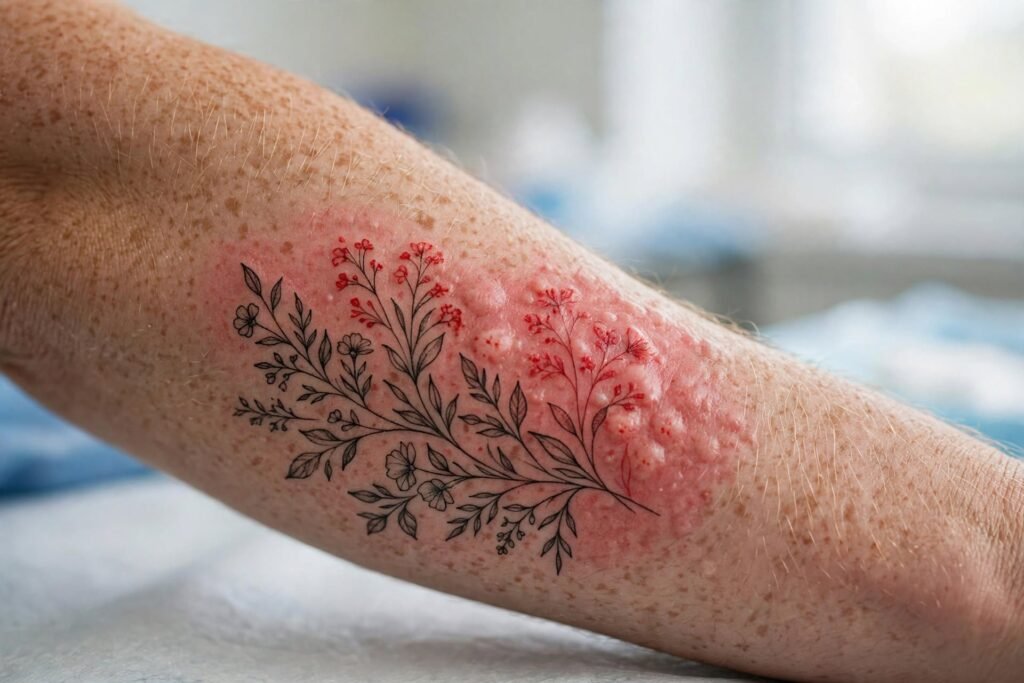
An acute allergic reaction develops within hours to days of getting tattooed. The area becomes red, swollen, and intensely itchy beyond what normal healing involves. There may be hives, a rash spreading beyond the tattoo boundary, or in more significant cases, systemic symptoms like swelling in other parts of the body.
Acute reactions are less common than delayed reactions but tend to be more dramatic when they occur. They require medical attention, and antihistamines or corticosteroids are typically part of the treatment approach.
Delayed Hypersensitivity Reactions
Delayed hypersensitivity reactions are far more common than acute ones and are what most people experience when they have a tattoo ink allergy. They can develop weeks, months, or even years after the tattoo was done, which is part of what makes them confusing to identify.
The immune system is not immediately reactive to the ink on first exposure. Instead, it identifies specific compounds as foreign and builds a sensitization response over time. Once that sensitization is established, subsequent exposure to the same compound, or sometimes just the continued presence of the ink in the skin, triggers the delayed reaction.
It presents as raised, thickened, itchy skin concentrated in specific colored areas of the tattoo. The surrounding skin and areas with different pigments often look and feel normal while the reacting areas are inflamed and elevated. The reaction may come and go, flaring up at certain times and settling at others.
Photoallergic Reactions
Some tattoo ink compounds react specifically to UV exposure. A photoallergic reaction occurs when UV light interacts with certain pigment compounds in the skin and triggers an immune response. These reactions typically appear in sun-exposed areas of the tattoo after UV exposure and may not occur when the tattoo is kept covered and out of sunlight.
Yellow and red pigments are most commonly associated with photoallergic reactions. People who notice their tattoo flaring up specifically after sun exposure, becoming raised, red, and itchy in ways that settle when the tattoo is protected, may be experiencing this type of reaction rather than a general allergic response.
Managing an Allergic Reaction
During the Healing Period
If a reaction develops during the healing period, the first priority is identifying whether it’s an allergic reaction or an infection, since both can present with redness, swelling, and inflammation. The key differences are that an allergic reaction tends to be concentrated in specific colored areas rather than spreading outward from the tattoo boundary, and it typically doesn’t produce the thick, discolored discharge associated with infection.
Keep the area clean with mild, fragrance-free soap. Avoid applying products with fragrance, alcohol, or active ingredients that could further irritate already reactive skin. A plain, fragrance-free aftercare balm applied gently to keep the skin from drying out is appropriate during this period.
See a doctor. Allergic reactions during healing need medical evaluation to confirm the diagnosis and determine the appropriate treatment. Topical corticosteroids are commonly prescribed for localized reactions. Oral antihistamines help manage itching and systemic symptoms.
For Established Tattoos
Delayed reactions in healed tattoos are managed with topical or injected corticosteroids depending on the severity. Mild reactions that are primarily itchy and raised without significant inflammation can sometimes be managed with over-the-counter hydrocortisone under medical guidance. More significant reactions typically require prescription-strength treatment.
For reactions that persist despite treatment, a dermatologist may recommend other options including laser treatment to break down the reactive pigment, or in significant cases, surgical removal of the affected area.
Sun Protection
For photoallergic reactions specifically, consistent sun protection over the tattooed area reduces flare-ups significantly. Keeping the tattoo covered with clothing when outdoors and applying broad-spectrum sunscreen once the skin has fully healed helps manage this type of reaction without medical intervention in many cases.
Avoiding the specific pigment that caused the reaction in future tattoos is the most straightforward prevention measure once an allergy has been identified.