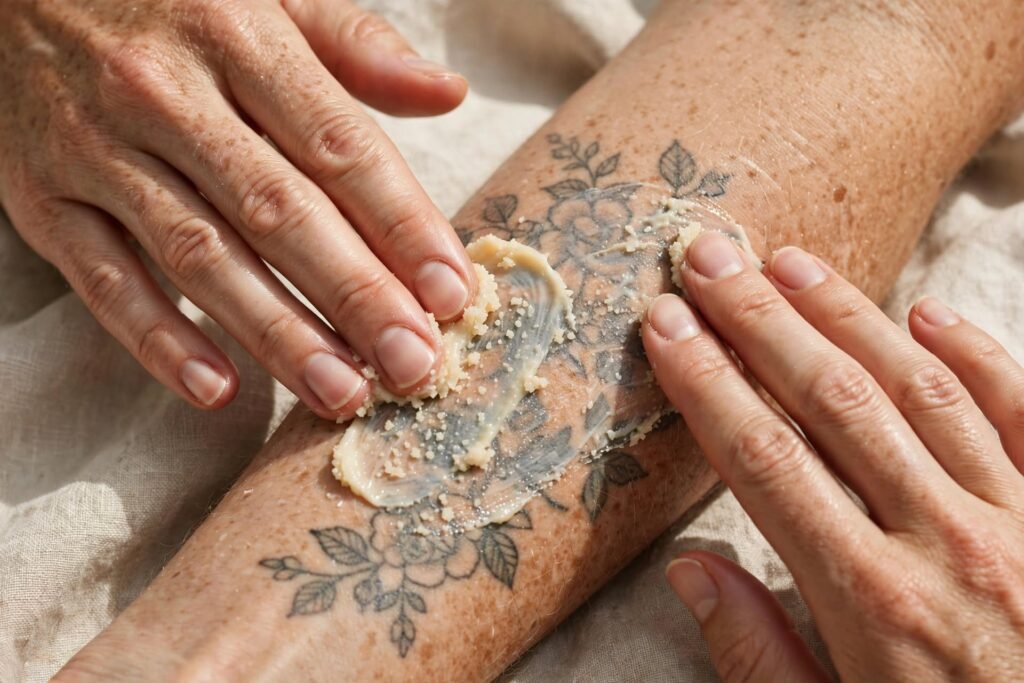
Old tattoos go through a lot. Years of sun exposure, skin dryness, neglect, and the natural aging of both the ink and the skin above it all contribute to a tattoo that looks more worn than it once did. The colors are flatter, the lines are softer, the overall piece lacks the definition it had when it was fresh.
Before booking a touch-up, it’s worth understanding how much of that faded appearance is actual ink loss versus surface skin condition. The answer is often more of the latter than people expect, and addressing the skin condition side can produce a noticeable improvement without any new ink.
The Difference Between Real Fading & Surface Dullness
Real fading is ink loss, UV radiation has broken down pigment molecules in the dermis, and those pigment molecules are gone. No topical product replaces them. The only way to address genuine ink loss is a touch-up with fresh pigment.
Surface dullness is different. It’s the effect of the skin above the ink being in poor condition, dry, rough, lacking in the qualities that let light interact with the skin in a way that makes ink look clear and defined. Surface dullness makes a tattoo look more faded than it actually is, because the skin presenting the ink to the outside world is not in good shape.
Many tattoos that look significantly faded are carrying a mix of both real fading and surface dullness. Improving the skin condition addresses the surface dullness component and reveals how much actual ink is still present underneath. The result is often a tattoo that looks noticeably better after a few weeks of consistent care, not because the ink came back, but because the skin condition improved enough to let what’s there show through properly.
Building a Skincare Routine for Old Tattoos
Step One — Start Moisturizing Daily
If you haven’t been moisturizing your tattooed skin consistently, starting is the first and most impactful step. Use a plain, fragrance-free moisturizer or tattoo-specific balm applied once daily after showering.
Apply to slightly damp skin rather than completely dry skin. Water on the skin surface helps the moisturizer lock in hydration more effectively. Pat the skin dry after your shower, leave it slightly damp, and apply the moisturizer while it’s still in that state.
Give this routine four to six weeks before assessing the result. Skin condition changes gradually, and the improvement in how the tattoo looks builds over weeks rather than happening overnight.
Step Two — Add Sun Protection
If the fading has been driven partly by UV exposure, continuing to leave the tattoo unprotected means any improvement from moisturizing gets offset by ongoing UV damage. Apply broad-spectrum SPF 30 or higher over the tattooed area whenever it will be exposed to sunlight.
For tattoos on regularly sun-exposed areas, this means most days. Making it part of the morning routine is more practical than trying to remember it situationally.
Step Three — Address Skin Texture
Old tattoos on skin that has developed rough texture, keratosis pilaris, or significant dryness benefit from gentle exfoliation as part of the skincare routine. A mild chemical exfoliant, lactic acid or a low-percentage glycolic acid, used once or twice a week removes the buildup of dead skin cells that contributes to dullness.
This step is for fully healed, long-established tattoos only. Active exfoliants should never be used on tattoos that are still healing. For old tattoos, gentle and consistent exfoliation smooths the skin surface in a way that lets the ink below read more clearly.
Step Four — Internal Hydration
Drinking consistently throughout the day supports the skin’s ability to hold moisture from the inside. This is the part of the routine that gets overlooked because it doesn’t feel like skincare, but chronically dehydrated skin responds less well to topical moisturizers and shows its age faster than well-hydrated skin.
What a Consistent Routine Actually Changes
After four to six weeks of daily moisturizing, consistent sun protection, and gentle exfoliation where appropriate, the changes you’ll typically see include less surface dullness, better light interaction with the skin, improved surface texture over the tattoo, and colors that look more like they once did because the dullness layer has been removed.
What it won’t change is genuine ink loss from UV damage. Lines that have softened from years of ink migration don’t sharpen back up with skincare. Colors that have been broken down by UV radiation don’t return. These are the things that require a touch-up to address.
When Skincare Isn’t Enough
If after six to eight weeks of a consistent routine the tattoo still looks significantly more faded than you’d like, and you’ve noticed that the lines are genuinely softer rather than just looking dull, a touch-up consultation is the appropriate next step.
Go to the consultation with the skin in good condition from the routine you’ve established. A touch-up on well-maintained skin heals more cleanly and holds the new ink better than a touch-up on skin that hasn’t been cared for. The skincare routine you build for reviving the tattoo becomes the maintenance routine that keeps the touch-up looking good long-term.
The combination of good ongoing skin care and a touch-up when genuinely needed covers everything a faded tattoo requires. Neither alone is the full answer for tattoos that have experienced real aging, but starting with the skincare routine tells you clearly what’s surface condition and what’s actual ink loss, which helps you have a more informed conversation with your artist about what a touch-up actually needs to address.