Sunscreen on tattoos is one of those topics where people know they’re supposed to do it but aren’t always clear on why it matters or whether it actually makes a meaningful difference. The short answer is yes, SPF protects tattoos, and consistently using it is one of the most practical things you can do for long-term ink appearance. The longer answer involves understanding what UV radiation does to ink and why the protection sunscreen provides is genuinely significant over time.
What UV Radiation Does to Tattoo Ink
Tattoo ink sits in the dermis, but UV radiation from sunlight penetrates through the epidermis and reaches that layer. When UV rays contact the pigment molecules in tattoo ink, they cause a chemical reaction called photodegradation, the breakdown of pigment molecules into smaller fragments that no longer produce the same color.
This process is gradual and cumulative. A single afternoon in the sun doesn’t visibly fade a tattoo. Years of unprotected exposure accumulate enough UV damage that the change becomes clear. Colors shift, black ink develops a grey-blue quality, and lines that were once crisp look softer and less defined.
The rate at which this happens depends on how much UV exposure the tattoo accumulates, the pigments involved, and how consistently the skin has been protected. Lighter pigments, yellow, pink, light blue, break down faster than dark pigments. Red fades more quickly than black. But all ink is affected over time by consistent UV exposure without protection.
How Sunscreen Actually Protects Ink
Sunscreen works by either absorbing UV radiation before it reaches the skin, chemical sunscreens, or reflecting it away from the skin’s surface, physical sunscreens using zinc oxide or titanium dioxide. Either mechanism reduces the amount of UV radiation that reaches the dermis where the ink is.
Less UV reaching the ink means slower photodegradation. The pigment molecules break down less quickly, colors hold their saturation longer, and lines maintain their definition for more years than they would without consistent protection.
This is not a theoretical benefit. The difference between a well-protected tattoo and an unprotected one on the same person over the same period of time is visible to anyone looking at the two pieces side by side. Artists who work in areas with high sun exposure regularly see this difference in clients who come back for touch-ups, the pieces that have been protected look dramatically better than those that haven’t.
SPF Level — What Actually Works
SPF 30 blocks roughly 97 percent of UVB rays. SPF 50 blocks around 98 percent. The difference between SPF 30 and SPF 50 is smaller than most people assume, but for tattoos on regularly sun-exposed areas, forearms, calves, shoulders, hands, SPF 50 provides a meaningful additional margin of protection worth using.
Broad-spectrum coverage matters more than the SPF number alone. Broad-spectrum means the sunscreen protects against both UVA and UVB radiation. UVA rays are the ones that penetrate most deeply and cause the most significant pigment breakdown in tattoo ink, a sunscreen that only addresses UVB is not doing the full job.
Look for “broad-spectrum” on the label alongside SPF 30 or higher. Both elements need to be present for the sunscreen to provide real tattoo protection.
Physical vs Chemical Sunscreen for Tattooed Skin
Both physical and chemical sunscreens protect against UV radiation, but there are some considerations for tattooed skin specifically.
Physical sunscreens, zinc oxide and titanium dioxide, sit on the skin surface and reflect UV away. They tend to be less irritating than chemical sunscreens, which makes them a better choice for people with sensitive skin or for tattoos that are still relatively new and the skin is still reactive. They also provide immediate protection from the moment of application rather than requiring the 20 to 30 minute absorption window that chemical sunscreens need.
Chemical sunscreens absorb UV radiation and convert it to heat. They tend to be lighter in texture and easier to apply without leaving the white cast that physical sunscreens sometimes produce. For daily use on healed tattoos on regularly exposed areas, chemical sunscreens are practical and effective.
Both work. The best sunscreen is the one you’ll actually apply consistently, which for most people means finding a texture and formula that fits easily into the daily routine.
When to Apply & How Often
For tattoos that are still healing, sunscreen should not be applied. The skin surface is not intact during healing, and sunscreen formulated for normal skin applied to a wound can cause irritation and slow healing. During the healing period, physical coverage, loose clothing, is the appropriate protection.
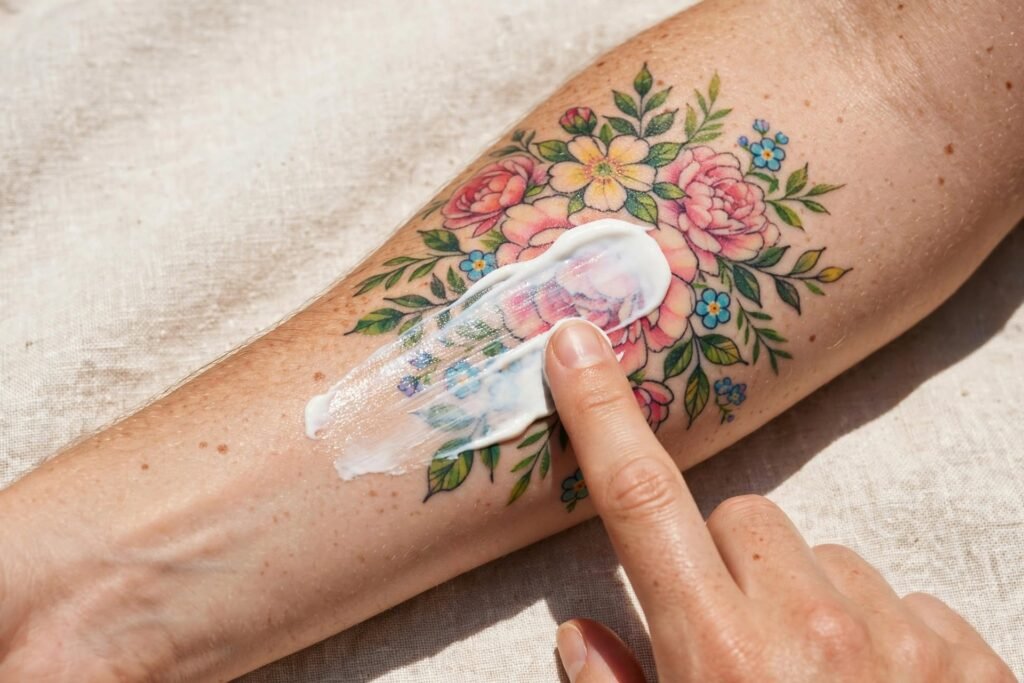
Once the tattoo has fully healed at the surface, typically around the three to four week mark, sunscreen can be applied normally. From that point, apply it as part of the morning routine whenever the tattooed area will be exposed to direct sunlight.
Reapplication every two hours during extended outdoor time is the standard recommendation for sunscreen effectiveness. For everyday life, commuting, working, running errands, a morning application is typically sufficient. For a day at the beach or extended outdoor activity, reapplication matters.
Building the Habit Around Aftercare
The natural point to start the sun protection habit is when you transition out of active healing and into long-term maintenance. Aftercare brands like Inky Duck approach tattoo care as a two-phase process, supporting healing through the initial weeks with a properly formulated aftercare balm, then transitioning to ongoing maintenance that includes consistent moisture and sun protection. The healing period establishes the foundation, and sun protection from that point forward is what preserves it.
Making sunscreen part of the daily routine rather than a situational measure is the practical difference between protection that actually works and protection that’s applied too rarely to matter. Consistent daily application on exposed tattoos accumulates genuine protection over years in a way that occasional use doesn’t.
What Sunscreen Cannot Do
Sunscreen slows UV-driven fading. It does not reverse fading that has already occurred. Pigment that has been broken down by years of unprotected UV exposure is gone, and no topical product restores it. The protection sunscreen provides is entirely forward-looking, it preserves what’s there rather than recovering what’s been lost.
For tattoos that have already experienced significant UV fading, a touch-up combined with a consistent sun protection habit going forward is the full solution. The touch-up restores the ink, and the sunscreen keeps the new work protected in a way the original piece wasn’t.