Not every part of the body hurts the same amount when getting tattooed. Anyone who has sat for work on their ribs and then gotten something on their outer thigh knows that the difference can be dramatic. Numbing cream works better on some placements than others, and knowing where it’s most effective, and where its limitations show up, helps you decide when it’s worth using and what to realistically expect.
This is practical information that makes a difference in how you plan a session, particularly if you’re working on a placement that has a reputation for being difficult to sit through.
Why Placement Affects Numbing Cream Performance
The effectiveness of lidocaine-based numbing cream depends on how well it can penetrate through the skin to reach the nerve-rich layers in the dermis. Several factors tied to body placement influence this.
Skin thickness varies significantly across the body. Areas with thinner skin allow the lidocaine to reach target depth more easily and with shorter application times. Areas with thicker skin require longer application windows and may still produce less complete numbing because the lidocaine has further to travel before reaching the nerve fibers it needs to block.
Proximity to bone affects the type of sensation during tattooing. Lidocaine blocks pain signal transmission through nerve fibers, but pressure and vibration travel through different pathways. Areas tattooed directly over bone produce a vibration and pressure sensation that numbing cream reduces but does not eliminate. This is why bony placements still feel significant even with numbing cream applied correctly.
Blood supply to the area also plays a role. Areas with high blood flow clear lidocaine from the tissue faster once the session begins, which shortens the effective window. Areas with lower baseline circulation tend to hold the numbing effect longer.
Placements Where Numbing Cream Works Best
Outer Thigh
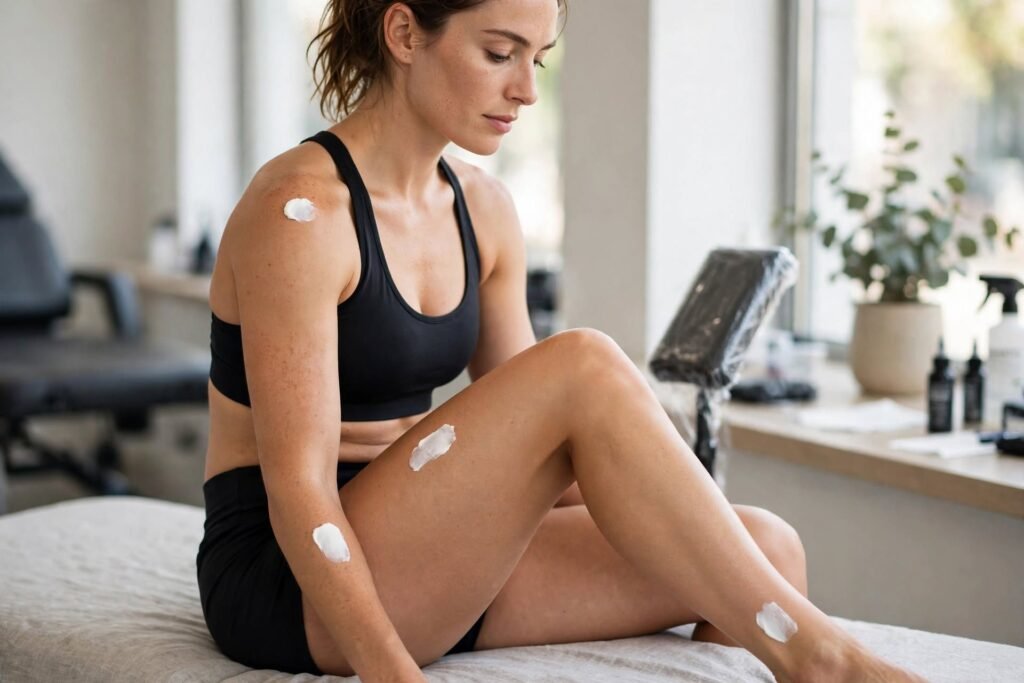
The outer thigh is one of the most reliably effective placements for numbing cream. The skin is relatively thick but sits over substantial muscle tissue rather than bone, which means the vibration and pressure issue that affects bony placements is minimal. Lidocaine penetrates well with the standard 45 to 60 minute application window, and the numbing effect tends to last solidly through the first few hours of a session.
The outer thigh is also a large, flat surface area that is easy to apply cream to evenly and cover with wrap without complicated positioning. For people getting their first large-scale piece and wanting numbing support, the outer thigh is one of the more straightforward placements to manage.
Upper Arm & Shoulder
The outer upper arm and shoulder area respond well to numbing cream for similar reasons to the outer thigh. There’s enough muscle beneath the skin to cushion the tattooing pressure, and the skin thickness is moderate enough for good lidocaine penetration. People getting upper arm sleeves or shoulder caps often find numbing cream significantly reduces discomfort for the first portion of longer sessions.
The inner upper arm is thinner skinned and more sensitive, but also numbs more easily because of that thinner skin. The tradeoff is that it may feel more uncomfortable once the numbing starts to wear off compared to the outer arm.
Calf
The calf is another placement where numbing cream tends to perform well. The skin sits over muscle rather than directly over bone across most of the surface, and it’s easy to apply and wrap before a session. People sitting for calf pieces, particularly larger ones, often find numbing cream makes the first half of the session much more manageable.
The shin is a different story, that placement sits directly over the tibia, and the pressure and vibration component that lidocaine doesn’t fully address makes it significantly harder to numb effectively regardless of how well the cream is applied.
Upper Back & Shoulder Blades
The upper back away from the spine responds reasonably well to numbing cream. The skin is moderately thick and sits over muscle in the areas between the spine and shoulder blades. For large back pieces, applying cream to sections and working in phases is the most practical approach, as discussed in planning guides for long sessions.
The spine itself is much harder to numb effectively because of the bone proximity and the concentration of nerve tissue in that area. Artists working along the spine on a back piece will usually find clients noticeably more sensitive there even with cream applied.
Placements Where Numbing Cream Has Clear Limits
Ribs & Sternum
Ribs are one of the most requested placements for numbing cream because the reputation for pain is well established. The cream does help, it reduces the sharp stinging quality of the needle. But the rib area involves thin skin directly over bone, and the pressure and vibration from tattooing over the ribcage is significant. Most people find numbing cream makes rib work more tolerable but not painless.
Application over the ribs can also be tricky to keep covered properly. The area moves with breathing, which can cause the wrap to shift. Applying the cream with plenty of time and securing the wrap carefully helps, but it requires more attention than flatter, less mobile placements.
Hands & Feet
Hands and feet are among the hardest areas to numb effectively. The skin on the hands and feet is thick, particularly on the palms and soles, which means lidocaine penetration is slower and less complete. These areas also have a high concentration of nerve endings, which contributes to their sensitivity.
For the tops of the hands and feet, numbing cream provides more benefit than on the palms and soles, but the overall effectiveness is still lower than on larger body areas with more substantial tissue between the skin and bone. Having quality aftercare ready for hand and foot tattoos matters too, products like Inky Duck’s tattoo aftercare balm are worth having on hand for placements like these since they heal more slowly and need consistent moisture support throughout the process.
Inner Wrist & Inner Elbow
These placements have thin skin that numbs relatively easily, but they also have a high concentration of nerve fibers and are close to major blood vessels. The numbing effect tends to be good initially but fades faster than on areas with less blood supply, because the circulation in these areas clears the lidocaine more quickly.
Neck & Head
Neck and head placements are among the most difficult to numb effectively and also among the placements where being most careful about numbing cream use matters. The skin on the neck and scalp has high blood flow, which clears lidocaine faster. The proximity to major blood vessels also means absorption into the bloodstream is faster than on areas further from central circulation.
For neck and head work, discussing numbing cream use with your artist beforehand is especially worth doing. Some artists prefer not to work with numbing cream on these placements for the reasons above, and their experience with how the skin in those areas behaves is worth factoring into the decision.
General Principles for Any Placement
Regardless of where the tattoo is going, the basics of numbing cream application stay the same. Apply a generous layer, cover it with wrap, time it correctly, and remove it fully before the session starts. Patch test before using a new product on your skin.
Talk to your artist. They’ve worked on every placement on the list above and have direct experience with how numbed skin behaves in each area. Their input on timing, product choice, and what to expect from numbing on a specific placement is worth more than any general guide, and the conversation is worth having before you’re already sitting in the chair.