Blackwork tattoos cover a wide range of styles, from bold geometric patterns and tribal-inspired designs to full black fill pieces, illustrative work, and dark floral compositions. What they all have in common is a significant amount of black ink deposited into the skin, often across large surface areas and with multiple passes to achieve density and saturation. That shared characteristic is what makes blackwork healing a somewhat different experience from healing a smaller, lighter piece.
If you’ve just gotten a blackwork tattoo or you’re planning one, here’s what the healing process actually looks like and what to pay attention to along the way.
Why Blackwork Heals Differently
The volume of ink involved in blackwork is the primary factor that changes the healing experience. A piece with dense black fill or heavy shading has significantly more ink deposited into the dermis than a simple line tattoo of similar size. More ink means more tissue trauma during the session, and more tissue trauma means a more active healing response.
The skin doesn’t just heal the surface punctures, it also responds to the foreign material deposited beneath it. A higher volume of ink triggers a more pronounced inflammatory response, which translates to more swelling, more redness, and often more discomfort in the days following the session compared to lighter work.
This is normal and expected. It’s not a sign that something went wrong. It’s the body doing what it does when a significant amount of work has been done to the skin.
The First Few Days
The first 48 to 72 hours after a blackwork session are typically the most intense from a recovery standpoint. The tattooed area will be red, swollen, and warm to the touch. Larger blackwork pieces, back panels, sleeves, full chest work, can produce swelling that extends beyond the tattooed area into surrounding tissue. This is the inflammatory response at its most active and settles progressively over the first week.
Weeping & Ink Seepage
Blackwork tattoos often weep more than lighter pieces in the first day or two. The combination of plasma, blood, and excess black ink that seeps from the surface can be striking, the fluid is dark and can stain bedding, clothing, and anything else it comes into contact with. Use old sheets or put a clean cloth under the tattooed area when sleeping, and wear dark, loose clothing over it during the day.
This seeping is not ink leaving the tattoo permanently. It’s excess ink and plasma from the surface layers. The ink that matters, the ink that makes up your tattoo, is in the dermis and stays there.
Cleaning During the First Week
Clean the tattoo twice daily with mild, fragrance-free soap and your fingertips. Be thorough but gentle, blackwork pieces need to be kept clean because the larger surface area of broken skin means more exposure to bacteria. Rinse with lukewarm water and pat dry with a clean paper towel. Apply a thin layer of aftercare balm after each cleaning and whenever the skin feels tight or dry.
The Peeling Phase
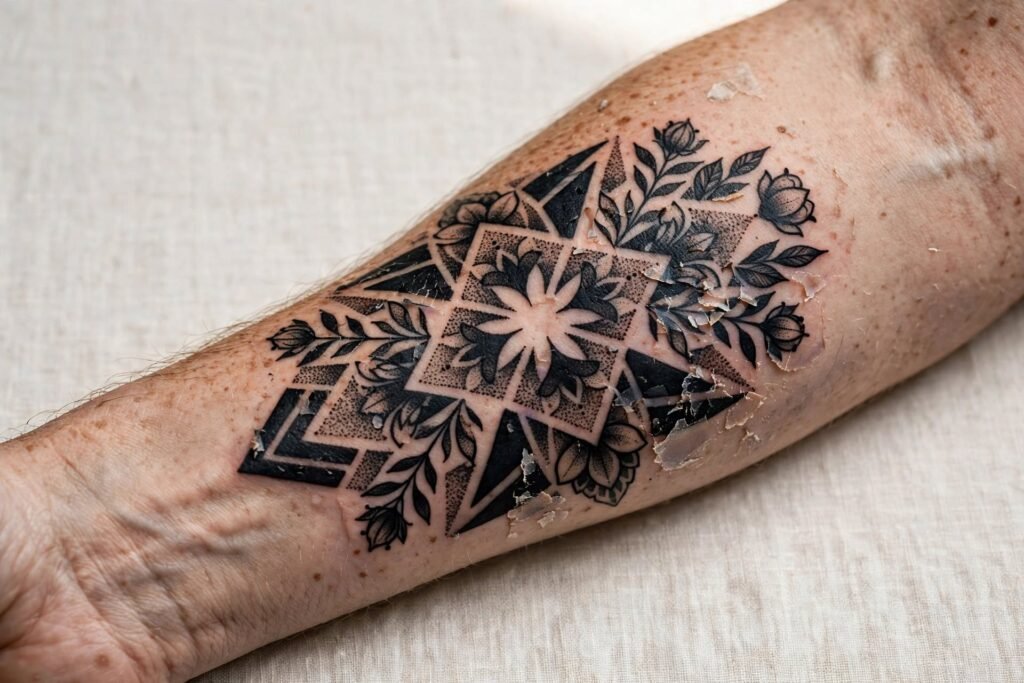
Blackwork tattoos often have a more pronounced peeling phase than lighter work. The skin sheds more visibly because of the higher ink volume and the more significant surface trauma. The peeling skin may appear very dark, almost black, because of the concentration of ink near the surface.
This is one of the most alarming-looking parts of blackwork healing for people who haven’t been through it before. The dark peeling skin can look like the ink is coming off the tattoo entirely. What’s actually happening is that the very top layer of the epidermis, which absorbed some surface ink during the session, is shedding as part of normal healing. The ink in the dermis is unaffected.
Do Not Pull the Peeling Skin
The temptation to peel off dark flaking skin is strong, particularly when the pieces are large. Pulling peeling skin off a blackwork tattoo before it’s ready pulls ink with it and can leave light or grey patches in areas that should be fully saturated. Leave it to shed naturally, keep the area moisturized to make the shedding more gradual, and pat rather than scratch when the itching peaks.
The Milky Phase & What It Means for Blackwork
After peeling, blackwork tattoos go through the same milky phase that all tattoos experience, a period where new skin forming over the ink makes the tattoo look less saturated and slightly grey or hazy. In blackwork this can be particularly noticeable because the difference between fully saturated black ink and the greyed-out appearance during the milky phase is visually dramatic.
This phase resolves on its own as the new skin matures and becomes more transparent. The deep black tones return as the skin settles. Expecting this phase and knowing it’s temporary saves a lot of unnecessary concern during the second and third weeks of healing.
Long-Term Healing for Blackwork
Full healing for blackwork, particularly large, densely filled pieces, takes longer than for lighter tattoos. Surface healing wraps up within the standard three to four week window, but the deeper dermal healing can take six months or longer for heavily worked pieces. The skin continues to settle during this period, and the final appearance of the tattoo develops gradually.
Touch-Ups Are Common
Because of the density of ink and the volume of work involved, blackwork pieces sometimes heal with small areas that didn’t hold as fully as intended. Light spots, areas where the black appears slightly less saturated, or spots where the skin healed unevenly over dense fill are common enough that many blackwork artists include touch-ups as a standard part of their process.
Wait until the tattoo is fully healed before assessing what needs attention, at least three to four months, and ideally closer to six for large pieces. What looks like an uneven area at eight weeks may have filled in further by month four.
Sun Protection for Black Ink
Black ink is more resistant to UV fading than colored pigments, but it’s not immune. Consistent sun exposure on a blackwork tattoo over years causes the black to shift toward a grey-blue tone and lines to soften. Applying broad-spectrum sunscreen to healed blackwork whenever it will be in direct sunlight slows this process considerably. For large pieces that are regularly exposed, back pieces, sleeve work on forearms, making sunscreen a daily habit makes a visible difference over the long term.