Fine line tattooing has grown significantly in popularity over the past several years. The style covers everything from botanical illustrations and minimalist geometric work to detailed portraits and delicate lettering, all executed with thin needles and precise technique. The results can be remarkable, but fine line tattoos also come with specific healing considerations that are worth understanding before you sit down for the session.
The margin for error in fine line healing is smaller than in bolder styles. Here’s what that means in practice.
Why Fine Line Tattoos Require More Careful Healing
Fine line work is applied with single needles or small groupings that deposit ink in thin, precise strokes. The lines are narrow, the detail is tight, and the overall ink volume deposited is significantly lower than in bold or heavily shaded work. That lower ink volume is what creates the delicate visual quality of the style, and it’s also what makes the healing period more consequential.
With a bold traditional tattoo, some ink loss during healing is absorbed by the volume of what was deposited. A light spot from scabbing can usually be touched up without major consequence. With fine line work, that same light spot can eliminate an entire line or detail that was already at the threshold of visibility. There’s simply less ink to lose before the piece is visibly affected.
This doesn’t mean fine line tattoos are fragile or that healing them is difficult. It means that the standard aftercare practices that any tattoo requires matter more with fine line work, and that shortcuts have more visible consequences.
The Healing Timeline for Fine Line Work
Fine line tattoos generally produce less initial inflammation and swelling than heavy blackwork or traditional pieces because the tissue trauma is less extensive. The first 24 to 48 hours are usually milder in terms of redness, swelling, and weeping compared to more heavily worked pieces.
The peeling phase, when it arrives around days three to five, is also typically lighter, fine line work produces less surface trauma, so the skin’s shedding response is less dramatic. This can be misleading. A lighter peeling phase doesn’t mean the tattoo is healed, it means the surface healed more quickly, and the deeper dermal layers are still working.
Key Aftercare Practices for Fine Line Tattoos
Keep It Moisturized Without Overdoing It
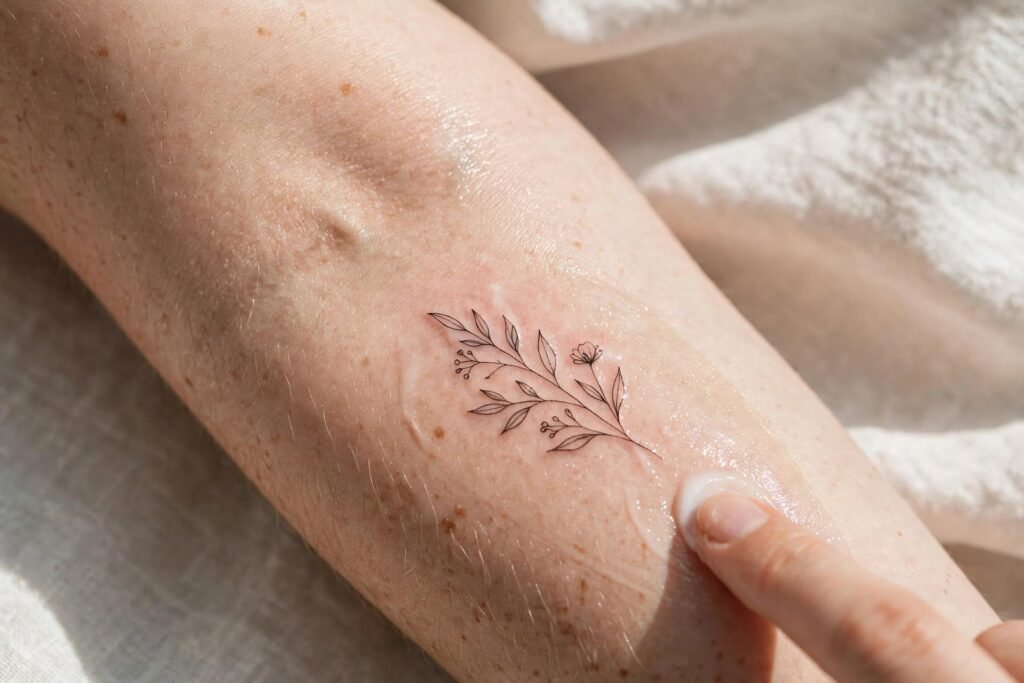
Consistent moisturizing is essential for fine line healing, but the balance between enough and too much is worth paying attention to. Over-moisturizing fine line tattoos, applying too much product too frequently, can cause the skin to become waterlogged and soft in a way that affects the surface during healing. Thin lines in soft, over-moisturized skin are more prone to slight spreading or blurring at the surface during healing than lines in skin that is well-hydrated but not saturated.
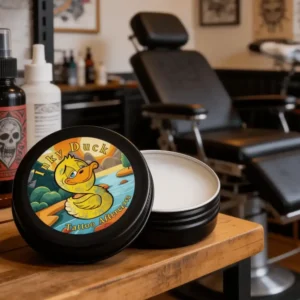
A thin layer of aftercare balm applied two to three times daily is the right approach. Brands like Inky Duck formulate their aftercare balm with this kind of controlled application in mind, the consistency is designed to cover the skin with a thin, effective layer rather than flooding it with product. Apply after cleaning, and let it absorb before covering the area with clothing.
Do Not Pick or Scratch Under Any Circumstances
This applies to all tattoos, but it matters more for fine line work than for any other style. A single instance of picking at a peeling area over a fine line tattoo can remove an entire line segment. The delicacy that makes the style visually appealing is the same quality that makes it vulnerable to physical interference during healing.
When the itching peaks, which typically happens around days five through ten, pat the area rather than scratching. Cool compresses help manage the itch without friction. Keep nails short during the healing period as a practical measure against accidental scratching during sleep.
Protect From Sun Exposure
Fine lines fade faster than bold lines under UV exposure because there’s less ink volume holding the design. A fine line tattoo that heals well but gets consistent unprotected sun exposure will show softening and fading noticeably faster than the same piece that is consistently protected.
During healing, keep the tattoo covered from direct sunlight entirely. Once healed, apply broad-spectrum sunscreen consistently whenever the tattoo will be exposed. For fine line work on areas like forearms and wrists that get regular sun exposure, this is less optional than it might be for other placements.
What to Watch for During Healing
The Milky Phase Looks Different on Fine Line Work
The milky phase, the period after peeling where new skin forming over the ink makes the tattoo look hazy or faded, can be more pronounced on fine line tattoos because the lines are thin enough that even a semi-opaque layer of new skin makes them harder to see. Very fine lines may seem almost invisible during this phase.
This is temporary. As the new skin matures and becomes more transparent over weeks three through six, the lines reappear with more definition. Assessing the final result before this phase has fully resolved leads to unnecessary concern about lines that are actually fine.
When Something Needs Attention
If a line appears broken, patchy, or completely absent after the tattoo has fully healed, six to eight weeks minimum, ideally three months, that’s worth discussing with your artist. Fine line tattoos occasionally need touch-ups in areas where the ink didn’t hold as expected, and a skilled fine line artist can address this precisely.
Long-Term Care for Fine Line Tattoos
Daily moisturizing and consistent sun protection are the two habits that most affect how fine line work holds up over time. The style naturally softens and develops over years, fine lines do not stay as crisp as they looked fresh indefinitely, but good ongoing care slows that process and keeps the design readable for longer.
Touch-ups are a normal part of maintaining fine line work over the years. Staying in contact with your artist and scheduling check-ins at the one and two year marks is a practical approach for pieces with a lot of detail.