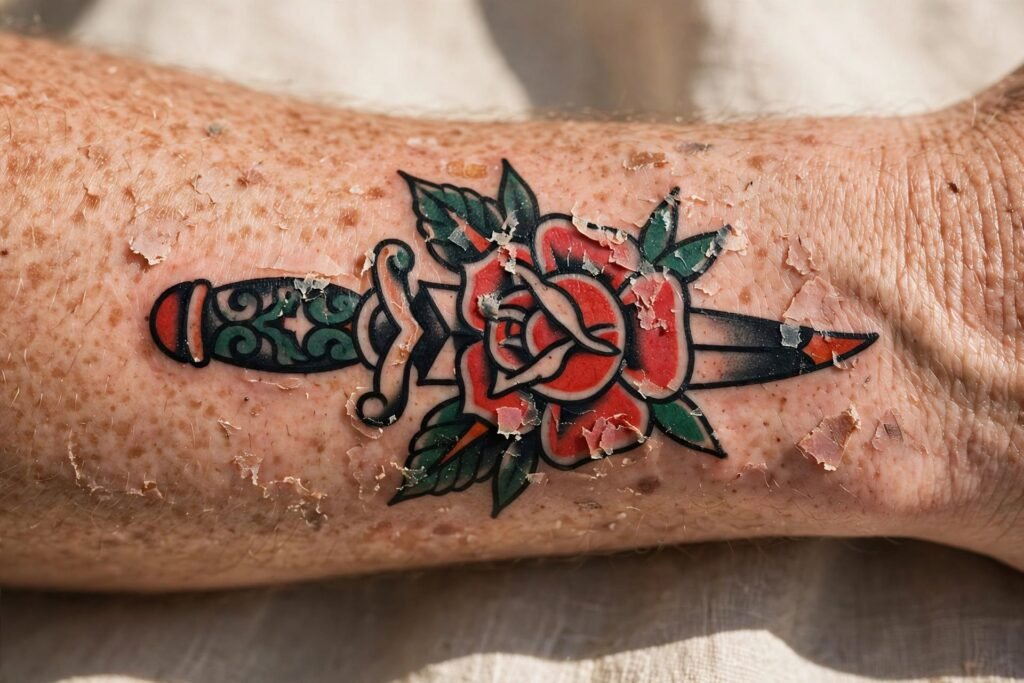
Traditional tattooing, sometimes called American Traditional or Old School, is defined by its bold black outlines, solid color fill, and a limited but strong palette. It’s one of the oldest tattooing styles practiced in the Western tradition, and the way it’s executed makes the healing experience distinct from finer, more detailed styles.
If you’ve just gotten a traditional piece or you’re planning one, understanding what’s different about how this style heals helps you care for it correctly and know what to expect as the skin settles.
How Traditional Tattoos Are Applied
The defining technical characteristic of traditional tattooing is the bold outline. Traditional artists use larger needle groupings for outlining than most other styles, and the lines are applied with consistent, deliberate pressure to create clean, even strokes that read clearly from a distance.
The fill work uses needle configurations designed to pack color efficiently into the skin. Traditional color fill, the flat, solid areas of red, yellow, green, and blue that characterize the style, is applied with enough passes to achieve full saturation. The goal is ink that sits solidly in the skin rather than the subtle gradations of other styles.
Both the outlining process and the color packing process deposit more ink into the skin per unit of surface area than finer work does. That’s what drives the distinctive healing characteristics of this style.
The First Few Days of Healing
Traditional tattoos typically produce a more active inflammatory response than fine line or illustrative work of similar size. The bolder needle configurations and the volume of ink deposited mean more tissue trauma, which the body responds to with more pronounced swelling, redness, and tenderness in the first 48 to 72 hours.
The Lines Feel Raised
One of the first things people notice after getting a traditional tattoo is that the outlines feel distinctly raised and firm to the touch. The bold lines sit above the surrounding skin surface because of the volume of ink and the inflammatory response concentrated along them. This raised feeling is normal and temporary, it settles as the inflammation resolves over the first week or two.
Weeping From Color-Packed Areas
Heavily color-packed areas, particularly those worked with multiple passes to achieve full saturation, tend to weep more plasma and excess ink in the first day or two than lightly worked areas. This is normal and is a sign that the skin was worked to the level needed to achieve solid traditional fill. Clean it gently, apply aftercare consistently, and use old sheets or a cloth barrier for sleeping during the first few nights.
The Peeling Phase in Traditional Work
Traditional tattoos typically have a more visible peeling phase than finer styles because of the higher ink volume involved. The peeling skin can carry a noticeable amount of color, red peeling skin over a red-filled area, for example, which can look alarming if you’re not expecting it.
Why the Colors Look Different While Peeling
During the peeling phase, the outer skin layer sits over the ink and affects how the colors appear from above. Reds may look more orange. Yellows may look muted. The overall palette may look less saturated than it did right after the session. This is temporary and the colors settle back toward their intended tones as the new skin matures.
Traditional tattooing is specifically designed to hold its palette well over time. The bold application and solid fill are part of what makes traditional work one of the more durable styles in terms of long-term color retention. The peeling phase does not reflect the final result.
Keeping the Outlines Intact
The bold outlines of a traditional tattoo are its most defining feature, and protecting them during healing is important. The outline areas are where scabbing can be most damaging, a thick scab forming along a bold line and then pulling off with force can leave gaps or light areas in the line that affect the crispness of the finished piece.
Consistent moisturizing from day one prevents the heavy scabbing that causes this. Keep the skin hydrated throughout the peeling phase and let any scabbing that does form detach naturally without interference.
Color Healing in Traditional Tattoos
Different colors in a traditional tattoo heal at slightly different rates and can look different during the healing process. Reds and oranges tend to look inflamed for longer than other colors because the immune system is more reactive to certain red pigment compounds. This usually settles within the first two weeks and is not necessarily a sign of an allergic reaction unless accompanied by raised, itchy texture concentrated specifically in the red areas after healing is complete.
Yellow is another color worth noting. It can look pale or washed out during healing and sometimes for a few weeks after, before it settles into its final tone. Yellow in traditional work is designed to be bold and solid, but it often takes longer than other colors to show its final healed appearance.
Why Traditional Work Holds Up Well Long Term
The bold application that makes traditional tattooing distinctive also makes it one of the most durable styles over time. Bold lines hold their definition better than fine lines as the skin ages and ink naturally migrates slightly through the tissue. Solid color fill retains more visual impact than subtle gradients as colors shift over years.
This durability does not mean traditional work is maintenance-free. Sun protection remains important, UV exposure affects color pigments in traditional work the same way it affects any tattoo, just from a stronger visual starting point. Consistent moisturizing keeps the skin in the condition that lets the work look its best as it ages.
Touch-ups on traditional work are less commonly needed than on finer styles, but when they are needed, usually in areas of heavy color fill that healed with slight patchiness, the bold nature of the style makes touch-up work relatively straightforward compared to more detail-dependent styles.
Aftercare Routine for Traditional Tattoos
The aftercare routine for traditional work follows the same basic principles as any tattoo, with emphasis on the areas most relevant to this style.
Clean twice daily with mild, fragrance-free soap during the first two weeks. Apply a thin layer of aftercare balm after each clean and whenever the skin feels tight. Do not pick at peeling skin over colored fill areas or along the outlines. Keep the tattoo out of direct sunlight throughout the healing period and apply broad-spectrum sunscreen once the surface has healed.
For the raised outline texture in the first week, cool compresses can help with discomfort and mild swelling. Keep clothing loose over the area to avoid friction against the raised lines during the most active healing phase.