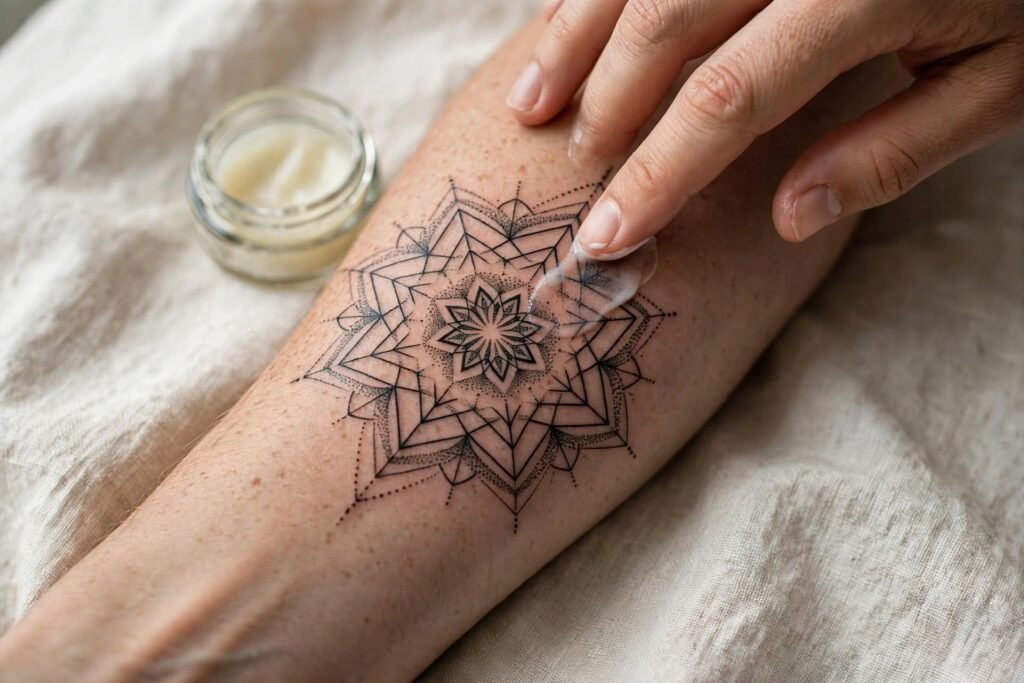
Geometric tattoos are built on precision. The lines need to be straight, the shapes need to be accurate, the spacing needs to be consistent. When a geometric piece heals well, it looks sharp and intentional. When it doesn’t, the geometric nature of the design makes every healed imperfection more visible than it would be in a more organic style.
That’s the specific challenge of healing a geometric tattoo, the precision that defines the style is also what makes healing quality so visible in the final result.
What Makes Geometric Tattoos Distinctive from a Healing Perspective
Geometric work typically combines precise linework with areas of fill or shading, depending on the design. The lines are the foundation, they define the shapes and carry the visual structure of the piece. The healing of those lines determines how the finished tattoo reads.
Unlike organic illustrative styles where slight variation in line quality can feel part of the aesthetic, geometric work is meant to look exact. A line that heals with a light spot or slight deviation is more noticeable in a geometric context than it would be in a floral or portrait piece. This puts more emphasis on protecting the linework specifically during the healing process.
The fill areas in geometric work, whether solid black, color, or dotwork shading, heal similarly to fill in other styles. The linework is where the specific attention needs to go.
Protecting the Lines During Healing
Moisturize Consistently to Prevent Scabbing Over Lines
The most common source of damage to geometric lines during healing is scabbing that forms over the outline areas and then lifts with force when it eventually detaches. A thick scab adhered to a fine geometric line pulls ink out of that line when it comes off, leaving light spots or gaps that break the line’s continuity.
Consistent moisturizing from day one prevents this. Keeping the skin hydrated allows the outer layer to shed gradually and gently rather than forming heavy crusts. For geometric work specifically, focus on making sure the line areas, not just the fill, are staying consistently moisturized through the healing period.
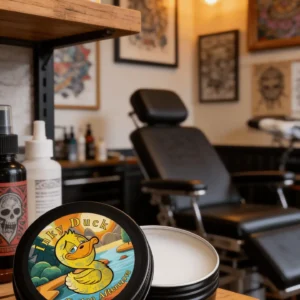
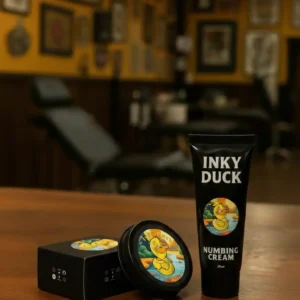
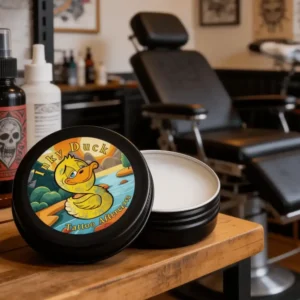
Aftercare products built for healing tattooed skin, like the Inky Duck tattoo aftercare balm, are worth using for geometric work specifically because they’re formulated to hydrate without the pore-clogging or skin-disrupting ingredients that can complicate healing. Apply a thin layer after each cleaning session and whenever the skin feels tight.
Avoid Anything That Creates Friction Over the Lines
Tight clothing rubbing against a healing geometric tattoo during the active healing phase can disturb the skin surface along the lines. The repeated friction of fabric against healing lines adds mechanical stress that can affect how the ink settles. Wear loose, breathable clothing over the tattooed area throughout the peeling and healing phase.
Sleep position matters too. If the geometric tattoo is in an area that you naturally sleep on, using a clean cloth between your skin and the bedding reduces friction during the night.
The Milky Phase & Geometric Work
Geometric tattoos can look particularly rough during the milky phase of healing. The hazy, semi-opaque quality of new skin forming over the ink can make lines look broken, shapes look uneven, and the whole piece look like it healed poorly. This phase, usually between weeks two and four, is not an accurate representation of the final result.
Wait until the skin has fully settled before assessing the piece. For most geometric tattoos, a clear picture of how it actually healed doesn’t emerge until six to eight weeks post-session, and for larger or more heavily worked pieces, closer to three months.
Sun Protection for Geometric Work
Geometric pieces that rely on precise linework are particularly affected by UV-driven fading because line softening in a geometric context is very visible. A geometric tattoo with softened, slightly blurred lines after years of UV exposure looks fundamentally different from the same piece with crisp, defined lines.
Consistent sun protection from the point of healing onward is one of the most practical investments in keeping geometric work looking the way it was intended to look. Broad-spectrum SPF 30 or higher applied to the tattoo whenever it will be exposed to direct sunlight slows the UV-driven softening that all tattoos experience over time.
Touch-Ups for Geometric Tattoos
Because the style relies on precision, touch-ups for geometric work require an artist with experience in the style. A touch-up that doesn’t match the original line weight, spacing, or technique exactly can be more disruptive to the visual result than the original healing issue it was meant to fix.
Stay with your original artist for touch-up work if possible. They know the design, the needle configuration, and the technique used in the original session. If your original artist isn’t available, bring detailed reference photos from right after the session to any touch-up consultation.