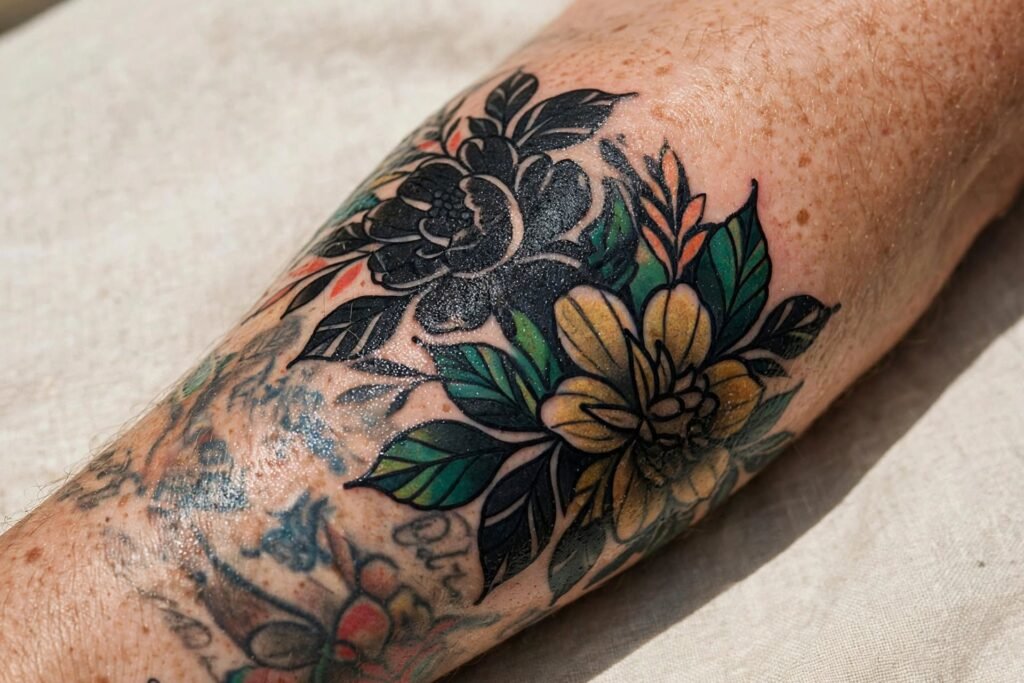
Cover-up tattoos present a different healing situation than fresh work on untattooed skin. The area has already been through the tattooing process once, sometimes more than once if previous laser removal sessions were involved, and the skin is working with a different baseline than it was for the original piece.
Understanding what makes cover-up healing different helps you give the new work the best conditions to settle properly.
What’s Different About the Skin Under a Cover-Up
The skin that a cover-up is applied to is not the same as fresh, untattooed skin. The dermis already contains ink from the original tattoo, that ink is still there, encased in scar tissue from the original healing process. The new tattoo is being applied over and into skin that already has a history of trauma and repair.
This has a few specific effects. The skin in the cover-up area tends to be slightly thicker and less pliable than untattooed skin because of the scar tissue present from the original work. This affects how the needle moves through it and how the new ink deposits. Experienced cover-up artists account for this in their technique, but it’s worth knowing because it influences the healing experience.
If the area has been through laser removal sessions before the cover-up, the skin has additional history, laser treatment causes its own tissue response, and skin that has been lasered may have slightly different texture and reactivity during healing.
Why Cover-Ups Often Require More Intensive Sessions
Cover-up tattoos typically involve more ink volume and more needle passes than original tattoos of similar size. The new design needs to be dark and dense enough to visually overwhelm the existing ink underneath. This means more tissue trauma per session than a fresh piece would involve, which in turn means a more active healing response.
The first few days after a cover-up session are often more intense than people experienced with fresh tattoos expect. More swelling, more redness, more weeping, and more tenderness are all normal responses to the more intensive work involved. This settles on the same timeline as other tattoo healing, it’s just starting from a more active baseline.
Aftercare That Supports Cover-Up Healing
Start Immediately & Be Consistent
The more intensive tissue trauma involved in cover-up work makes consistent aftercare more important, not less. The skin has more to repair, and providing it with the right conditions from the start of the healing process reduces the risk of complications and supports better ink retention.
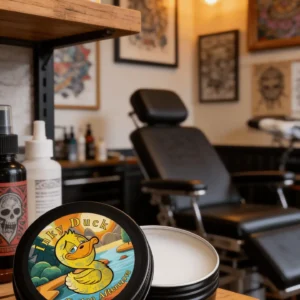
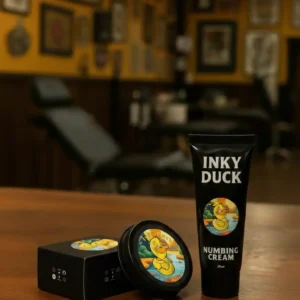
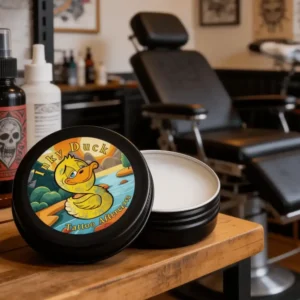
Clean the tattoo twice daily from the first day of aftercare with mild fragrance-free soap. Apply a well-formulated aftercare balm consistently, products like Inky Duck’s tattoo aftercare balm are built for exactly this kind of application, with ingredients chosen to support healing skin without the additives that cause reactions or slow the process. Keep applications thin and consistent rather than heavy and occasional.
Heavy Scabbing Is More Likely
Because of the volume of work involved, cover-up tattoos are more prone to heavier scabbing than lighter pieces. The key to managing this is consistent moisturizing from day one that prevents the heavy scab formation before it starts, rather than trying to manage it after the fact.
If scabbing does develop, leave it entirely alone. Cover-up tattoos where scabs are picked off prematurely often heal with light areas that reveal the original tattoo underneath, which is the outcome the cover-up was meant to prevent. Patience during the scabbing and peeling phase is more important for cover-up healing than for almost any other situation.
Managing the Longer Healing Timeline
Cover-up tattoos often take longer to fully settle than original work because the skin has more going on at the dermal level. The new ink needs to settle alongside existing ink and scar tissue, and the overall healing timeline at the deeper skin layers can extend beyond what people are used to from previous tattoo experiences.
Give the tattoo more time than you think it needs before assessing the final result. Three to four months is a reasonable minimum before drawing conclusions about how it healed. Some cover-ups continue settling visually for up to six months.
Sun Protection for Cover-Up Work
The density of ink in a cover-up tattoo makes sun protection particularly important. More ink means more pigment available for UV radiation to break down, and cover-up work that fades significantly can start showing the original tattoo through the new work as the covering ink diminishes. Consistent broad-spectrum sunscreen applied to healed cover-up work whenever it will be exposed to sunlight is the most practical long-term protection against this.
When to Assess & When to Touch Up
Wait until the tattoo has fully healed before deciding whether a touch-up is needed. For cover-up work, this means a minimum of three to four months, and ideally closer to six for heavily worked pieces.
If light areas appear in the healed result where the cover-up isn’t fully concealing the original, a touch-up session with the same artist addresses this. Cover-up touch-ups are a normal part of the process for complex pieces, the original artist knows the design and the existing ink that needed to be covered, which makes them the best person to assess what needs additional work.