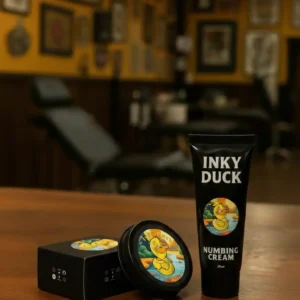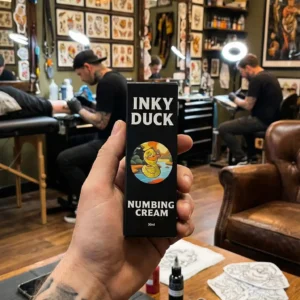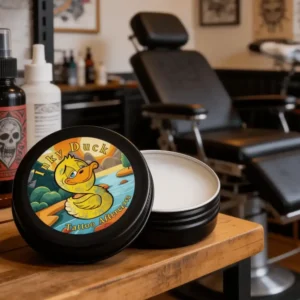
This is one of the questions that comes up most often when numbing cream gets discussed in tattoo circles, and it’s one where you’ll find strong opinions on both sides. Some artists refuse to work on numbed skin. Others use numbing products regularly in their own practice without issue. Clients want to know if using numbing cream is going to compromise the tattoo they’re paying for.
The answer depends on what specifically is being asked. Numbing cream can affect certain aspects of the tattooing process under certain conditions. It does not, when used correctly, fundamentally compromise ink quality or produce inferior tattoos. But there are legitimate reasons why some artists have reservations about it, and those reasons are worth understanding.
What Numbing Cream Does to the Skin
To understand how numbing cream might affect tattooing, it helps to know what it does to the skin beyond blocking pain signals.
Lidocaine, the active ingredient in most numbing creams, is a local anesthetic that works by blocking sodium channels in nerve fibers. But the cream formulation it’s delivered in also affects the skin’s surface and texture in ways that go beyond the anesthetic effect.
Skin Texture Changes
One of the most commonly reported effects among artists who work on numbed skin is a change in skin texture during the session. Numbing creams, particularly when applied under occlusion for extended periods, can cause the skin to become slightly swollen and puffy, a condition sometimes called edema. The skin takes on a slightly different feel under the needle, which some artists describe as mushier or less firm than un-numbed skin.
This texture change can affect how the needle interacts with the skin. Firmer skin provides more consistent resistance, which helps with line precision and ink deposit. Skin that is slightly swollen and softened from extended occlusion can be harder to work with, particularly for fine linework and detail-heavy pieces.
How Significant This Actually Is
The degree of texture change depends on how long the cream was applied and how the individual’s skin responds to occlusion. Applying numbing cream for the recommended time, typically 45 to 90 minutes, produces less texture change than leaving it on for three or four hours. Following the product instructions minimizes this effect.
For bold traditional work, large-scale shading, and pieces that don’t rely heavily on fine line precision, the texture change is less likely to affect the outcome. For pieces with tight linework, fine details, or micro-realism, the effect on skin texture is more relevant.
Does Numbing Cream Affect How Ink Sits
The short answer is that correctly used numbing cream does not cause ink to reject, fade faster, or sit unevenly in the skin.
Ink is deposited in the dermis, and the healing process determines how well it settles there. Numbing cream affects the surface and nerve tissue, it doesn’t change the fundamental properties of the dermis in a way that alters ink retention. Tattoos done on numbed skin heal the same way as tattoos done without numbing cream, assuming the cream was applied and removed correctly before the session.
Where ink quality issues sometimes get attributed to numbing cream, the actual cause is usually one of two things: the skin texture change affecting how the needle deposited the ink during the session, or the client moving more than expected during the session because the numbing wore off and the artist wasn’t able to compensate in time.
The Vasoconstriction & Vasodilation Factor
Some numbing creams include a vasoconstrictor, epinephrine is the most common, alongside the lidocaine. Vasoconstrictors narrow the blood vessels in the application area, which slows bleeding during the session and can help keep the work area cleaner.
The effect is that the skin bleeds less while the vasoconstrictor is active, which some artists find makes certain types of work easier. The tradeoff is that when the vasoconstrictor wears off and the blood vessels dilate again, there can be a rebound effect where the area becomes more reactive. Some artists report that this rebound makes the skin harder to work with toward the end of a longer session.
Not all numbing creams contain vasoconstrictors, so this is worth checking on the product label if it’s a concern for you or your artist.
Why Some Artists Prefer Not to Work on Numbed Skin
The artist reservations around numbing cream are not without basis, but they’re also not universal.
Artists who work primarily with fine line styles, micro-realism, or highly detailed geometric work are more likely to have concerns because these styles are most affected by skin texture changes. The precision required for a fine line botanical piece is more sensitive to a slightly softened skin surface than a bold Japanese traditional piece.
Some artists also prefer to have client feedback during a session as a guide, pain responses can signal when they’re working an area too hard or need to adjust their approach. Working on fully numbed skin removes that feedback loop.
For clients with low pain tolerance or anxiety around tattoo pain, many artists are fully supportive of numbing cream and have learned to work with the skin conditions it creates. Communication with your artist before the session is the most important step.
How to Minimize Any Impact on Tattoo Quality
Follow the Timing Instructions
Applying numbing cream for longer than recommended thinking it will work better is one of the most common mistakes people make. Extended occlusion increases the skin texture change that affects how artists work. Stick to the recommended application time.
Remove It Properly Before the Session
All cream should be wiped off completely and the skin cleaned before the session starts. Residual product on the skin surface affects how ink interacts with the skin during application. Your artist will clean the area as part of their prep process, but making sure the bulk of the cream is already removed when you arrive helps.
Discuss It With Your Artist Beforehand
This is the step that matters most. Letting your artist know you plan to use numbing cream gives them the opportunity to adjust their technique if needed, advise you on timing, or recommend a specific product they’ve had good results with. Going in without telling them and hoping they won’t notice is the approach most likely to lead to a suboptimal outcome.
Numbing cream, used correctly and with your artist’s knowledge, does not ruin tattoos. Used carelessly or without communication, it can create conditions that make the artist’s job harder and the outcome less predictable.