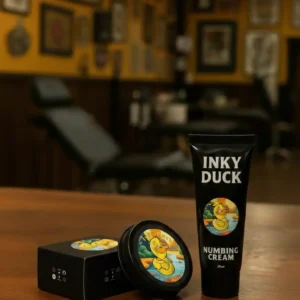
One of the most practical questions people have about tattoo numbing cream is how long it actually works once the session starts. The answer matters for planning, if you know the numbing effect lasts two hours, you can have a realistic conversation with your artist about pacing a longer session, or decide how much of a sleeve you want to attempt in one sitting.
The honest answer is that duration varies depending on several factors, and understanding those factors helps you set realistic expectations before you sit down in the chair.
The Baseline Duration
For most people using a lidocaine-based numbing cream at standard over-the-counter concentrations, typically 4 to 5 percent, the effective numbing window during a tattoo session runs somewhere between one and three hours. That’s a wide range, and where someone falls within it depends on their individual physiology, the placement being tattooed, how the cream was applied, and what happens to the skin during the session itself.
The first 30 to 60 minutes of a session are usually where numbing cream performs best. The lidocaine concentration in the nerve tissue is at its highest right after the wrap comes off and the session begins. From there, effectiveness gradually diminishes as the body processes and clears the anesthetic from the area.
Why the Numbing Effect Fades
The Tattooing Process Increases Blood Flow
This is the main reason numbing cream doesn’t last indefinitely during a session. When the tattoo needle punctures the skin repeatedly, the body responds with vasodilation, the blood vessels in the area widen to increase blood flow as part of the healing response. That increased blood flow accelerates the clearance of lidocaine from the tissue. The same biological process that starts healing the tattoo also starts washing the anesthetic out faster than normal.
The more active the tattooing, heavier shading, dense linework, repeated passes over the same area, the more pronounced the vasodilation and the faster the lidocaine clears. This is why highly worked areas tend to lose their numbing faster than lighter, more straightforward linework.
Individual Metabolism
People metabolize lidocaine at different rates. Some people clear it quickly and notice the numbing effect fading within the first hour. Others maintain effective numbing for two to three hours with the same product and application method. This variation is largely outside anyone’s control, it’s just how individual physiology works.
Age, body composition, circulation, and general metabolic rate all play some role in how fast lidocaine is processed. Younger people with faster metabolisms sometimes find the effect fades more quickly. People with slower circulation may hold the numbing effect longer.
Skin Thickness & Placement
The area being tattooed affects both how well the numbing cream works and how long it lasts. Areas with thinner skin, inner arm, inner wrist, ribcage, neck, tend to numb more effectively and sometimes hold that effect longer because the lidocaine reaches the target nerve depth more easily. Areas with thicker skin, outer thigh, calf, upper arm, require more time to numb in the first place and may see the effect diminish faster once the session starts because there’s more tissue for the blood flow to move through.
Bony areas like the spine, ribs, and shins are worth noting separately. These areas are painful partly because of how close the bone is to the skin surface and the vibration that comes with tattooing over bone. Lidocaine affects pain signals from nerve fibers but does less to reduce the sensation of pressure and vibration, which means bony placements often still feel uncomfortable even when the cream is working well.
What Happens When the Numbing Wears Off
The transition from numbed to un-numbed during a session is usually gradual rather than sudden. Most people notice the sensation increasing progressively rather than flipping from numb to fully painful in one moment. There’s typically a window where the numbing is clearly fading but the area is still more manageable than it would be without any cream at all.
How much this matters depends on how sensitive the placement is and the individual’s pain tolerance. For some people, the partial numbing that remains toward the end of a session is still a significant improvement over no cream at all. For others, especially on high-pain placements, the fading effect is noticeable enough to require a break or a conversation with the artist about pacing.
Can You Re-Apply During a Session
Re-application during a session is something that comes up often, and the answer is more nuanced than a simple yes or no.
On Intact Skin Areas
For tattoos being done in sections, where the artist works on one area while another part of the skin is still untouched, applying numbing cream to the next section while the first is being worked on is a legitimate approach. The skin in the waiting area is still intact, so applying cream and covering it with wrap for the appropriate time works the same way it did before the session started.
Some artists build this into their workflow for longer sessions, particularly for large-scale work done in phases. It’s worth discussing with your artist before the appointment if you’re planning a long session.
On Broken Skin
Applying standard cream formulations to skin that has already been tattooed, where the surface is broken and the barrier is compromised, is generally not recommended. The absorption becomes unpredictable, and the concentration of lidocaine that enters the bloodstream through broken skin increases in ways that are harder to control safely.
Some artists use numbing sprays or gels specifically formulated for application on broken skin during sessions. These are different products from pre-session cream and are designed for this purpose. If re-application on worked skin is something you want to explore, it’s a conversation to have with your artist beforehand, not a decision to make mid-session.
Planning Around the Duration
Knowing that numbing cream typically provides one to three hours of meaningful effect during a session helps with practical planning.
For shorter sessions under two hours, a single well-timed application is usually sufficient to cover the whole session, with the understanding that some fading may occur toward the end.
For longer sessions, talking with your artist about breaking the work into phases, with re-application on unworked areas between phases, is worth doing before you book. Trying to get through a four-hour session on a single pre-application of numbing cream will leave you without meaningful numbing for the second half of the session.
Being realistic about duration helps you get the most out of numbing cream as a tool without being caught off guard when it starts to wear off.