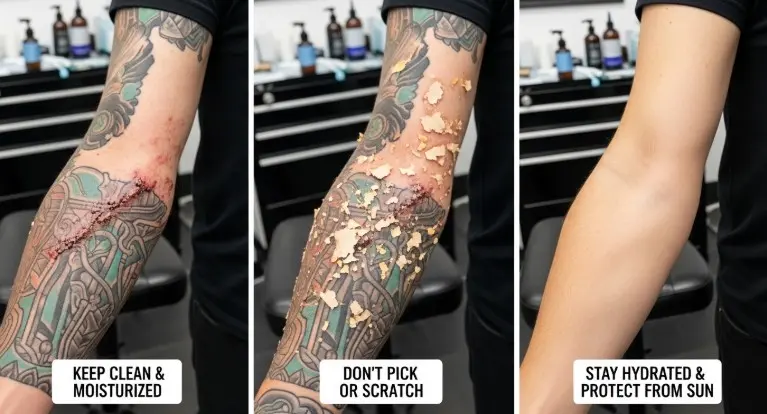
Getting a tattoo is exciting but what happens after the needle stops matters just as much as the tattoo itself. Healing is where your artwork either settles perfectly into your skin or becomes compromised due to poor care. Many first-time clients underestimate this phase, assuming a tattoo is “done” once they leave the studio.
In reality, tattoo healing is a structured biological process that takes weeks, not days. Understanding it properly helps you avoid infections, fading, patchiness, and unnecessary touch-ups.
This expert guide breaks down exactly how long does a tattoo take to heal, what happens at each stage, and how to ensure your tattoo heals clean, sharp, and long-lasting.
Immediate Answer
A tattoo typically takes 2 to 4 weeks to heal on the surface, while full skin recovery can take up to 6 weeks or longer, depending on size, placement, and aftercare.
Quick Facts:
- Surface healing: 7–14 days
- Full healing: 2–6 weeks
- Healing discomfort: Mild itching, tightness, sensitivity
- Cost range: $50–$2,500+ depending on size and complexity
- Key factors: placement, ink depth, shading, aftercare quality
Even when a tattoo looks healed externally after two weeks, the dermis underneath is still repairing and stabilizing ink.
Core Explanation: What Tattoo Healing Really Means
Understanding Tattoo Healing Process
Tattoo healing is the body’s controlled response to skin trauma. The tattoo needle deposits ink into the dermis, triggering a natural immune response.
During healing, the body:
- Repairs damaged skin cells
- Stabilizes ink particles in the dermis
- Forms temporary scabs and flakes
- Rebuilds collagen structure
Who This Is For
- First-time tattoo clients
- People planning large or detailed tattoos
- Clients with sensitive or slow-healing skin
- Anyone concerned about infection or fading
Why Healing Time Varies
Healing speed depends on:
- Body placement (ribs heal slower than arms)
- Tattoo size and shading density
- Skin type and hydration level
- Aftercare discipline
Tattoo Design Insights (Healing Impact Factors)
Popular Tattoo Types and Healing Differences
- Minimalist fine-line tattoos → fastest healing
- Traditional tattoos → moderate healing
- Black & grey realism → slower due to shading layers
- Color realism → slower due to pigment saturation
- Heavy blackout tattoos → longest healing process
Style Healing Behavior
- Fine-line: minimal trauma, fast recovery
- Traditional: light scabbing, stable healing
- Realism: layered skin trauma, longer recovery
- Neo-traditional: moderate healing complexity
Placement Healing Sensitivity
- Forearm → fast healing, high airflow
- Upper arm → stable and consistent healing
- Ribcage → slowest due to movement + sensitivity
- Ankle → slower due to friction
- Thigh → moderate healing, large surface area
People Also Ask
- Does a tattoo hurt while healing?
- How much does a tattoo cost?
- How long does a tattoo last?
- Is it safe to get a tattoo?
- Can tattoos be removed or covered up?
- Why is my tattoo peeling?
- What slows down tattoo healing?
Tattoo Healing Process
Step 1: Initial Healing (Days 1–3)
- Skin is open and sensitive
- Plasma and ink leakage is normal
- Bandage must remain on as instructed
Step 2: Scabbing Phase (Days 4–10)
- Light scabs begin forming
- Itching and dryness increase
- Skin feels tight and sensitive
Step 3: Peeling Stage (Days 10–21)
- Skin flakes like sunburn
- Tattoo may look dull temporarily
- Do NOT pick or scratch
Step 4: Surface Healing (Weeks 3–4)
- Outer skin appears healed
- Internal healing continues
- Color begins settling
Step 5: Full Healing (Up to 6 Weeks)
- Deep skin layers fully repaired
- Ink stabilizes permanently
How to Prepare for Faster Healing
- Stay hydrated before appointment
- Avoid alcohol 24–48 hours prior
- Eat a proper meal before session
- Choose experienced tattoo artists
Tattoo Aftercare Steps
- Wash gently with fragrance-free soap
- Apply thin layer of healing ointment
- Avoid sun exposure and swimming
- Wear loose clothing over tattoo
- Never scratch or peel scabs
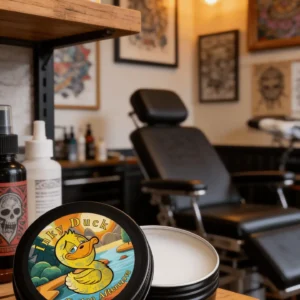
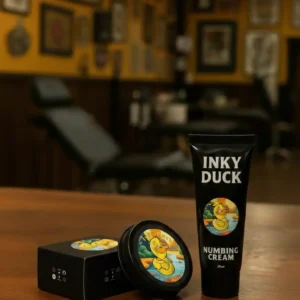
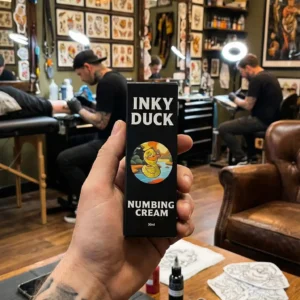
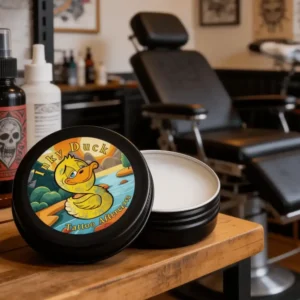
For better comfort during healing, many clients use Inky Duck Numbing Cream before sessions to reduce initial sensitivity, and support healing-friendly tattoo sessions overall.
To maintain proper recovery hygiene, professionals often recommend Inky Duck Comfort + Aftercare Bundle, which supports hydration and reduces irritation during healing stages.
Comparison Table
Tattoo Styles vs Healing Time
| Style | Healing Time | Pain Level | Notes |
|---|---|---|---|
| Minimalist | Fast | Low | Quick surface recovery |
| Traditional | Moderate | Moderate | Balanced healing |
| Realism | Slow | High | Layered ink saturation |
| Black & Grey | Moderate–Slow | Moderate | Shading affects healing |
| Color Heavy | Slowest | High | Multiple pigment layers |
Placement vs Healing Time
| Area | Healing Speed | Notes |
|---|---|---|
| Upper arm | Fast | Low movement |
| Forearm | Fast | Good airflow |
| Rib area | Slow | Constant movement |
| Ankle | Slow | Friction from footwear |
| Thigh | Moderate | Stable but large area |
Temporary vs Permanent Tattoos
| Type | Duration | Healing | Commitment |
|---|---|---|---|
| Temporary | Days–Weeks | None | Low |
| Semi-permanent | Weeks–Months | Minimal | Medium |
| Permanent tattoo | Lifetime | 2–6 weeks | High |
Safety & Aftercare
Healing Process Overview
- Surface healing: 7–14 days
- Full recovery: 4–6 weeks
- Internal repair continues even after visible healing
Infection Risks
- Dirty hands touching fresh tattoo
- Poor studio hygiene
- Swimming too early
- Over-moisturizing or blocked airflow
Do’s and Don’ts
Do:
- Follow aftercare instructions strictly
- Keep tattoo clean and dry
- Use sunscreen after healing
Don’t:
- Pick or scratch scabs
- Expose fresh tattoo to sunlight
- Wear tight or dirty clothing
Long-Term Care
- Moisturize regularly
- Protect from UV exposure
- Avoid repeated friction on tattooed skin
Cost Breakdown Section
Average Tattoo Pricing
- Small tattoos: $50–$200
- Medium tattoos: $200–$800
- Large tattoos: $800–$2,500+
- Sleeve projects: $3,000–$10,000+
Factors Affecting Cost
- Artist experience and reputation
- Tattoo size and detail complexity
- Color vs black & grey work
- Placement difficulty
- Number of sessions required
FAQs
How long does a tattoo take to heal?
A tattoo typically takes 2–4 weeks for surface healing and up to 6 weeks for full recovery.
Does a tattoo hurt while healing?
Not usually, but mild itching, tightness, and sensitivity are common.
Why is my tattoo peeling?
Peeling is a normal part of skin regeneration during healing.
Can I speed up tattoo healing?
Yes, proper aftercare, hydration, and hygiene can improve healing speed.
Is it safe to get a tattoo?
Yes, if done in a licensed and hygienic studio.
Can tattoos be removed later?
Yes, but laser removal is expensive, painful, and not always fully effective.
What slows down tattoo healing?
Poor aftercare, infection, friction, and sun exposure.
What is the biggest mistake during healing?
Picking scabs or ignoring aftercare instructions.
Conclusion
Understanding how long does a tattoo take to heal is essential for anyone getting inked. While the surface may appear healed within two weeks, true recovery continues beneath the skin for up to six weeks.
Proper aftercare, smart placement choices, and experienced tattoo artists all play a critical role in ensuring your tattoo heals cleanly and retains its quality over time. Tattoo healing is not just a waiting period, it is an active process that determines how your final artwork will look for life.
Patience, discipline, and correct care are what turn a fresh tattoo into a long-lasting piece of body art.
Price Disclaimer
All tattoo prices mentioned in this article are general industry estimates only and may vary depending on design complexity, artist experience, studio location, and individual requirements.