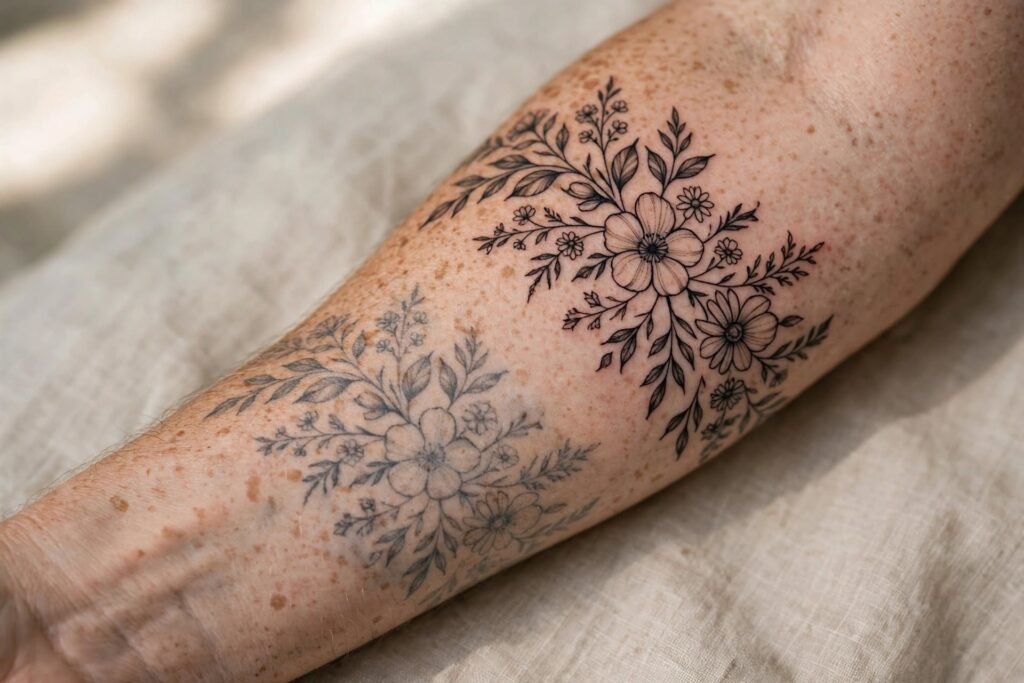
Watching a tattoo fade faster than expected is frustrating, especially when you spent good money on it and followed what you thought was a reasonable aftercare routine. The ink looks washed out, colors have lost their punch, or lines that were crisp when you left the studio now look softer than they should at this stage. Something went wrong somewhere, and figuring out what helps you understand both what happened and what to do differently going forward.
Fast fading is almost never caused by one single thing. It’s usually a combination of factors, some related to aftercare, some to the healing process, some to external conditions, and occasionally some to how the tattoo was applied in the first place. Going through each one gives you a clearer picture of where the problem started.
Aftercare Failures During the Healing Window
The healing period, roughly the first two to four weeks, is when a tattoo is most vulnerable to factors that cause fading. What happens during this window has a direct and lasting effect on how the ink looks once the skin has fully settled.
Insufficient Moisturizing
Dry skin during healing leads to heavy scabbing. Heavy scabbing sits over the ink and pulls at it when it eventually lifts. When thick scabs come off, they take ink with them, leaving patchy areas, faded spots, and uneven color distribution in the healed result. This is one of the most common causes of premature fading and one of the most preventable.
Keeping the tattoo consistently moisturized from day one of aftercare prevents the heavy scab formation that causes this. A thin layer of aftercare balm applied two to three times daily throughout the healing period maintains the skin hydration the repair process needs and keeps shedding gentle rather than disruptive.
Picking & Scratching During Healing
Pulling off peeling skin before it’s ready to come off is one of the most direct ways to remove ink from a healing tattoo. The outer layer of skin sheds during healing and takes a small amount of surface ink with it, that’s normal and expected. Pulling it off manually before it detaches on its own accelerates that process and removes ink that wasn’t ready to go yet.
Scratching during the itching phase causes similar damage. Fingernails dragging across a healing tattoo create friction that disturbs the surface, breaks off peeling skin prematurely, and can introduce bacteria that complicate healing further. Both habits have a visible impact on how the tattoo looks once healed.
Sun Exposure During Healing
UV exposure on a healing tattoo causes fading that cannot be reversed. The skin during healing is more permeable and more reactive than fully healed skin, which means UV radiation affects the ink more aggressively during this period than it would after the skin has closed.
Even limited sun exposure during the first few weeks, a short walk outside, a drive with the tattoo near a window, adds up. The UV damage to ink pigment is cumulative and permanent. Protecting the tattoo from direct sun exposure throughout the entire healing period is one of the most impactful things you can do for long-term ink retention.
Prolonged Water Exposure
Soaking a healing tattoo in water, through baths, swimming, or hot tub use, causes the outer layers of skin to soften and swell in a way that allows ink to leach out before it has fully settled into the dermis. Even a single swimming session during the early healing period can cause noticeable ink loss.
Showers are fine when handled correctly, but prolonged exposure to running water directed at the tattoo, or standing in a steamy shower for extended periods, contributes to the same softening effect on a lesser scale.
The Role of Placement in How Ink Holds
Some body areas simply hold ink less reliably than others, and fading that seems fast on certain placements is partly explained by the nature of the skin in those areas.
High-Movement Areas
Hands, fingers, feet, inner elbows, and the backs of knees are all areas where the skin flexes constantly. That constant movement accelerates how quickly ink migrates and breaks down in the upper dermis. Tattoos in these areas fade faster as a baseline compared to placements on less mobile areas, and they typically require more frequent touch-ups to maintain their appearance.
Areas With Thinner Skin
Thinner skin areas, inner arm, inner wrist, behind the ear, don’t hold ink as deeply or as consistently as areas with more substantial tissue. The ink has less dermis to anchor into, and fading happens faster over time.
Palms & Soles
Palms and the soles of feet are particularly notorious for fast fading. The skin in these areas regenerates rapidly, much faster than elsewhere on the body, and as the skin turns over, it takes ink with it. Tattoos in these areas often need touch-ups within months of the initial session.
Issues With How the Tattoo Was Applied
Aftercare and placement don’t tell the whole story. Sometimes fading that seems premature points back to how the tattoo was done in the first place.
Ink Deposited Too Shallow
If the tattoo needle was set too shallow during the session, the ink was deposited in the epidermis rather than the dermis. The epidermis turns over continuously, it’s designed to shed. Ink in the epidermis fades quickly as that skin sheds, sometimes within weeks of the session. This is an application error rather than an aftercare failure, and no amount of careful healing reverses it. A touch-up with ink deposited at the correct depth is the solution.
Overworked Skin
Skin that was worked too aggressively during a session, too many passes, too much pressure, too much trauma to the tissue, can reject ink during healing. The body’s response to excessive trauma is an aggressive healing reaction that pushes ink out as part of clearing what it perceives as debris. The result is patchy, faded areas that appear as the skin heals.
Ink Quality
Not all tattoo inks are formulated to the same standard. Lower quality inks fade faster than professional-grade pigments, regardless of how well the tattoo heals. This is largely in the hands of the artist in terms of what products they stock, but it’s worth asking about if you’re choosing a studio for a significant piece.
Ongoing Sun Exposure After Healing
UV damage to tattoo ink doesn’t stop being a concern once the tattoo has healed. It’s an ongoing factor that accumulates over time. Tattoos on consistently sun-exposed areas, forearms, hands, neck, calves, fade faster than tattoos kept out of direct UV exposure, and the difference becomes very visible over years.
Applying broad-spectrum sunscreen to healed tattoos whenever they’ll be exposed to sunlight is the most effective ongoing protection against UV-driven fading. SPF 30 or higher provides meaningful protection, and making it a consistent habit rather than an occasional measure is what actually makes a difference over time.
What to Do About a Faded Tattoo
If the fading happened during healing due to aftercare issues, the first step is getting through the rest of the healing period correctly before assessing what needs to be fixed. Tattoos continue to settle for months after the surface heals, and what looks patchy at six weeks can look noticeably better at six months.
Once the tattoo is fully healed, typically two to six months for the dermal layers, a touch-up with the original artist addresses areas that healed poorly. Most artists include touch-ups in their aftercare policy for work that didn’t hold as expected, particularly when the fading is clearly related to how the ink was applied rather than aftercare neglect.
Going forward, consistent moisturizing and sun protection are the two habits that have the most impact on how long a tattoo holds its appearance. Neither is complicated, and both make a real visible difference over the years.