Most tattoo healing issues are minor and sort themselves out with consistent aftercare. A little extra redness, some itching, peeling that goes on longer than expected, these are normal parts of the process and don’t require anything beyond keeping up with cleaning and moisturizing. But occasionally something more serious develops, and knowing the difference between normal healing and an actual infection is information worth having before you need it.
Tattoo infections are not as common as people fear, but they do happen. When they do, getting medical attention early makes a significant difference in the outcome, both for your health and for how the tattoo heals.
Why Tattoos Can Get Infected
A fresh tattoo is an open wound. The needle has punctured the skin thousands of times across the tattooed area, creating a surface that is actively vulnerable to bacteria for the first several days of healing. Under normal circumstances, proper aftercare, keeping the tattoo clean, moisturized, and protected, keeps bacterial contamination from taking hold.
Infections develop when bacteria get into the wound and the body’s local immune response isn’t enough to clear them. This can happen through contaminated equipment at the studio, though this is rare in licensed studios following proper sterilization protocols. More commonly it happens during the healing period at home, touching the tattoo with unwashed hands, exposing it to dirty water, letting it rub against contaminated surfaces, or using products that introduce bacteria to the wound.
Knowing the signs of infection means you can catch it early, which is when it’s easiest to treat.
Normal Healing vs Early Infection — The Distinction That Matters Most
The early signs of infection overlap with normal healing responses, which is what makes identifying an infection in its earliest stages genuinely tricky. The key is in the direction of the symptoms, are they getting better or worse as the days progress?
What Normal Healing Looks Like
In the first 24 to 72 hours, a fresh tattoo is expected to be red, swollen, and warm to the touch. It may weep a mix of plasma, blood, and excess ink. There may be some tenderness and mild throbbing. All of this is the inflammatory response doing its job, and it should begin improving after the first two to three days.
By days three to five, redness and swelling should be noticeably reduced. The tattoo starts to itch and peel. The discomfort transitions from soreness to itching. The skin begins to look and feel more settled.
When the Direction Changes
An infection typically presents as symptoms that get worse instead of better after the first few days. Redness that spreads beyond the tattoo boundary, swelling that increases rather than decreasing, and pain that intensifies after day three are all signals that something beyond normal healing is happening.
This directional shift is the most reliable indicator. If things are generally improving day by day, normal healing is the likely explanation. If things are getting worse, particularly after the first three days, that warrants closer attention.
Specific Signs of a Tattoo Infection
Expanding Redness
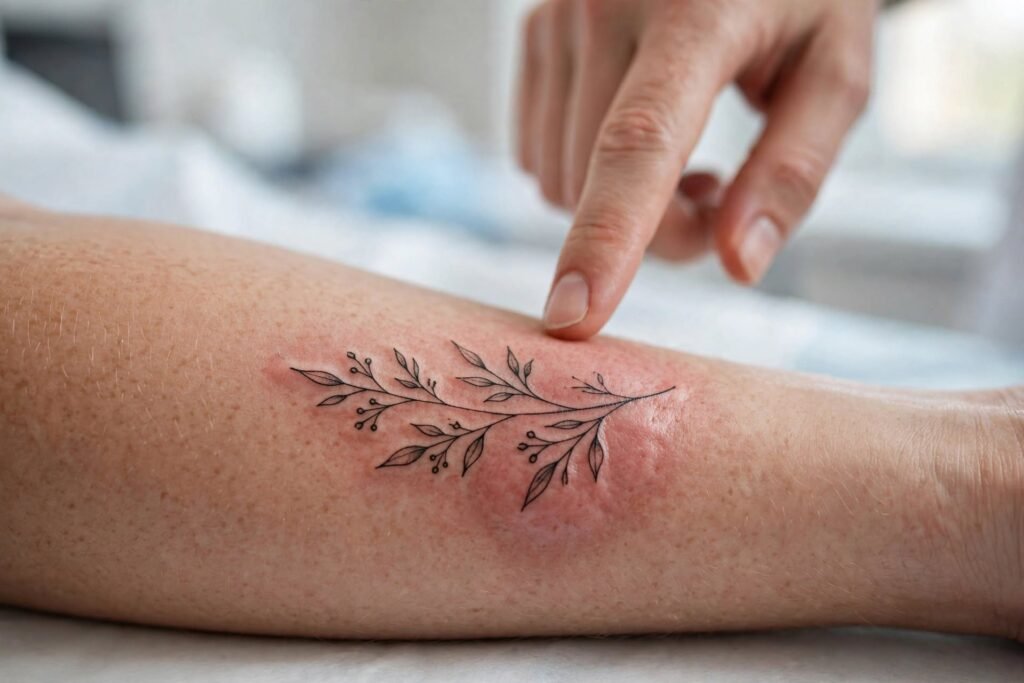
Some redness around a fresh tattoo is expected. Redness that spreads outward from the tattoo in streaks or as an expanding area of inflamed skin is not. Spreading redness, particularly red streaks moving away from the tattoo toward the body, is a serious sign that infection is progressing and needs immediate medical attention. This can indicate that bacteria are spreading through the lymphatic system, which requires prompt treatment.
Discharge With Color or Odor
A healing tattoo may produce clear or slightly yellowish plasma in the first day or two. This is normal and is part of the wound weeping process. Discharge that is thick, opaque, yellow, green, or has any noticeable odor is not normal plasma, it is a sign of bacterial activity and infection. If the tattoo is producing this type of discharge beyond the first 48 hours, medical evaluation is needed.
Increasing Pain After Day Three
The soreness of a fresh tattoo should reduce progressively after the first couple of days. Pain that gets worse rather than better after day three, especially if it’s accompanied by other symptoms like redness and swelling, suggests infection rather than normal healing. A tattoo that becomes more painful as days pass rather than less painful is not healing correctly.
Fever & Systemic Symptoms
A fever developing after getting a tattoo is a sign that the body is mounting a systemic immune response to something. Combined with a tattoo that looks inflamed and is producing abnormal discharge, fever indicates that infection has moved beyond a local skin issue. This level of infection needs medical attention promptly, it is not something to manage with aftercare products and hope it resolves.
Swollen lymph nodes near the tattoo, in the armpit for arm tattoos, in the groin for leg tattoos, can accompany a more significant infection and are worth noting when assessing symptoms.
Prolonged Inflammation Without Improvement
Most of the initial redness and swelling from a fresh tattoo clears up within a week. Inflammation that persists beyond that window without any improvement, or that fluctuates between slightly better and worse rather than consistently improving, can indicate a low-grade infection or another issue that needs evaluation.
Aftercare’s Role in Prevention
The majority of tattoo infections are preventable with consistent, correct aftercare. Washing the tattoo twice daily with mild fragrance-free soap, applying a clean aftercare product, and keeping the tattoo away from dirty water and contaminated surfaces covers the basics of infection prevention.
Product choice matters here too. Using aftercare products free from unnecessary additives reduces the chance of introducing irritants to the wound. Brands like Inky Duck formulate their tattoo aftercare balm specifically for healing skin, without fragrance, alcohol, or synthetic additives that could cause reactions or create conditions where bacterial issues develop. Clean, simple ingredients applied to a clean wound are the foundation of infection prevention.
Keeping hands washed before touching the tattoo is one of the most basic but most overlooked steps. Hands carry bacteria constantly, and every unnecessary touch transfers that to an open wound.
When to Go to the Doctor — The Practical Answer
If you notice spreading redness, colored or odorous discharge, worsening pain after day three, fever, or swollen lymph nodes near the tattoo, go to the doctor. Do not wait to see if it improves on its own. Tattoo infections respond well to treatment when caught early, typically with a course of antibiotics. Left untreated, they can progress to more serious conditions and cause permanent damage to the skin and the tattoo.
If you’re unsure whether what you’re seeing is normal healing or something more serious, err on the side of getting it checked. A doctor telling you it’s just normal healing is a much better outcome than waiting too long on something that needed treatment.
Minor redness and tenderness in the first few days, keep up with aftercare and monitor it. Symptoms getting worse after day three, spreading, or accompanied by systemic signs, see a doctor. That’s the framework that covers most situations.