The tattoo aftercare market has expanded a lot over the past decade. Where there used to be a handful of options, there are now shelves full of balms, lotions, ointments, and sprays all claiming to be the best thing for healing ink. Some lean heavily into natural ingredients. Others are built around synthetic compounds. And plenty sit somewhere in between.
The question people keep coming back to is which approach is actually safer for healing skin. It’s a fair thing to wonder about, especially when you’re applying something multiple times a day to what is essentially an open wound.
What “Natural” Actually Means in Skincare
Before getting into the comparison, it’s worth being clear about what natural actually means in this context, because the term gets used loosely. In the skincare and aftercare space, natural generally refers to ingredients derived from plants, animals, or minerals with minimal processing. Things like shea butter, coconut oil, beeswax, calendula extract, and jojoba oil fall into this category.
Natural does not automatically mean safe, and it doesn’t mean the ingredient has been tested for effectiveness on healing tattoos specifically. Some plant-derived ingredients cause reactions in certain people. Some essential oils, which are entirely natural, are too harsh for broken skin. The origin of an ingredient matters less than how it behaves on skin and whether it’s appropriate for the intended use.
That said, the general principle behind natural formulations, fewer synthetic additives, simpler ingredient lists, lower irritation potential, is worth paying attention to when choosing aftercare for a healing tattoo.
What Chemical or Synthetic Ingredients Bring to the Table
Synthetic ingredients in skincare and aftercare products serve specific functions. Preservatives extend shelf life. Emulsifiers hold formulas together. Certain synthetic moisturizers deliver hydration in a controlled, consistent way. Some of these work perfectly well and have strong safety records.
The issue in tattoo aftercare is not that synthetic ingredients exist, it’s that some of the most commonly used ones are problematic for broken skin. Fragrance, which is almost always synthetic, is one of the most common skin irritants in personal care products. Certain preservatives like parabens have raised concerns around skin sensitivity. Alcohol-based ingredients dry skin out at exactly the stage when it needs moisture most.
A product loaded with synthetic additives that serve the formula’s shelf stability or scent profile rather than the skin’s healing needs is not well-suited for tattoo aftercare, regardless of how well those ingredients might work in other contexts.
Where the Real Difference Shows Up
When you put a natural-leaning balm next to a synthetic-heavy product and look at how each performs on healing tattooed skin, a few differences tend to show up consistently.
Irritation & Allergic Response
Healing tattoo skin is significantly more reactive than intact skin. The barrier is compromised, which means things that wouldn’t cause a reaction on normal skin can absolutely cause one on a fresh tattoo. Fragrance, artificial dyes, and certain synthetic preservatives are the most common culprits.
Natural formulations that skip these ingredients tend to produce fewer reactions on healing skin. That’s not a guarantee, someone can be allergic to shea butter or react to a specific botanical extract, but the overall irritation risk is generally lower when the ingredient list is short and plant-based.
Moisture Delivery
Both natural and synthetic moisturizing ingredients can hydrate skin effectively. The difference is often in how they interact with broken skin. Natural oils and butters like jojoba and shea tend to work with the skin’s own lipid barrier rather than just coating the surface. They absorb at a rate that supports the skin’s repair process without creating a seal that blocks airflow.
Some synthetic moisturizers do the same thing well. Others, particularly heavy petroleum-based ones, create an occlusive layer that traps moisture but also traps bacteria and slows the skin’s ability to regulate itself. For healing tattoos, breathability matters alongside hydration.
Ingredient Transparency
One practical advantage of natural formulations is that the ingredient lists tend to be shorter and more readable. When you’re trying to figure out if a product is safe for healing skin, a list of ten recognizable plant-derived ingredients is easier to evaluate than a list of forty compounds, half of which require a chemistry background to assess.
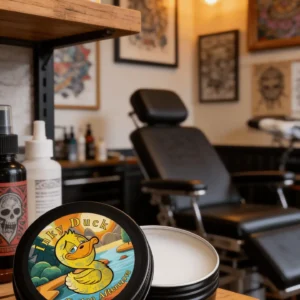
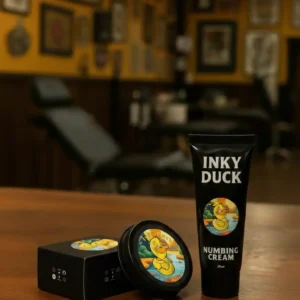
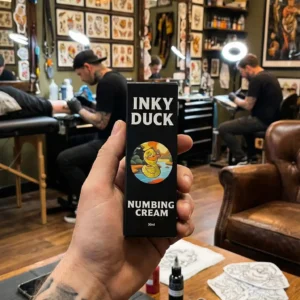
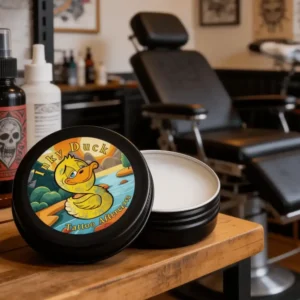
Brands that build their products around natural ingredients, like Inky Duck, whose tattoo aftercare balm focuses on skin-safe, natural components without synthetic fragrance or harsh additives, make it easier for people to know exactly what they’re putting on their skin. That transparency is genuinely useful when you’re trying to avoid anything that might interfere with healing.
The Middle Ground Most Good Products Occupy
Framing this as a strict natural versus chemical debate misses the reality of how most well-made aftercare products are actually formulated. The best options on the market tend to use natural ingredients as their core, the things doing the actual moisturizing and skin-supporting work, while using minimal, well-tested synthetic ingredients where necessary for stability and preservation.
A balm that uses shea butter, beeswax, and plant oils as its base but includes a small amount of a synthetic preservative to prevent bacterial growth in the formula is not a compromised product. It’s a practical one. The goal is a formula where every ingredient serves the skin, not the manufacturing process.
What to watch for is the inverse: products where the synthetic components dominate and the beneficial natural ingredients are present in token amounts buried at the bottom of the label.
How to Make the Call for Your Own Skin
If you have a history of sensitive skin or known allergies to specific ingredients, a natural-leaning balm with a short, readable ingredient list is the lower-risk starting point. Patch testing on intact skin before applying anything to a fresh tattoo is a reasonable precaution if you’re uncertain.
If your skin generally tolerates products well, the most important filter is still ingredient function rather than origin. Look for a balm that moisturizes without occluding, soothes without irritating, and keeps the ingredient list free of fragrance and alcohol regardless of where the other components come from.
The natural versus chemical framing is a useful starting point, but the real question is simpler than that: does every ingredient in this product serve healing skin? If the answer is yes, it’s worth using. If the label is full of things that serve shelf life, scent, or marketing appeal instead, it’s worth putting back on the shelf.