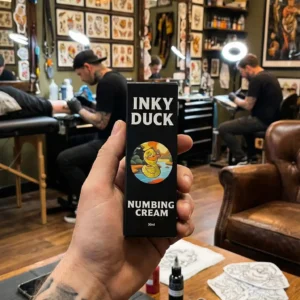
Getting a tattoo comes with sensation. That is part of the process. But for many people, the level of discomfort determines how long they can sit, how still they can stay, and how much work gets done in a single session. A tattoo numbing cream offers a way to reduce that discomfort so the experience stays manageable from start to finish.
This guide covers how tattoo numbing cream works, who benefits from it, and how to use a painless tattoo numbing cream safely.
How Tattoo Numbing Cream Reduces Discomfort
A tattoo numbing cream contains a topical anesthetic, most commonly lidocaine, that temporarily blocks nerve signals at the surface of the skin. When the cream is applied and allowed to absorb, the treated area becomes less responsive to the sensation of the needle.
The effect does not eliminate all feeling. It reduces the sharpness and intensity so the experience stays within a comfortable range for most people. A 4% lidocaine formula provides the strongest over-the-counter relief available without a prescription.
How It Affects the Tattooing Process
Tattoo numbing cream works at the surface level, which means it does not affect the deeper layers of skin where the ink is deposited. The artist’s ability to work and the quality of the result are not compromised when the product is applied and removed correctly.
Who Should Consider a Painless Tattoo Numbing Cream
A painless tattoo numbing cream is not limited to people with low pain tolerance. Here are some situations where it makes a difference.
First-Time Clients
Anyone who does not know what to expect and wants to ease into the process.
Sensitive Placement Areas
Anyone getting work in a high-sensitivity area like the ribs, feet, inner arms, hands, or neck.
Long Sessions
Clients sitting for hours where fatigue and discomfort build over time.
Touch-Ups and Additions
People returning for work in areas that were already sensitive during the first session.
Tattoo numbing cream is a practical tool, not a shortcut. It lets the client manage their comfort level so the focus stays on the work.
How to Use Tattoo Numbing Cream Before a Session
Wash the area with mild soap and dry it completely before application.
Application Steps
Apply a thick, even layer of the tattoo numbing cream over the entire area to be tattooed.
Cover with plastic wrap to help the cream absorb and prevent it from drying out.
Wait 30 to 60 minutes for the cream to take full effect. Follow the timing on the product label.
Remove the wrap and wipe the skin clean before the session starts. The artist needs a residue-free surface to apply the stencil and begin.
A painless tattoo numbing cream works best when applied correctly and given enough time to absorb. Rushing the process or applying too thin of a layer reduces the effect.
What to Look for in a Tattoo Numbing Cream
Strength and Formula
4% lidocaine for the strongest over-the-counter numbing relief.
Non-greasy texture that does not interfere with stencil placement or ink application.
No fragrance, no dyes, and no alcohol in the formula.
Supporting Ingredients
Botanical extracts that calm redness and cool the surface.
Hydrating components that keep the skin conditioned before the session.
Not all numbing creams on the market are formulated with tattooing in mind. General-purpose pain relief creams may contain ingredients that irritate open skin or interfere with the healing process. A tattoo numbing cream built for studio use avoids these issues.
How Long Does a Painless Tattoo Numbing Cream Last
Most 4% lidocaine creams provide one to two hours of relief after full absorption. The actual duration varies based on skin type, the size of the treated area, and individual response.
Reapplication During Long Sessions
For sessions that run longer than the numbing window, some artists allow a reapplication during a scheduled break. Confirm this with your artist before the session so you can plan accordingly.
What to Expect as the Effect Fades
As the effect fades, sensation returns gradually. This is a normal part of the process and does not mean the product failed. It means the window has run its course and the lidocaine is clearing from the surface.
Safety and Precautions for Tattoo Numbing Cream
Before Application
Apply only to intact skin. Do not use on broken, cut, or already irritated areas.
Test a small patch of skin before full application if you are using the product for the first time.
If you have a known sensitivity to lidocaine, consult a medical professional before use.
During Application
Follow the product instructions for timing and amount.
Do not exceed the recommended application area. Applying over too large a surface at once increases the chance of an unwanted reaction.
A painless tattoo numbing cream is safe when used as directed. The key is following the application steps, respecting the timing, and making sure the product is fully removed before the session begins.
Why Tattoo Numbing Cream Belongs in Your Prep Routine
Discomfort does not have to control the session. A tattoo numbing cream gives you a way to manage the experience so you can focus on the result instead of counting the minutes. For clients sitting through long appointments, working on sensitive areas, or preparing for their first session, a painless tattoo numbing cream makes the process more controlled and more productive for everyone involved.