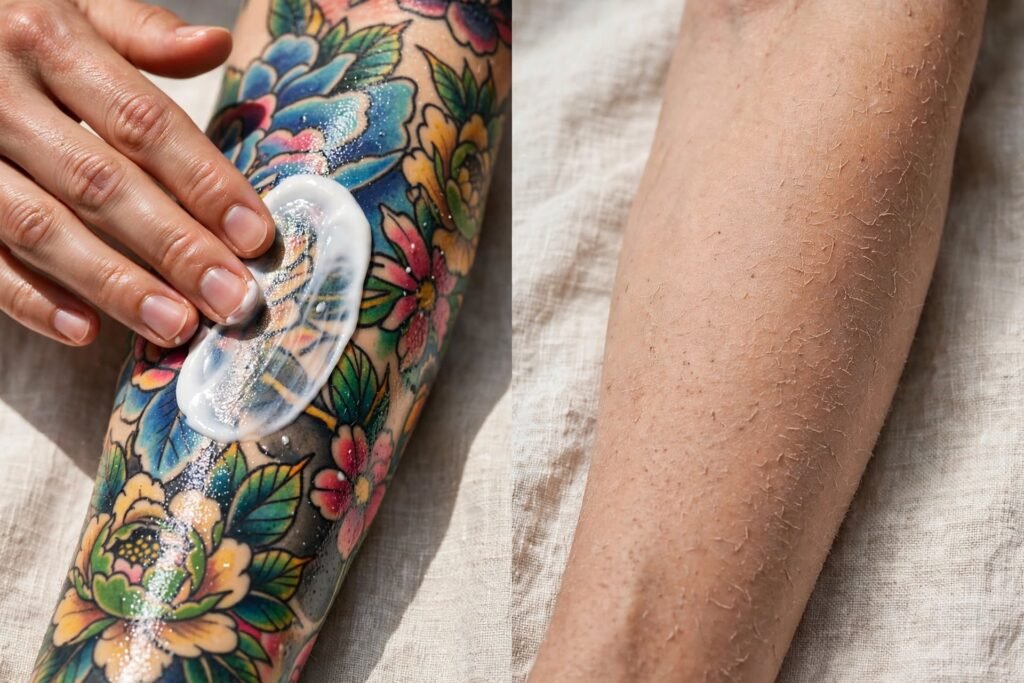
The idea that tattooed skin needs special attention long after healing is done doesn’t always land intuitively. The tattoo looks healed, the skin feels normal, everything seems fine, why would moisturizing matter more than it does for the rest of your skin?
The answer lies in what happens to skin at the structural level when it’s tattooed, and how those changes affect how the skin functions and ages over time.
What Tattooing Does to the Skin Permanently
Getting a tattoo changes the skin in ways that extend beyond the healing period. The needle creates thousands of punctures through the epidermis and deposits ink into the dermis. The body heals the surface damage, but the dermal structure doesn’t return to exactly what it was before.
The ink particles in the dermis are encased in scar tissue, this is part of what keeps them from being cleared by the immune system. That scar tissue, even when it’s minimal and below the threshold of being visible, changes the mechanical properties of the dermis slightly. It affects elasticity, the way the skin responds to movement, and how well the skin layers work together.
The epidermis over a tattoo also behaves differently from untattooed skin in some people. The skin barrier function in tattooed areas can be subtly altered by the healing process, affecting how well the skin holds onto moisture over time.
The Moisture Retention Difference
Healthy skin has a barrier layer, the stratum corneum, that regulates water loss through the skin surface. This barrier keeps moisture in and prevents the skin from drying out faster than the body can replenish it.
Research into tattooed skin has found that the barrier function in tattooed areas can be less effective than in adjacent untattooed skin, even after the tattoo has healed. This means tattooed skin loses moisture through the surface at a slightly higher rate than surrounding skin, which translates to a tendency toward dryness that untattooed skin in the same area doesn’t have to the same degree.
The practical effect of this is that tattooed skin benefits more from external moisturizing than untattooed skin does, because it’s losing moisture faster and has a reduced capacity to hold onto it from within.
How This Affects Tattoo Appearance
The moisture content of the skin directly affects how the tattoo looks from the outside. The ink is in the dermis, but what you see when you look at a tattoo is the ink through the layers of skin above it. Those skin layers act as a lens, their condition determines how clearly and accurately the ink below is displayed.
Well-hydrated skin has a quality that lets ink read with more definition and apparent depth. Dry skin flattens that quality. The same tattoo on the same person looks noticeably different when the skin is well-moisturized versus when it’s been neglected for a period. The ink hasn’t changed, the skin presenting it has.
This is why tattoos on consistently well-maintained skin look better at five and ten years than tattoos on neglected skin, even when the amount of UV exposure and other aging factors have been similar. The skin condition is doing a significant portion of the visual work.
What Well-Hydrated Tattooed Skin Looks Like in Practice
The difference between consistently moisturized tattooed skin and neglected tattooed skin shows up over time rather than immediately. In the short term, the difference is visible in how the tattoo looks after a period of consistent moisturizing versus how it looks after a week of no product, smoother surface, clearer ink definition, less of that flat, washed-out appearance.
Over years, the cumulative difference is more significant. Skin that has been consistently moisturized maintains better elasticity, holds onto its barrier function more effectively, and develops fewer of the surface texture changes that make old tattoos look rough rather than just aged.
How Much Moisturizing Is Actually Needed
The good news is that maintaining tattooed skin doesn’t require an intensive routine. Once a day is enough for most people in most climates. Apply a fragrance-free moisturizer or tattoo-specific balm to tattooed areas after showering, when the skin is clean and slightly damp. That single daily application, maintained consistently, covers most of what tattooed skin needs from an external hydration standpoint.
People in dry climates or with naturally dry skin may find twice daily is more effective. Cold weather and centrally heated or air-conditioned environments pull moisture from skin faster than temperate, humid conditions, adjusting frequency seasonally makes sense if you notice the skin feeling tighter or looking drier during certain times of year.
The Internal Side of Skin Hydration
External moisturizing handles the topical side of skin hydration. The internal side, systemic hydration from adequate water intake, supports skin function from within in ways that topical products can’t replace.
Skin is one of the last tissues to receive water when the body is running low. Chronically dehydrated people show skin changes, reduced elasticity, slower barrier repair, more pronounced surface dryness, that affect how tattooed areas look and function over time.
Consistent daily water intake is not a dramatic skincare intervention, but it’s part of the picture for tattooed skin the same way it is for skin health generally. Combining adequate internal hydration with consistent external moisturizing gives tattooed skin the best overall conditions for maintaining its appearance and function long-term.
Putting It Together
Tattooed skin loses moisture faster than untattooed skin and benefits more from consistent external hydration as a result. The visual payoff, ink that reads more clearly and skin that ages better, accumulates over time with consistent daily moisturizing. It’s one of the lower-effort habits with one of the more visible long-term returns for anyone who cares about how their tattoos hold up over the years.