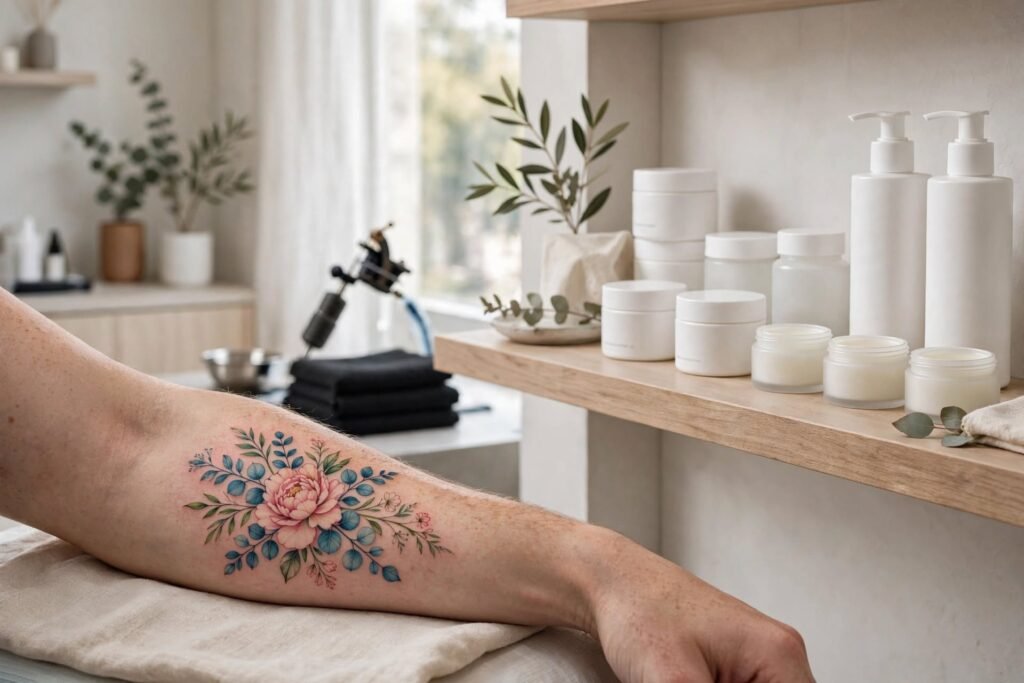
Most tattoo studios put significant thought into the equipment they use, the inks they stock, and the environment they create for clients. Aftercare products often get less attention, a handout sheet, maybe a small sample, and a recommendation to pick something up at the drugstore. It’s a gap that makes less sense the more you think about it, because what happens to the tattoo after the client walks out the door directly affects how the work looks when it’s healed.
Stocking aftercare in-shop is not just a retail opportunity. It’s a natural extension of what a studio already does, taking care of the work from start to finish.
The Problem With Sending Clients to Figure It Out Themselves
When a client leaves the studio without a clear aftercare product in hand, they’re left to make a decision about what to put on a fresh tattoo without the knowledge to make that decision well. Some will find a reasonable option. Others will grab whatever is on the pharmacy shelf, apply something with fragrance or alcohol, and end up with a healing experience that’s harder than it needed to be.
The consequences of poor aftercare choices land on the tattoo, which means they also land on the artist’s work. Heavy scabbing from inadequate moisturizing pulls ink. Fragrance reactions cause inflammation that slows healing. Petroleum-based products trap bacteria and cause complications. None of these outcomes reflect what the artist put into the piece, but they affect how it looks when healed.
Studios that stock the right aftercare products remove this variable. The client leaves with what they need, knows how to use it because the artist told them, and has a better healing experience as a result.
It Establishes the Studio as the Authority on Healing
One of the less obvious benefits of stocking aftercare is what it signals to clients about the studio’s level of care. A studio that hands a client a quality aftercare balm and walks them through how to use it is communicating something important, that the relationship between artist and client doesn’t end when the needle stops.
Clients notice this. It differentiates a studio that thinks about the full experience from one that treats aftercare as someone else’s problem. For clients who are new to tattooing especially, having a clear recommendation from a trusted source rather than being sent to sort it out themselves creates a more confident, positive experience overall.
That confidence in the studio translates into reviews, referrals, and return business. People talk about where they got their tattoo, and part of what they talk about is how the studio made them feel taken care of.
Better Healing Outcomes Protect the Artist’s Work
Every tattoo that heals badly is a piece of work that didn’t reach its full potential in the healed result. For artists who take pride in what they create, this matters beyond the business case. A piece that was executed well but healed poorly because of inadequate aftercare is still going to look like it didn’t heal well, and in the age of healed photo sharing, that matters.
Artists who stock quality aftercare products, and who actively recommend them to clients before they leave, see better healed results across their portfolio. Cleaner healing means fewer light spots, better color retention, crisper lines. It means the healed photos look like the work deserves, not like a version diminished by a preventable healing issue.
For studios that actively post healed work on social media, this is not a small thing. Healed photos drive bookings in a way that fresh photos sometimes don’t, because people booking tattoos want to see what they’ll actually be wearing, not just what it looked like on the day.
The Wholesale Relationship Makes It Practical
Stocking aftercare doesn’t require a significant investment or a complicated retail operation. Aftercare brands that work with tattoo studios typically offer wholesale pricing that makes the math straightforward, buy product at wholesale, sell at retail, keep the margin. The products take up minimal shelf space and don’t require complex inventory management.
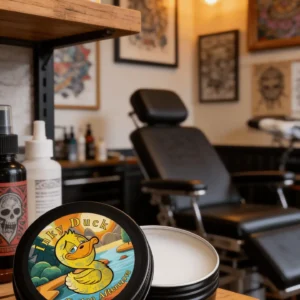
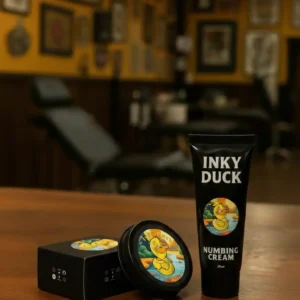
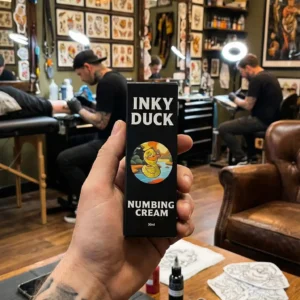
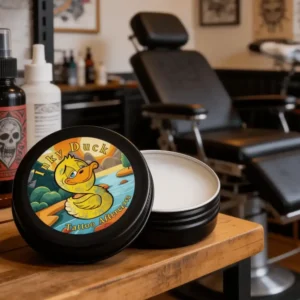
Brands like Inky Duck offer wholesale partnerships specifically designed for tattoo studios. The process is simple, reach out, get approved, receive product, stock it. There’s no pressure to carry large quantities and no complicated logistics. For studios that want to offer clients a quality product without adding operational complexity, this kind of straightforward wholesale relationship is the practical entry point.
What to Look for When Choosing a Product to Stock
Not every aftercare product is worth recommending. The products a studio puts its name behind by stocking them are products clients will associate with the studio’s endorsement. Choosing products built around the right ingredients, fragrance-free, alcohol-free, natural oils and butters that genuinely support healing, is important both for client outcomes and for what the studio is implicitly recommending.
Ingredient Quality
Products with shea butter, jojoba oil, beeswax, and vitamin E as core ingredients are well-formulated for healing tattooed skin. Products with fragrance, alcohol, or heavy synthetic additives are not worth stocking regardless of how they’re marketed.
Brand Credibility
Clients will look up what they’ve been sold. A brand with a clear story, real ingredients, and genuine community standing is one worth having on the shelf. Inky Duck is veteran-owned, focused on the tattoo community, and built on a simple premise, aftercare that actually works for the skin going through healing.
Practical Packaging
Products sold in studio need to be easy for clients to use correctly at home. Clear packaging, readable instructions, and sizes that are practical for the healing period, not so large that they become overwhelming, not so small that they run out before healing is done, all contribute to the client actually using the product correctly.
The Full Picture
Stocking aftercare is not about adding a retail category to the studio’s operation. It’s about completing the service the studio already provides. The artist does the work. The aftercare supports what happens next. Studios that connect those two things, by having the right product available at the moment the client needs it, give their work the best chance of looking the way it was meant to look once it heals.