One of the first things people Google after getting a new tattoo is what to put on it. And honestly, the answers out there are all over the place. Some people swear by a specific lotion. Others say use nothing at all. Some artists hand you a sample of tattoo balm on your way out. It gets confusing fast.
The short answer is that what you apply to a healing tattoo matters more than most people think. The wrong product can slow down healing, dull your ink, or irritate already-sensitive skin. The right one keeps things clean, moisturized, and on track.
Here’s a breakdown of the main options and what each one actually does for a healing tattoo.
Why Moisturizing a Fresh Tattoo Matters
Before getting into the product comparison, it helps to understand why aftercare products are used in the first place. When you get tattooed, the needle repeatedly punctures the top layers of your skin. Your body responds by triggering an inflammatory process and beginning skin repair. During that repair process, your skin needs moisture to heal properly.
Dry skin cracks. Cracked skin over a tattoo leads to scabbing. Heavy scabbing pulls ink out and can leave patchy, faded spots in the healed result. Keeping the skin moisturized reduces scabbing, minimizes itching, and gives the ink a better environment to settle into the dermis cleanly.
So yes, you should be applying something on it. The question is just what.
Tattoo Balm
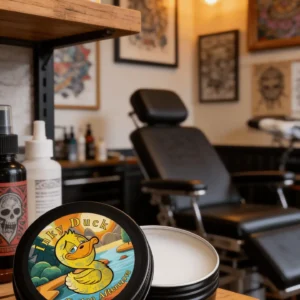
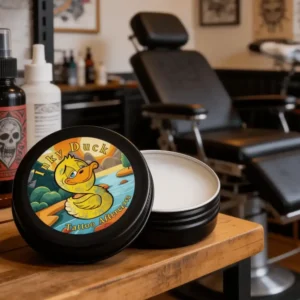
Tattoo balms are products made specifically for healing tattooed skin. They’re usually thicker than lotion, made with skin-safe ingredients, and formulated to support the repair process without interfering with the ink.
What Makes a Balm Different
A good tattoo balm typically uses natural ingredients like shea butter, beeswax, coconut oil, or similar plant-based oils. These create a protective layer over the skin without fully blocking airflow. They lock in moisture while letting the skin breathe, which is exactly what a healing wound needs.
Balms also tend to be free from fragrance, alcohol, and synthetic dyes, the stuff that commonly causes reactions on sensitive or broken skin. That matters a lot when you’re applying something to an open wound multiple times a day.
How to Use It
Apply a thin layer after cleaning the tattoo. Thin is the key word. Too much product sits on top of the skin and traps moisture in a way that can actually slow healing or cause small breakouts around the tattooed area. A pea-sized amount for a medium-sized tattoo is usually plenty.
Use it two to three times a day during the first two weeks, or whenever the skin feels tight or dry.
The Downside
Balms can be pricier than regular lotion. Some people find the thicker texture takes some getting used to. But for a healing tattoo, it’s the most purpose-built option available.
Regular Body Lotion
Body lotion is what most people already have at home, so it’s a common go-to after getting inked. It’s not the worst option, but it comes with some real conditions attached.
When Lotion Works
An unscented, dye-free, alcohol-free lotion can work reasonably well for tattoo healing, particularly during the later stages when the surface skin has already closed and you’re just maintaining moisture. Products like fragrance-free versions of common drugstore moisturizers have been used by tattoo communities for years.
When Lotion Becomes a Problem
The issue is that most standard body lotions are not formulated for open wounds. Many contain fragrance, which is one of the most common skin irritants. Others contain alcohol as a preservative, which dries out the skin. Some have active ingredients like alpha hydroxy acids or vitamin C that are great for mature skin but damaging to a fresh tattoo.
If you’re going to use lotion, you have to read the label carefully. Anything with fragrance, alcohol, or active skincare ingredients is off the table for the first few weeks.
The Bigger Issue With Lotion
Even the cleanest, most basic lotion is a general-purpose product. It wasn’t made with tattooed skin in mind. It doesn’t account for the fact that the skin is broken, that ink has been deposited underneath, or that the barrier needs support rather than just surface hydration. It can work in a pinch, but it’s not the first choice.
Petroleum Jelly & Thick Ointments
This one comes up a lot because petroleum jelly has been used on tattoos for decades. Older tattooing communities swore by it. A lot of artists used to recommend it as a standard aftercare product.
The general consensus has shifted. Petroleum jelly creates a thick, occlusive barrier over the skin that locks in everything, including bacteria and excess moisture. On a fresh tattoo, that can create a warm, wet environment that’s not ideal for healing. It can also cause ink to bleed or pull color, particularly on fresh work.
For the first few days of healing especially, petroleum-based products are better left out of the routine.
Applying Nothing at All
Some people advocate for the dry healing method, no product at all, just keeping the tattoo clean and letting it heal on its own. There are artists who recommend this approach, and it does work for some people.
The argument is that the skin heals naturally without interference, and that over-moisturizing creates its own set of problems. There’s some truth to that. Over-applying product does cause issues.
But for most people, particularly those with drier skin or in dry climates, applying nothing leads to excessive scabbing and peeling. Heavy scabs over a tattoo are a risk to the ink underneath. The skin gets tight, itchy, and uncomfortable, which makes it harder to leave alone.
Dry healing can work, but it requires a specific skin type and environment to go well. For the average person, some level of moisture management produces better results.
So What Should You Actually Use
For the healing period, especially the first two weeks, a tattoo-specific balm is the most reliable option. It’s made for this exact purpose, it’s gentle enough for broken skin, and it does the job without introducing unnecessary ingredients.
If a dedicated balm isn’t available, a plain, fragrance-free, alcohol-free lotion is a workable backup for the later stages of healing. Just check the ingredient list before applying anything.
Avoid petroleum jelly for fresh tattoos, avoid anything with fragrance or alcohol at any stage, and don’t assume that more product means faster healing. Less is usually more when it comes to tattoo aftercare.
The goal is simple: keep the skin clean, keep it moisturized without overdoing it, and let the natural repair process do its work. Give the skin what it needs and stay out of its way.