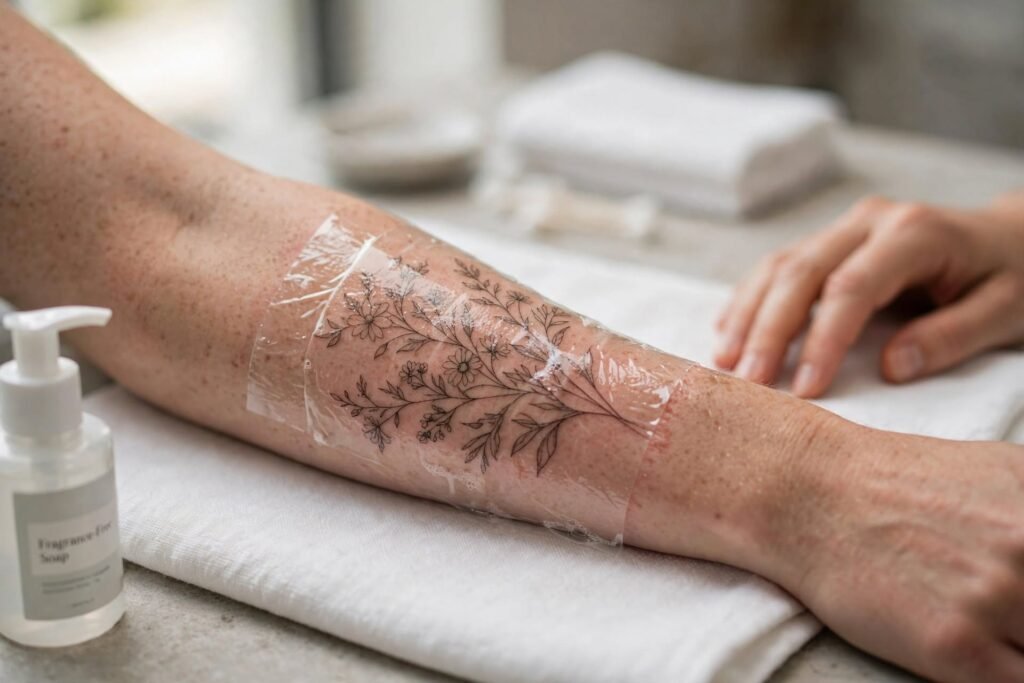
Getting a new tattoo is exciting. You walked out of the studio with fresh ink, a little adrenaline still running through you, and probably a lot of questions about what to do next. The first 24 hours after getting tattooed are the most important part of the whole healing process. What you do in that window sets the tone for how your tattoo heals, how the colors hold, and how clean the lines stay over time.
This is not complicated stuff. But it does require some attention and consistency.
What’s Actually Happening to Your Skin
A tattoo needle punctures your skin thousands of times per minute. That means a fresh tattoo is essentially an open wound, and your body immediately starts responding to it that way. You’ll notice some redness, swelling, and possibly some fluid or ink seeping out in the first few hours. That’s all normal. Your immune system is doing its job.
The top layer of your skin, the epidermis, takes the most initial damage. Underneath that, the dermis is where the ink actually gets deposited and stays permanently. While your body works to repair the surface, that deeper layer needs to stay protected and hydrated so the ink settles properly.
What Your Artist Wraps You In, & When to Remove It
Most tattoo artists will wrap your fresh tattoo before you leave the studio. Depending on the artist, this could be plastic wrap, medical-grade film like Saniderm or Tegaderm, or a standard bandage. Each one works a little differently.
Plastic Wrap or Standard Bandage
If your artist used regular plastic wrap or a basic bandage, you should remove it within 2 to 4 hours. Leaving it on too long traps moisture and creates a warm environment where bacteria can grow. Once you remove it, move on to cleaning.
Second-Skin or Medical Film (Saniderm/Tegaderm)
If your artist applied a second-skin adhesive bandage, you can typically leave it on for 24 hours or longer, some artists recommend keeping it on for up to 3 days. This type of wrap is breathable and acts as a protective barrier while letting the tattoo weep and breathe underneath. Follow your artist’s specific instructions here because different studios have different preferences.
How to Clean Your Tattoo for the First Time
Once the wrap comes off, wash your hands before you touch the tattoo. This is non-negotiable. Your hands carry bacteria, and a fresh tattoo is an open wound.
Use lukewarm water and a mild, fragrance-free soap. Gently work up a light lather and use your fingertips, not a cloth, not a sponge, to clean the area. You’re removing any dried plasma, excess ink, and surface bacteria. Don’t scrub. Don’t use hot water. Hot water opens pores and can cause the ink to bleed out.
After washing, pat the area dry with a clean paper towel. Cloth towels can harbor bacteria and the texture can irritate the tattoo. Let it air dry for another few minutes before applying anything to it.
Moisturizing in the First 24 Hours
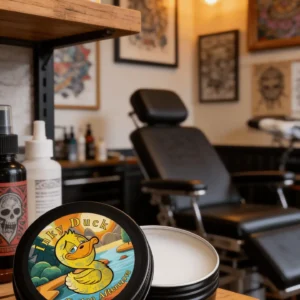
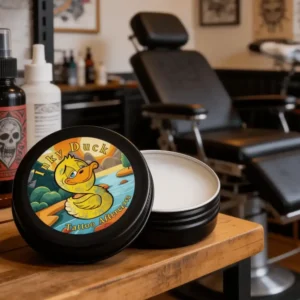
Once the tattoo is clean and dry, apply a thin layer of aftercare balm or moisturizer. The keyword here is thin. Too much product suffocates the skin and slows healing. You want just enough to keep the area from drying out.
What to Use
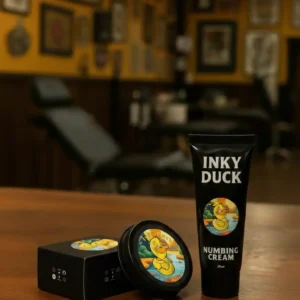
A tattoo-specific aftercare balm is the best option for the first 24 hours. These products are formulated with ingredients that support skin repair without clogging pores or reacting with fresh ink. If you don’t have a dedicated tattoo balm, an unscented, dye-free moisturizer works as a backup.
What to Avoid
Stay away from petroleum-based products like Vaseline during the early stages. They create a thick barrier that prevents the skin from breathing. Also avoid anything with fragrance, alcohol, or active skincare ingredients like retinol or acids. These will irritate a fresh wound and can affect how the ink heals.
Things You Absolutely Should Not Do in the First 24 Hours
Don’t Let It Get Wet Beyond Washing
Avoid soaking the tattoo. That means no baths, no swimming, no hot tubs. A quick shower is fine as long as you’re not directing water pressure straight at the tattoo. Prolonged water exposure softens the skin and can pull ink out during the early healing stage.
Don’t Cover It Back Up With Non-Breathable Material
Once the initial wrap is off and you’ve cleaned the tattoo, resist the urge to cover it again with regular plastic wrap. Your skin needs airflow. If you’re concerned about it rubbing against clothing, wear loose fabric that won’t press against the area.
Don’t Touch It Unnecessarily
Keep your hands off unless you’re cleaning or moisturizing. Every time you touch the tattoo without washing your hands first, you’re introducing bacteria to an open wound. It’s also worth telling the people around you to keep their hands to themselves, fresh tattoos are not something for everyone to poke at.
Don’t Apply Ice Directly
If there’s swelling or soreness, don’t put ice directly on the tattoo. You can use a cold pack wrapped in a cloth if you need to reduce swelling, but direct ice contact on a fresh wound can damage the skin surface.
Sun & Fresh Tattoos Don’t Mix
Keep the tattoo out of direct sunlight for at least the first 24 hours, and honestly, for the entire healing period. UV exposure on fresh ink causes fading and can slow down the healing process. If you have to be outside, cover it with loose clothing rather than sunscreen. Sunscreen should not go on a tattoo until it’s fully healed.
Sleep With It in Mind
Your first night with a new tattoo requires a little planning. The tattoo may weep slightly overnight, which can cause it to stick to bedding. Sleeping on clean sheets or putting a clean cloth under the tattooed area helps. Avoid sleeping directly on the tattoo if you can. The pressure and friction against fabric while you sleep can cause irritation.
The First 24 Hours Set Everything Up
Taking care of your tattoo on the first day is not about doing a dozen things, it’s about doing a few things correctly and consistently. Keep it clean. Keep it moisturized. Keep it out of the sun and away from prolonged water. Give your skin the space it needs to start healing, and the rest of the process will be a lot smoother.