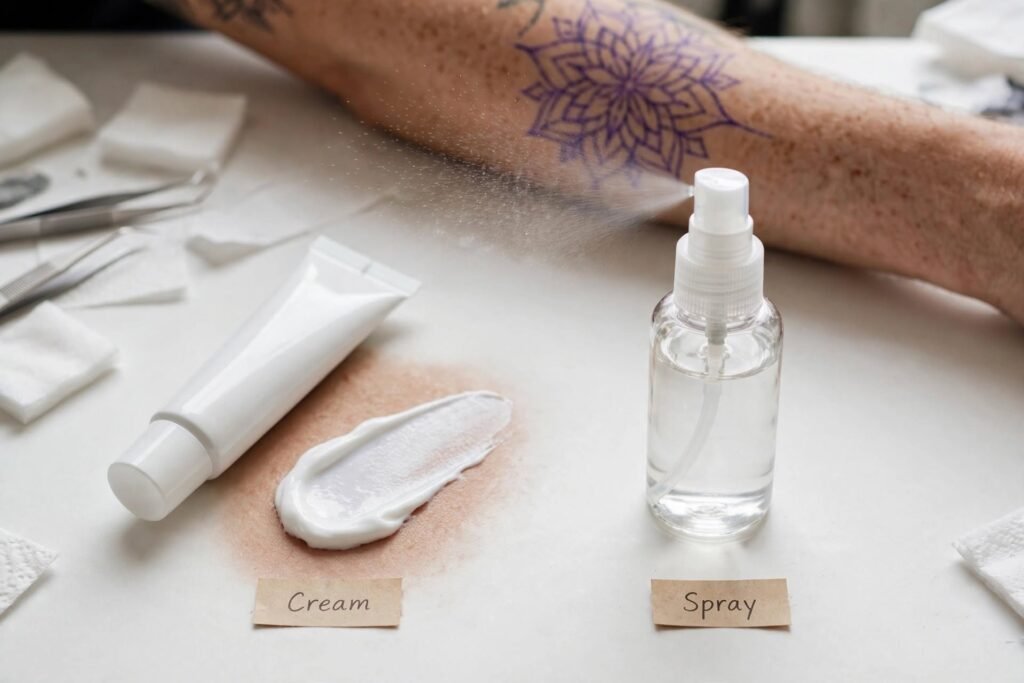
If you’ve spent any time looking into pain management options for tattoo sessions, you’ve probably come across both numbing creams and numbing sprays. They both contain local anesthetics. They both claim to reduce tattoo pain. But they work differently, they’re used at different points in the process, and they’re not really competing for the same job.
Understanding what each one does and when it’s used helps you make a better decision about which one belongs in your tattoo preparation kit, and in some cases, why having both makes sense.
The Core Difference
Numbing cream and numbing spray are not interchangeable products doing the same thing in different formats. The fundamental difference comes down to when they’re used and what kind of skin they’re designed for.
Numbing cream is a pre-session product. It’s applied to intact, unbroken skin before the tattoo session begins, given time to absorb under occlusion, and then removed before the artist starts working. Its job is to get lidocaine deep enough into the skin layers to block pain signals before the needle ever touches the skin.
Numbing spray is primarily an during-session product. It’s designed to be applied to skin that is already broken, skin that the tattoo needle has already been working on. Because broken skin has no intact barrier, topical anesthetics absorb almost immediately without needing extended application time or occlusion. Sprays are used mid-session to extend or refresh numbing after the initial cream effect has worn off.
Some sprays are marketed for pre-session use on intact skin, but their format makes them less effective for that purpose than cream. A spray applied to intact skin without occlusion absorbs slowly and superficially, fine for very sensitive skin surfaces but not reliable enough to produce meaningful numbing at tattoo needle depth.
How Each One Delivers the Active Ingredient
Cream & Occlusion
Numbing cream works through a process that requires time and occlusion to be effective. The cream is applied in a thick layer, covered with plastic wrap, and left for 45 to 90 minutes. The wrap creates a sealed, slightly warm environment that drives the lidocaine through the outer skin layers and into the dermis where the nerve fibers are.
This delivery method is slower but produces deeper, more sustained numbing than spray applied to intact skin. The lidocaine reaches the nerve endings at the depth the tattoo needle will work, which is why it provides meaningful pain reduction from the first needle contact.
The tradeoff is time and preparation. You need to plan the application well before your session, manage the wrap during the waiting period, and remove the cream cleanly before the session starts.
Spray & Broken Skin
Numbing spray applied to already-tattooed skin bypasses the barrier problem entirely because the barrier is gone. The active ingredients, typically lidocaine, sometimes combined with other anesthetics like tetracaine, absorb directly into the exposed tissue and take effect within minutes rather than the hour-plus required for cream on intact skin.
This rapid absorption is what makes spray useful mid-session. When the pre-session cream effect starts to wear off after an hour or two, a spray applied by the artist to the worked area can refresh the numbing and allow the session to continue more comfortably.
The limitation is that spray on broken skin also enters the bloodstream faster and in higher concentrations than cream on intact skin. For this reason, the amount used and the frequency of reapplication matter more with spray than with cream. Artists who use numbing sprays in their practice are generally aware of this and work within safe parameters, but it’s worth knowing as a client.
Active Ingredients — Are They the Same
Both cream and spray products are typically built around lidocaine as the primary active ingredient. Some sprays include additional anesthetics like tetracaine to increase potency or extend duration. Some cream formulations include prilocaine alongside lidocaine for similar reasons.
The concentration and combination of active ingredients varies by product, and comparing products requires looking at what’s actually in them rather than just what format they come in. A spray with 5 percent lidocaine and 2 percent tetracaine is a more potent product than a cream with 4 percent lidocaine alone, regardless of the delivery format.
For most people, a standard lidocaine cream at 4 to 5 percent is sufficient for pre-session numbing on most placements. Sprays with additional anesthetics are more relevant for mid-session use on broken skin where rapid, strong numbing is the goal.
Which Works Better for Pre-Session Numbing
For pre-session numbing on intact skin, cream wins. The occlusive application method delivers lidocaine to the depth needed for meaningful pain reduction during tattooing. Spray applied to intact skin without occlusion does not achieve the same penetration depth, which is why it’s not the recommended format for pre-session preparation.
Some artists and clients use spray pre-session on particularly thin-skinned or sensitive areas where penetration is less of an issue, inner wrist, inner elbow, neck, but for most placements, cream applied with the full occlusion protocol produces more reliable results.
Which Works Better Mid-Session
For mid-session use on broken skin, spray wins. The format is practical for application by the artist during a session, it can be applied quickly and cleanly without disturbing the work area the way applying cream might. The rapid absorption through broken skin means it takes effect fast enough to make a difference within the session rather than requiring the client to wait an extended period.
Cream is not appropriate for application to broken skin mid-session. The intact skin formula is designed for a skin barrier that no longer exists on worked areas, and applying it to open skin leads to unpredictable absorption and unnecessary product exposure to an already-compromised wound.
Using Both in the Same Session
For longer sessions, using cream pre-session and spray mid-session is a legitimate and practical combination. The cream handles the opening hours of the session before the session begins. When the cream effect starts to wear off during the session, the artist can apply spray to keep things manageable.
This approach works best when planned in advance and discussed with your artist before the session. Not every artist incorporates numbing spray into their workflow, and some prefer not to use it at all. Knowing your artist’s position on this before the day means you’re not negotiating it mid-session when everyone is already committed.
Practical Considerations for Choosing
For a standard session of two hours or less, numbing cream applied correctly pre-session is usually all you need. Choose a product with 4 to 5 percent lidocaine, follow the application and timing instructions, and remove it completely before the session starts.
For longer sessions where mid-session refreshing is part of the plan, discuss numbing spray with your artist. Let them recommend a product they’re familiar with or bring one they’ve approved. The artist applying the spray knows how much to use and when, this is not a self-administered step during an active tattoo session.
For placements with particularly thin skin where pre-session penetration is less of a concern, some people find spray applied pre-session under light occlusion works adequately. But for most standard placements, cream remains the more reliable pre-session option.
The bottom line is that cream and spray serve different parts of the process. Choosing between them is less useful than understanding which one belongs at which stage, and for sessions long enough to need both, using them together in the right sequence produces the best overall result.