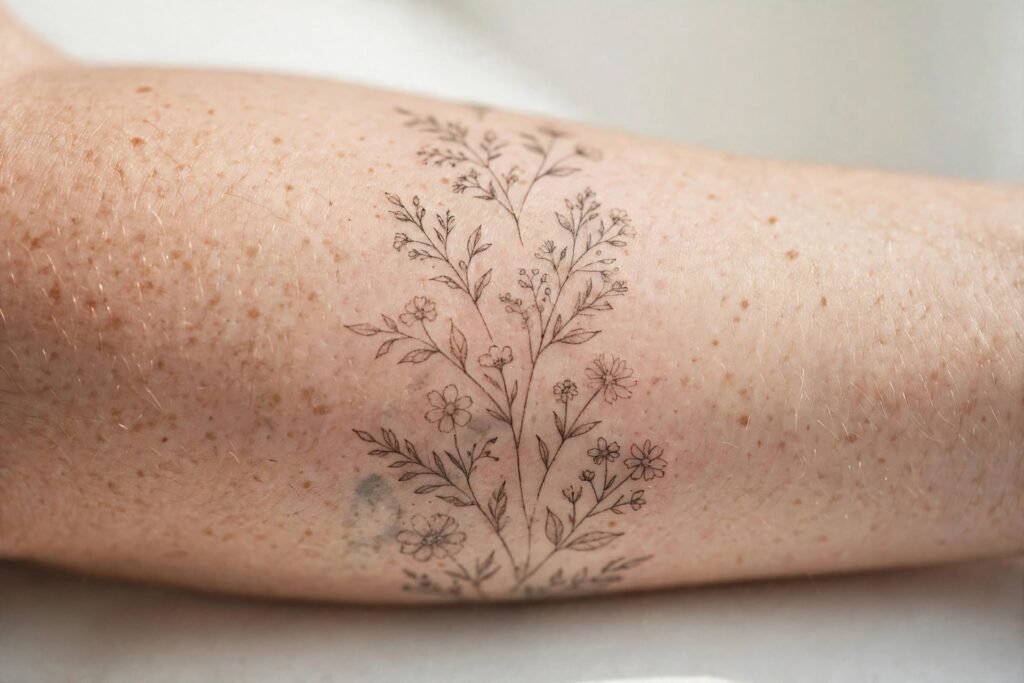
A tattoo that looks patchy during healing is one of the more stressful things to deal with as a client. You paid good money for a piece you were excited about, and now it’s looking uneven, faded in spots, or like the ink didn’t hold in certain areas. The natural instinct is to panic and assume something went permanently wrong.
The reality is more nuanced than that. Some patchiness during healing is completely normal and temporary. Other kinds of patchiness indicate a real issue that will need attention once the tattoo has fully settled. Knowing the difference saves you from unnecessary stress on one hand and from ignoring a real problem on the other.
Patchiness That Is Part of Normal Healing
The healing process is not visually consistent. A tattoo goes through several stages, and during many of those stages it does not look its best. Understanding what’s temporary versus what’s permanent is the first step.
The Milky Phase
Between weeks one and three, many tattoos go through what’s commonly called the milky phase. A new layer of skin forms over the ink during healing, and until that skin matures and becomes more transparent, it creates a slightly opaque layer that makes the ink underneath look muted, uneven, or patchy.
Lines that looked sharp on day one may look softer or slightly broken during this phase. Colors that were saturated may look faded or washed out. Dark areas may look lighter than expected. None of this is a reliable indicator of the final result, it’s just new skin doing what new skin does.
This phase resolves on its own as the skin continues to mature, typically clearing up somewhere between weeks three and six. The tattoo starts looking closer to its settled appearance as the new skin becomes more transparent.
Uneven Peeling
Skin doesn’t always peel evenly across a tattoo. Some areas shed faster than others, which can create a patchy appearance during the peeling phase where some sections look clearer while others still have the dull, healing-skin quality over them. This is temporary and resolves as the peeling completes across the whole area.
Patchiness That Indicates a Real Problem
Some patchiness is not temporary. Once the tattoo has fully healed and the milky phase has resolved, typically six to eight weeks after the session, patchy areas that remain are likely permanent without intervention.
Ink Loss From Scabbing
Heavy scabbing during healing is one of the most common causes of permanent patchiness. Thick scabs that form over a tattoo pull at the ink underneath when they eventually lift. Areas where scabs were particularly heavy, or where scabs were picked off before they were ready, often heal with light spots or gaps where the ink was pulled out.
This type of patchiness is real and will not resolve on its own. It needs a touch-up once the tattoo is fully healed.
Ink Not Deposited Properly
Sometimes patchiness is not a healing issue at all, it’s an application issue. If the needle was not working consistently during the session, or if certain areas were worked more lightly than others, the ink deposit can be uneven from the start. This shows up as patchiness once healing is complete that doesn’t correspond to any specific healing event.
An experienced artist can identify this during a touch-up consultation. The solution is going back in and filling the areas that didn’t hold properly.
What You Can Do During Healing
If the tattoo is still in the healing phase and looks patchy, the most important thing is to support the healing process as well as possible and wait before drawing conclusions.
Keep Moisturizing Consistently
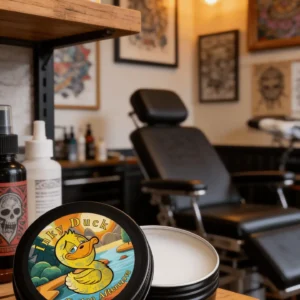
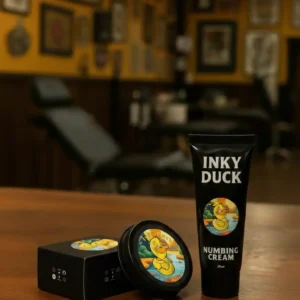
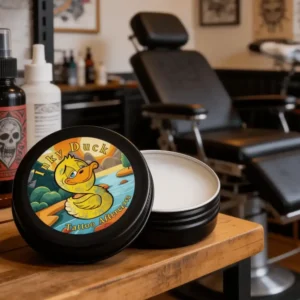
Consistent moisturizing through the rest of the healing period gives the skin the best conditions to complete the repair process. Products like Inky Duck’s tattoo aftercare balm are designed to keep healing skin hydrated without heavy additives that cause their own problems, a thin layer applied two to three times daily keeps the skin in the condition it needs to be in to heal as evenly as possible.
If insufficient moisturizing contributed to the patchiness through heavy scabbing, maintaining good moisture from this point forward at minimum prevents additional damage to areas that are still healing.
Do Not Pick at Remaining Scabs
If there are still scabs present over patchy areas, leave them alone. Every scab that gets pulled off before it’s ready risks taking more ink with it and making the patchiness worse. Let them detach naturally while keeping the skin around them moisturized.
Avoid Sun Exposure
UV exposure on a still-healing patchy tattoo adds another layer of damage to skin that is already compromised. Keep the area covered during the rest of the healing period and apply sunscreen once the surface has fully healed.
When to Contact Your Artist
Once the tattoo has fully healed, give it at least six to eight weeks, and ideally two to three months for the skin to fully settle at the dermal level, assess what remains. Take photos in good lighting and compare them to photos taken right after the session.
If the patchiness has resolved and the tattoo looks even, the healing process did its job. If patchy areas remain, contact your original artist for a touch-up consultation. Most reputable artists offer touch-ups for work that didn’t heal as expected, particularly when the issue is related to how the ink was applied rather than aftercare neglect.
Go to the consultation with clear photos of both the fresh tattoo and the healed result. This gives the artist the best information to work with and makes the touch-up process more straightforward for both of you.