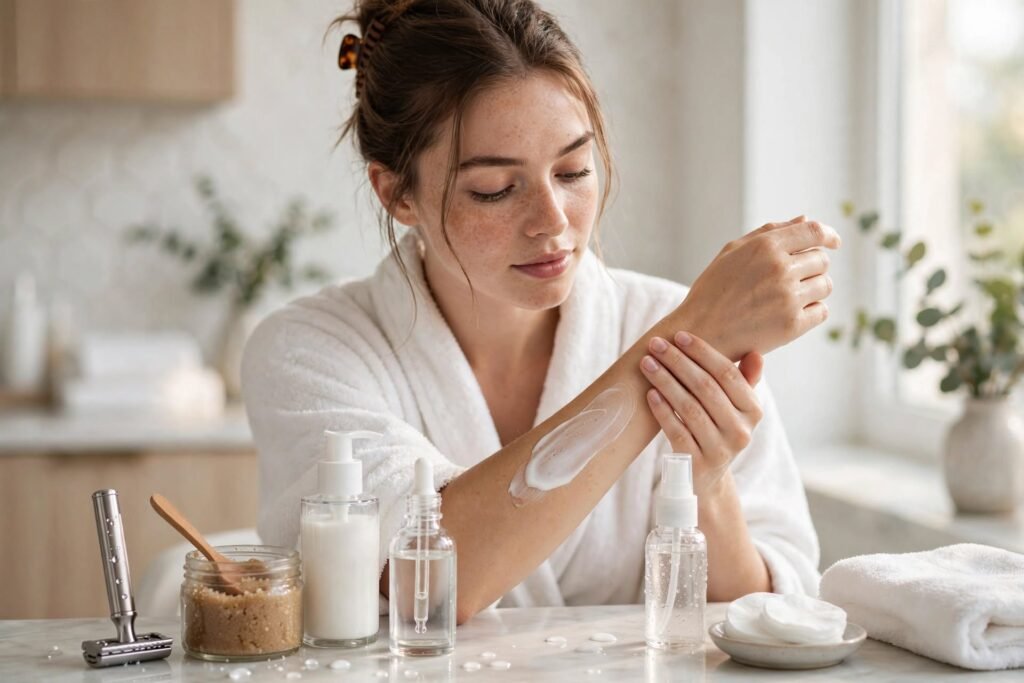
Most people put a lot of thought into choosing a design and finding the right artist. Skin preparation before the appointment gets significantly less attention, which is a missed opportunity. The condition your skin is in when you sit down in the chair affects how smoothly the session goes, how well the ink deposits, and how cleanly the tattoo heals afterward.
Good skin preparation is not complicated. It’s mostly about building a few consistent habits in the weeks leading up to your appointment and avoiding a few things in the days immediately before.
Why Skin Condition Matters for Tattooing
Tattoo ink is deposited into the dermis, the layer of skin beneath the surface. To get there, the needle has to pass through the epidermis, the outer layer. The condition of that outer layer directly affects how the needle moves through the skin and how evenly the ink deposits.
Dry, rough, or damaged skin creates an uneven surface that makes consistent ink deposit harder. Skin that is well-hydrated, smooth, and in good condition gives the needle a more consistent working surface, which produces cleaner lines and more even fill. The difference is subtle in most cases, but for detailed work and fine lines, skin condition matters more than people realize.
The healing process is also influenced by how healthy the skin is going in. Skin that is already compromised from dryness, sun damage, or irritation has more to repair during healing, which can slow the process and affect how the ink settles.
Start Moisturizing Early
The most impactful thing you can do to prepare your skin for a tattoo is moisturize the area consistently in the two weeks before your appointment. Not just the day before, two weeks before.
Building skin hydration takes time. A single application of moisturizer the night before a session doesn’t meaningfully change the skin’s hydration level. Consistent daily moisturizing over the preceding weeks does. By the time your appointment arrives, the skin in the tattooed area should be soft, pliable, and well-conditioned.
Use a plain, fragrance-free moisturizer for this. Anything with active skincare ingredients, acids, retinol, vitamin C, should be stopped a week before the appointment. These ingredients affect the skin’s surface and can make it more sensitive to the tattoo needle.
On the day of the appointment, apply a thin layer of moisturizer in the morning if the appointment is later in the day. Don’t apply anything directly before going in, freshly applied product on the skin surface can interfere with how the artist preps the area.
Stay Hydrated From the Inside
External moisturizing is one part of skin hydration. Internal hydration, how much water you’re drinking, is the other. Skin that is dehydrated from within doesn’t respond as well to topical moisturizers because the body’s water supply to skin tissue is limited when overall hydration is low.
Drink consistently in the days before your appointment. Not dramatically more than usual, but enough to keep your hydration levels in a good range. Pale yellow urine is a reasonable indicator that you’re adequately hydrated. Dark yellow is a sign you need more water.
Protect the Area From Sun Exposure
Sun-damaged skin is harder to tattoo and heals more slowly than healthy skin. UV damage thickens and toughens the outer skin layers, affects the skin’s texture at the surface, and compromises the barrier function that the healing process depends on.
Keep the area being tattooed out of direct sunlight as much as possible in the two weeks before your appointment. If it’s an area that’s regularly exposed, forearms, calves, shoulders, apply sunscreen to it consistently during this period. Show up to your appointment without a fresh sunburn on the placement area. A sunburned area cannot be tattooed safely, and most artists will reschedule rather than work on burned skin.
Shaving the Area
If the area being tattooed has hair, it needs to be shaved before the session. Your artist will shave it at the studio as part of their prep process, so you don’t need to do this yourself. If you prefer to shave at home, do it the night before rather than the morning of. Shaving creates micro-abrasions on the skin surface, and giving those a few hours to settle before the session is better than shaving right before you go in.
Do not use hair removal creams or wax on the area before a tattoo. Chemical hair removal products can irritate the skin and affect its surface condition. Waxing can cause inflammation and sensitivity that makes the skin more reactive during tattooing.
Avoid Certain Products in the Days Before
Some skincare products that are perfectly fine in normal use are worth pausing before a tattoo session.
Exfoliants, both physical scrubs and chemical exfoliants like AHAs and BHAs, should be stopped a week before the appointment. These remove or thin the outer skin layer, which can make the skin more sensitive and reactive to the needle.
Retinol and retinoid products thin the skin over time and increase photosensitivity. Stop using these at least a week before the session, longer if you use prescription-strength retinoids.
Blood-thinning supplements, fish oil, vitamin E, and high-dose vitamin C, can increase bleeding during a session. Talk to your doctor before stopping any supplements, but it’s worth being aware that these can affect how much the skin bleeds during tattooing.
What to Do on the Day
On the day of your appointment, keep things simple. Shower and make sure the area is clean. Apply a light moisturizer in the morning if your appointment is in the afternoon or evening, and skip it if your appointment is in the morning. Wear clothing that gives easy access to the area being tattooed.
Don’t apply any self-tanner, body oil, or heavily scented lotion to the area on the day of. These sit on the skin surface and interfere with the artist’s prep and the tattooing process.
Show up with clean, well-hydrated skin that hasn’t been burned, recently exfoliated, or loaded with products. That’s the baseline that gives your artist the best surface to work with and gives your tattoo the best conditions to start healing from.