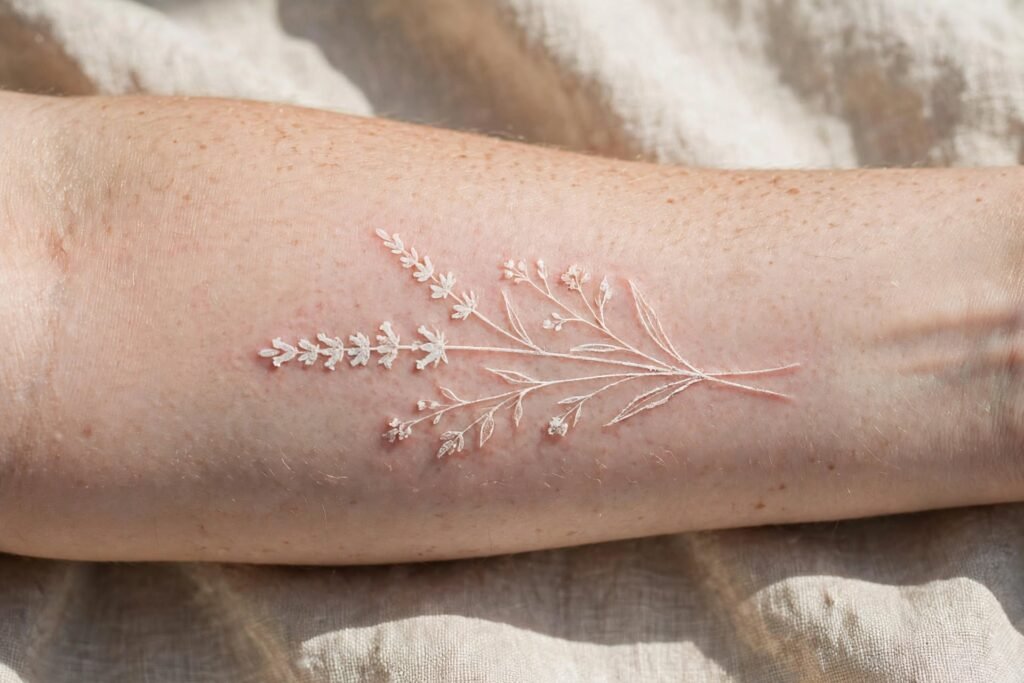
White ink tattoos occupy a specific niche in the tattoo world. They’re subtle, often used for fine line work, lettering, or highlight effects within larger pieces, and they present a healing experience that is noticeably different from black or colored ink work. If you’ve gotten a white ink tattoo or you’re planning one, there are specific challenges to the healing process worth knowing about before you start.
How White Ink Is Different From Other Inks
White tattoo ink is fundamentally different in composition from black or colored inks. Rather than using a pigment that absorbs light to create color, white ink reflects light, that’s what creates the pale, bright appearance. The pigments used to achieve this reflective quality are typically titanium dioxide-based compounds.
These compounds behave differently in the skin than other pigment types. White ink particles are larger than most other ink particles, which affects how they sit in the dermis and how the skin responds to them. The immune system is also more reactive to white ink in some people than to other ink types, which influences both the healing process and the long-term appearance of white ink work.
What Makes White Ink Healing Challenging
The Ink Is Harder to See During Healing
White ink applied to skin is difficult to assess during healing because the skin itself is pale, swollen, and going through visible changes. Right after the session, white ink can look almost invisible against the reactive, reddened skin around it. During peeling, the contrast between the ink and the healing skin surface is minimal.
This makes it harder to tell how the healing is progressing visually compared to black or colored work where the ink is clearly visible against the skin at every stage. The temptation to over-examine or over-touch the tattoo during healing is higher with white ink work because it’s hard to see what’s happening, and this can lead to unnecessary interference with the healing process.
Higher Rate of Immune Response
The immune system’s reaction to white ink is more pronounced in some people than to other ink types. The titanium dioxide compounds in white ink can trigger a more active response from the macrophages, the immune cells that attempt to break down and clear foreign particles in the dermis. This increased immune activity can cause the ink to fade faster than other colors and contributes to the variability in how white ink heals between individuals.
Some people heal white ink beautifully and maintain visible, defined white work for years. Others find the ink fades significantly within months as the body processes the pigment more aggressively. This variability is largely driven by individual immune response and is not fully predictable before getting the tattoo.
Yellowing During & After Healing
White ink tattoos frequently take on a yellowish or cream tone during healing and sometimes after. This happens for a few reasons. The plasma and fluid that the skin produces during healing have a yellowish tint that affects how the white ink appears at the surface. As healing progresses, this typically resolves somewhat, but many white ink tattoos settle into a cream or slightly yellow-white tone rather than the pure white they appeared when freshly applied.
This is not a healing failure. It’s a characteristic of how white ink behaves in skin tissue over time. Artists experienced with white ink work will set realistic expectations about this during the consultation.
Aftercare for White Ink Tattoos
The aftercare basics for white ink are the same as for any tattoo, clean twice daily with mild fragrance-free soap, apply a thin layer of aftercare balm, avoid picking at peeling skin, and protect the tattoo from sun exposure during healing. But there are specific emphases worth noting for white ink work.
Keep It Exceptionally Clean
White ink tattoos are more prone to showing contamination from bacteria and external pigment during healing. Anything that deposits color on healing skin, dirty surfaces, heavily dyed fabrics, even some products, can stain white ink during the healing period when the skin is open and absorptive.
Keep the tattooed area away from potential contamination sources. Use only white or light-colored paper towels when patting it dry, dyed paper products can transfer color. Be conscious of what fabrics are in contact with the area during healing.
Fragrance-Free Products Only
White ink skin tends to be more reactive during healing than skin with other ink types in some people. Using products free from fragrance, alcohol, and unnecessary additives reduces the risk of adding irritation to an already active healing response. A plain, well-formulated aftercare balm with minimal ingredients is the appropriate choice throughout the healing period.
Sun Protection Is Non-Negotiable
White ink fades faster than any other ink type under UV exposure. Titanium dioxide is actually used as a UV filter in some sunscreens, but in the context of tattoo ink in the skin, UV exposure causes the surrounding tissue to produce melanin that visually overwhelms the white ink over time. Sun exposure tans the skin around and over the tattoo, making the white ink appear even less visible as the surrounding skin darkens.
Keeping white ink tattoos covered and out of direct sunlight during healing is essential. After healing, consistent broad-spectrum sunscreen applied whenever the tattoo will be exposed to sunlight is the most important ongoing maintenance step for preserving visibility and slowing fading.
Realistic Expectations for White Ink
White ink tattoos require more realistic expectation-setting than most other styles. The appearance immediately after the session, with fresh, bright white ink against clean skin, is typically the most visible the tattoo will ever look. From that point forward, some degree of softening and fading is normal and expected.
Well-healed white ink on appropriate skin tones in protected locations can look good for years with consistent sun protection and skin care. But it will not remain as stark and defined as it appeared fresh, and the rate of change is highly individual.
Discussing placement, skin tone suitability, and long-term expectations with an artist experienced in white ink work before committing to the piece is worth doing. White ink shows most clearly on lighter skin tones and in placements where UV exposure can be consistently minimized. On darker skin tones, white ink often becomes nearly invisible once healed, which may or may not align with what you’re going for.