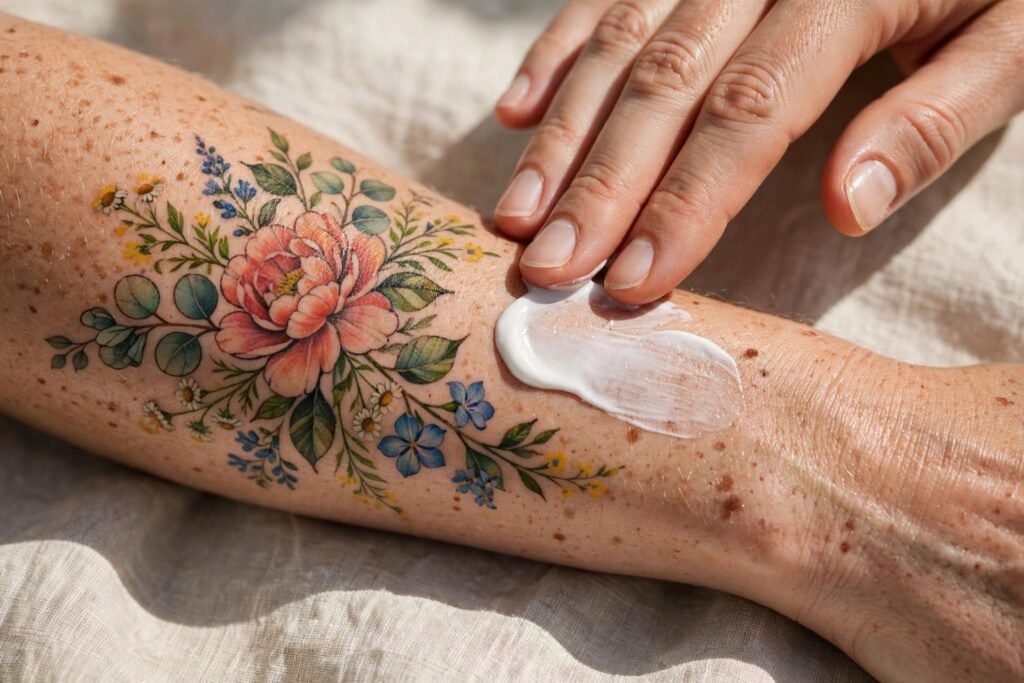
A tattoo that looks sharp five or ten years after it was done doesn’t happen by accident. The ink itself doesn’t change much on its own, what changes is the skin around it and above it, and the environment that skin is exposed to over time. Taking care of tattooed skin as an ongoing habit rather than just during the healing period is what separates tattoos that age well from ones that look worn out before their time.
None of this requires an elaborate routine. It comes down to a few consistent habits that address the main factors driving how tattoos change over time.
What Actually Causes Tattoos to Change Over Time
Understanding what drives long-term changes in tattoo appearance helps you focus on the things that actually matter rather than chasing fixes for symptoms.
UV Radiation
Ultraviolet radiation is the single biggest environmental factor in tattoo fading. UV rays break down the pigment molecules in tattoo ink through a process called photodegradation. Every unprotected sun exposure adds to cumulative UV damage that chips away at ink saturation and line definition over time.
Black ink is more resistant to UV than colored pigments, but nothing is immune. Colors fade unevenly, lighter pigments like yellow, pink, and light blue go first, followed by reds and oranges, with black and dark blue holding longest. The rate of fading depends on how much UV exposure the tattoo accumulates and how consistently it’s been protected.
Skin Dryness 7 Neglect
Dry skin makes tattoos look dull even when the pigment is intact. The surface quality of the skin affects how light interacts with the ink below it. Hydrated skin has a quality that lets ink read more clearly and with more definition. Chronically dry skin flattens that quality and makes ink look washed out even when it hasn’t actually faded significantly.
Long-term skin neglect also affects the structural integrity of the skin over the tattoo. Skin that isn’t maintained loses elasticity faster and develops texture changes that affect how the ink appears from the surface.
Natural Ink Migration
Over years, ink particles in the dermis migrate slightly through the tissue. This is a slow, inevitable process that causes fine lines to soften, edges to become less crisp, and detailed areas to lose some definition. The rate of migration is influenced by placement, skin type, and how well the skin has been maintained, but it happens to every tattoo to some degree.
The Two Habits That Matter Most
Daily Moisturizing
Moisturizing tattooed skin daily is the most accessible and highest-return maintenance habit available. It keeps the skin surface in the condition that lets ink look its best, maintains the skin’s barrier function over time, and slows some of the structural changes that affect how tattoos age.
The product matters. A plain, fragrance-free moisturizer or a tattoo-specific balm built around natural oils and butters, shea butter, jojoba oil, vitamin E, is the right choice for daily use. Avoid products with fragrance, alcohol, or active skincare ingredients that don’t serve long-term skin health. The goal is consistent hydration, not an elaborate skincare regimen.
Once a day is enough for most people on healed tattoos. Apply after showering when the skin is clean and slightly damp, which helps lock in moisture more effectively than applying to completely dry skin.
Consistent Sun Protection
Applying broad-spectrum sunscreen to tattooed skin whenever it will be exposed to direct sunlight is the single most effective thing you can do to slow UV-driven fading. SPF 30 is a reasonable minimum. SPF 50 provides more protection for tattoos on regularly exposed areas like forearms, calves, and shoulders.
The key word is consistent. Applying sunscreen occasionally when you think about it provides far less protection than applying it as a daily habit. For tattoos on areas that get regular sun exposure, incorporating sunscreen into the morning routine the same way you would any other skincare step is the most practical approach.
Physical sunscreens, those using zinc oxide or titanium dioxide as active ingredients, provide broad-spectrum protection without the potential skin irritation that some chemical sunscreen compounds cause. Either type works for tattoo protection as long as it’s SPF 30 or higher and applied regularly.
Placement & Its Role in Long-Term Appearance
Some placements age better than others regardless of how well they’re cared for. Areas with high sun exposure, forearms, hands, calves, shoulders, accumulate UV damage faster than areas that are regularly covered. Areas with high skin movement, fingers, feet, inner elbows, experience more mechanical stress that accelerates ink migration and line softening.
This doesn’t mean these are bad placements. It means the maintenance habits matter more for these areas than for placements that are naturally more protected. Consistent sunscreen on a forearm tattoo does more to preserve it long-term than leaving an upper back tattoo unprotected, simply because the starting exposure level is so different.
Hydration From the Inside
Drinking enough water supports skin health in ways that topical products can’t fully replace. Chronically dehydrated people tend to have skin that shows signs of aging faster, less elasticity, more dryness, reduced barrier function. All of these affect how tattooed skin looks and performs over time.
This is not about dramatic water intake increases. It’s about staying consistently hydrated as a baseline habit. Pale yellow urine through the day is a reasonable indicator of adequate hydration.
What to Do When a Tattoo Starts Looking Dull
If a tattoo that used to look sharp is starting to look flat or dull, the first thing to check is skin condition rather than ink fading. Start a consistent daily moisturizing routine and give it four to six weeks before assessing. In many cases, the dullness is surface dryness rather than significant ink loss, and it responds noticeably to consistent hydration.
If after several weeks of consistent moisturizing and sun protection the tattoo still looks more faded than you’d like, that’s when a touch-up conversation with the original artist makes sense. Touch-ups on well-cared-for tattoos are more straightforward than touch-ups on neglected skin, because the skin condition going into the session affects how the new ink deposits and heals.