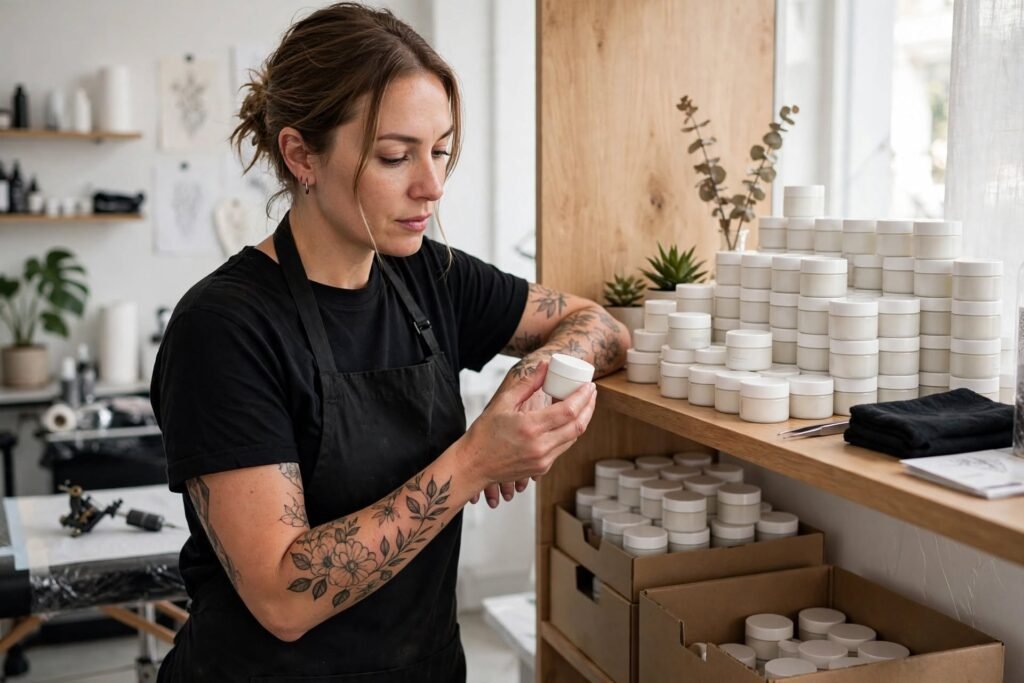
Choosing a wholesale aftercare partner is not the same decision as choosing what ink to stock or what machines to run. But it’s a decision that carries real implications for how the studio operates, how clients heal, and what the studio’s name gets attached to every time an artist hands a client a product on their way out the door. Artists and studio owners who have thought carefully about this tend to look for the same things, and the criteria are worth laying out clearly.
Product Quality Comes First
No wholesale relationship works if the product itself doesn’t perform. Artists recommend aftercare because their clients need it and because the healing outcome affects the work. A product that causes reactions, doesn’t moisturize effectively, or produces worse healing outcomes than what clients would find on a drugstore shelf is not a product worth putting the studio’s reputation behind.
What Good Formulation Actually Looks Like
Artists who have looked into aftercare ingredients tend to converge on the same markers of a well-formulated product. Fragrance-free is non-negotiable, fragrance is the most common skin irritant in personal care products and has no therapeutic benefit for healing skin. Alcohol-free matters for the same reason, alcohol dries the skin at the stage when it most needs moisture.
The positive side of the ingredient list matters too. Products built around natural oils and butters, shea butter, jojoba oil, coconut oil, beeswax, vitamin E, have a clear rationale for every ingredient. Each one does something useful for healing tattooed skin. Artists recommending these products can explain why they work in terms that make sense to clients, which reinforces the recommendation rather than making it feel arbitrary.
Products with long ingredient lists full of synthetic compounds that serve the formula’s stability or shelf appearance rather than the skin’s healing process are harder to recommend with confidence, and clients who read labels will notice the disconnect.
Consistency Across Batches
A product that works well in one batch needs to work the same way in the next. Inconsistent formulation, where the texture, absorption, or skin feel varies between orders, creates a problem for studios that have made the product part of their standard recommendation. Artists who have clients come back saying the product felt different from last time are put in an awkward position. Reliable formulation consistency is part of what makes a wholesale partner worth staying with.
The Wholesale Terms Need to Work for the Studio
Product quality alone doesn’t make a wholesale partnership practical. The commercial terms need to work within the reality of how a tattoo studio operates.
Minimum Order Quantities
Studios have variable client volume, and a wholesale partner that requires large minimum orders creates a cash flow and storage problem for smaller operations. Artists and studio owners consistently flag minimum order quantities as one of the first things they check when evaluating a wholesale relationship.
Brands like Inky Duck approach this practically, the wholesale process is designed to work for studios of different sizes without requiring a commitment to inventory levels that don’t make operational sense. Being able to order what the studio actually needs rather than what satisfies a supplier’s minimum is the difference between a partnership that works in practice and one that looks good on paper.
Margin That Makes Sense
The wholesale price relative to the recommended retail price needs to leave enough margin to make stocking the product worthwhile. Studios are not running retail operations as their primary business, aftercare is a complement to the tattooing service, not the main revenue line. The margin needs to be meaningful without requiring the studio to price the product out of range for clients.
A wholesale partnership where the math doesn’t work, where the margin is thin enough that it’s not worth the shelf space, doesn’t last. Artists evaluating wholesale relationships look at this quickly, and brands that offer terms that don’t respect the studio’s position as a seller rather than just a buyer lose those conversations early.
Reliable Supply & Shipping
Running out of aftercare product mid-week because a shipment was delayed is a problem that reflects on the studio even when it’s the supplier’s fault. Artists who have committed to stocking and recommending a product need to be able to count on consistent availability. Fast, reliable shipping and clear communication around order timelines are things artists and studio managers notice quickly when they start working with a new supplier.
Brand Credibility Matters to Artists
When an artist hands a client a product, they’re putting their name next to the brand. The brand’s story, its standing in the tattoo community, and whether it’s the kind of company artists are comfortable associating with all factor into whether the wholesale relationship feels right beyond the commercial terms.
Community Connection
Brands that exist within the tattoo community rather than adjacent to it tend to earn more genuine endorsement from artists. There’s a difference between a general skincare brand that has reformulated a product for the tattoo market and a brand that was built from the beginning around the specific needs of tattooed skin and the people who create tattoos for a living.
Inky Duck’s positioning as a veteran-owned brand built specifically for tattoo aftercare, not repurposed from a general skincare line, resonates with artists who value authenticity in what they recommend. The brand exists because the founders understood what was missing in tattoo aftercare, not because they saw a market opportunity to repackage an existing product.
Transparency About What’s in the Product
Artists who have questions about what they’re recommending need to be able to get clear answers. A brand that is transparent about its formulation, can speak to why each ingredient is included, and doesn’t hide behind vague marketing claims is one that artists can recommend with confidence.
This transparency is what allows an artist to say “I recommend this because of what’s in it and what those ingredients do for healing skin” rather than “I recommend this because the company told me it was good.” The difference in how that lands with clients is significant.
The Relationship Beyond the Transaction
The best wholesale partnerships between aftercare brands and tattoo studios are not purely transactional. Brands that treat studios as partners, that are responsive when questions come up, that communicate proactively about product updates, that take feedback seriously, build relationships that last rather than ones that get replaced at the next trade show or Instagram ad.
Artists are a community that talks to each other. A brand that treats studio partnerships well builds its reputation through those conversations. One that is difficult to work with, slow to respond, or inconsistent in its commitments loses those relationships and the word-of-mouth that would have come with them.
The criteria artists use when evaluating wholesale aftercare partners are consistent because they come from the same underlying concern, recommending something they can stand behind to clients who trust them. Brands that understand this and build their wholesale offering around it are the ones that earn and keep those partnerships.