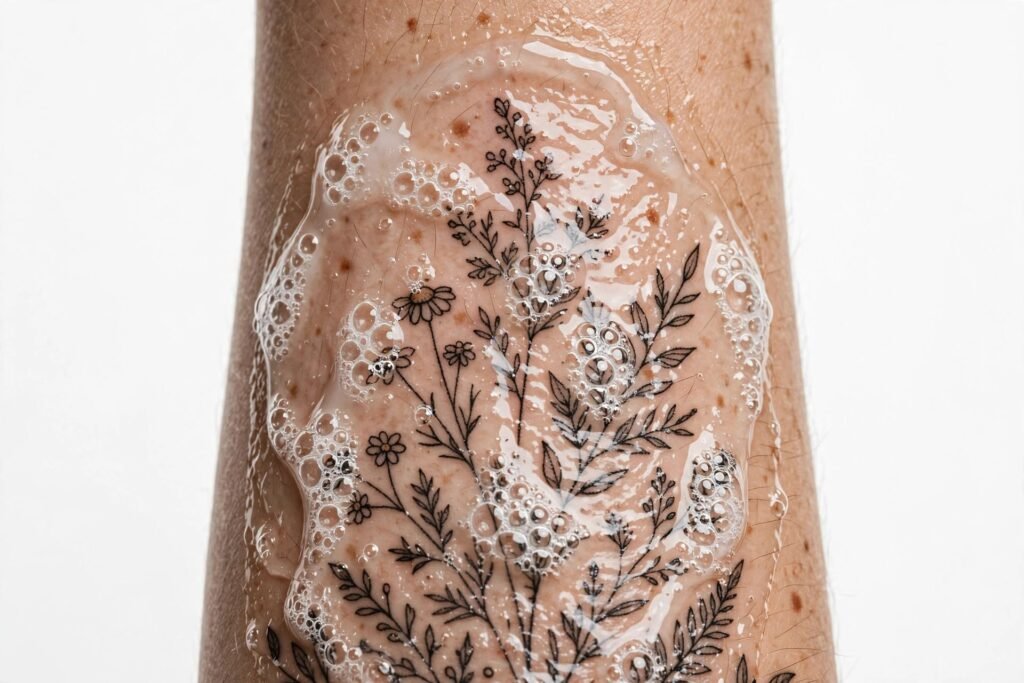
Most people go into tattoo aftercare thinking the more moisturizer the better. It makes sense intuitively. The skin is healing, it needs moisture, so more moisture means better healing. But that logic breaks down quickly in practice, and one of the clearest signs that it has broken down is tattoo bubbling.
Bubbling is exactly what it sounds like: the surface of the tattoo takes on a soft, slightly raised, water-logged appearance that looks and feels different from healthy healing skin. It is not the same as peeling, and it is not the same as normal scabbing. It is what happens when the skin gets more moisture than it can handle during the healing process, and it can cause real, lasting damage to the tattoo if it continues.
When you apply too much aftercare product too often, you prevent the healing skin from breathing properly. A fresh tattoo needs airflow to heal well. The skin is rebuilding its surface layer, and that process requires a balance between moisture and exposure to air.
When the surface is kept constantly wet under a thick layer of balm or lotion, the skin essentially becomes waterlogged. The outer layer softens and swells slightly, creating that raised, bubble-like texture. In some cases the skin takes on a white or grayish color in the affected areas, which is the same effect you see when skin is submerged in water for too long.
The problem goes beyond aesthetics. Soft, waterlogged skin does not hold ink as well as skin that is healing properly. The ink that is sitting in the dermis can migrate or blur slightly when the layers above it are compromised. Bubbling can also create an environment that is more hospitable to bacteria, which increases the risk of infection.
The right amount is much less than most people assume. A thin layer that absorbs into the skin and leaves the surface feeling soft but not greasy is the target. If you apply the product and the skin still looks shiny or feels sticky twenty minutes later, you used too much.
Most dermatologists and experienced tattoo artists recommend applying aftercare balm two to three times per day. That frequency keeps the skin from drying out without crossing into over-saturation. Applying it every hour or every time the skin feels slightly dry is where the problem starts.
The type of product matters too. Heavy, thick products that sit on the surface rather than absorbing into the skin are more likely to cause bubbling because they create a more occlusive barrier. A lighter, well-formulated balm that absorbs properly does a better job of moisturizing the skin without preventing airflow.
If you notice your tattoo starting to bubble, the first step is to stop applying aftercare product for a while and let the skin air out. Giving the skin a few hours without any product allows the surface to dry slightly and start returning to a normal texture.
Once the bubbling has calmed down, return to a much lighter application schedule. One thin layer once or twice a day is usually enough to keep the healing process moving without tipping back into over-moisturizing.
Keep the tattoo uncovered and away from anything that adds moisture to the area. Tight clothing that traps heat and sweat against the skin can make bubbling worse. In humid environments, the skin has more trouble managing the moisture balance on its own, so erring toward less product rather than more is the right call.
Mild bubbling that resolves within a few hours of letting the skin air out is usually not a serious problem. The skin bounces back quickly when the cause is removed.
Bubbling that persists, spreads, or is accompanied by redness, warmth, or pain is a different situation. These signs can indicate that bacteria have taken hold in the over-moisturized environment, and that is something that needs medical attention rather than just a change in aftercare routine.
If the bubbled areas look white or feel tender and the texture does not improve after airing out, it is worth contacting your tattoo artist for their input. They have seen this situation before and can help you assess if what you are dealing with is standard over-moisturizing or something that needs a professional to look at.
The easiest way to avoid bubbling is to follow a simple, consistent application schedule rather than applying product reactively every time the skin feels dry or tight.
Pick two or three times a day to apply your aftercare product and stick to them. Morning, midday, and before bed covers the healing skin without overdoing it. Resist the urge to apply more between those times unless the skin is genuinely cracked or flaking.
A pea-sized amount for a small to medium tattoo is a reasonable starting point. Work it across the tattooed area until it absorbs, and stop there. If there is excess product sitting on the surface after a minute or two, you can gently pat it away with a clean cloth.
Give the tattoo time without any covering or product between applications. Air exposure is part of how the skin heals, and interrupting that process with constant product application works against the healing rather than supporting it.
Healthy healing skin should feel slightly firm and may have some light flaking or tightness, especially in the first week. If the surface starts to feel spongy, looks waterlogged, or develops that raised bubble texture, pull back on the product immediately.
Tattoo aftercare is one of those situations where doing less, consistently, produces better results than doing more erratically. The skin knows how to heal. Your job is to support the process without getting in its way.