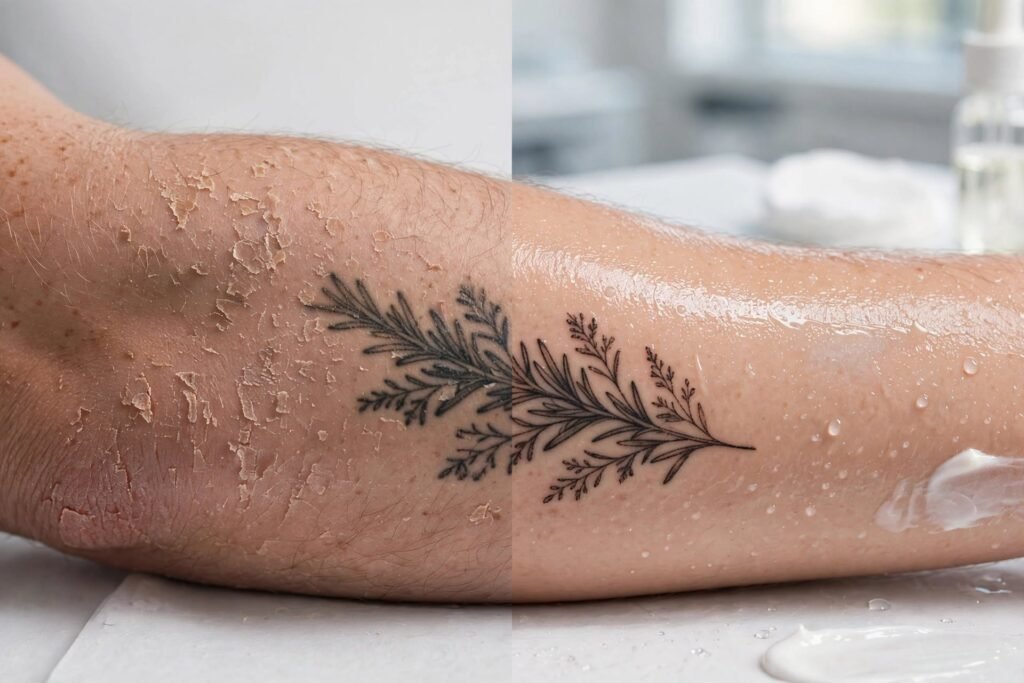
Skin hydration is one of those factors in tattoo healing that people nod along to without fully understanding why it matters. Everyone knows they’re supposed to moisturize a healing tattoo. But the role that hydration plays goes deeper than just keeping the surface from drying out, and understanding it helps explain why consistent aftercare makes such a visible difference in how tattoos turn out.
What Hydration Actually Does for Skin
Skin is not a static barrier. It’s a living tissue that continuously regenerates, repairs, and regulates itself. Hydration is central to almost every aspect of that functioning.
At the cellular level, skin cells require water to carry out the processes involved in reproduction and migration, the two activities most directly involved in wound healing. When the skin needs to repair itself after an injury, new cells are produced and migrate to cover the damaged area. Both processes happen more efficiently in a well-hydrated environment than in a dehydrated one.
The skin’s barrier function also depends on hydration. The outermost layer of skin contains lipids and proteins that work together to hold moisture in and keep irritants and bacteria out. When this layer is dehydrated, it becomes compromised, it cracks, loses elasticity, and stops regulating moisture effectively. A compromised barrier heals more slowly and is more vulnerable to external irritants.
How This Applies to Healing Tattoos
A fresh tattoo is a wound that needs to heal in all the ways normal wounds heal, which means everything above applies directly. But there are specific ways hydration affects tattoo healing that are worth looking at individually.
Surface Healing Speed
The cells responsible for covering the wound, keratinocytes, migrate across the wound surface as part of the healing process. Research on wound healing consistently shows that moist wound environments support faster and more complete keratinocyte migration than dry ones. In practical terms, this means a well-moisturized healing tattoo tends to close at the surface faster than one left to dry out.
Faster surface closure means a shorter window of vulnerability to bacteria, environmental irritants, and mechanical damage from clothing and daily activity. It also means the peeling phase, which is when the tattoo is most visually active and most at risk from picking and scratching, is shorter.
Scabbing & Ink Retention
This is where hydration most directly affects the final appearance of the tattoo. Skin that is adequately hydrated during healing sheds its outer layer gradually and evenly. Skin that is dry forms heavy scabs instead.
Heavy scabs are a problem for ink retention because they sit over the tattooed area and pull at the ink underneath when they eventually lift. The thicker and more adhered the scab, the more ink comes with it when it detaches. This is the mechanism behind the patchy, faded healing that sends people back to their artist for touch-ups.
Consistent moisturizing throughout the healing period, the kind that prevents heavy scab formation from the start, is the most effective way to maximize ink retention during healing.
The Inflammatory Response
Adequate skin hydration also influences how the inflammatory response plays out. Dehydrated skin mounts a more prolonged inflammatory response to injury than well-hydrated skin. Prolonged inflammation during tattoo healing means more redness, more swelling, more discomfort, and a healing process that takes longer overall.
External hydration from aftercare products works alongside internal hydration from drinking enough water. Both matter. The skin’s ability to manage inflammation and repair tissue draws on water available both from the outside environment and from the body’s internal water reserves.
Internal vs External Hydration
Most people think about skin hydration purely in terms of what they apply topically. The internal side, how much water you’re actually drinking, is just as relevant to how healing skin functions.
Chronically dehydrated people heal more slowly across all types of wounds, not just tattoos. The skin is one of the last organs to receive hydration when the body is running low, internal organs take priority. This means that if your overall hydration status is poor, your skin is working with less water than it needs for optimal function even before you factor in the additional demand of healing a fresh tattoo.
Staying consistently hydrated in the days and weeks around a tattoo session, before and during healing, supports the internal side of the equation. It’s not a dramatic intervention. It’s just making sure the body has the water it needs to run its repair processes properly.
What Good External Hydration Looks Like
Topical aftercare is the external hydration side of tattoo healing, and product choice matters for how effectively that hydration is delivered and maintained.
A well-formulated tattoo aftercare balm does more than just put moisture on the surface. The oils and waxes in a good balm create a semi-occlusive layer that holds moisture in the skin between applications rather than letting it evaporate. This sustained hydration is more effective than a water-based lotion that delivers moisture quickly but allows it to dissipate just as quickly.
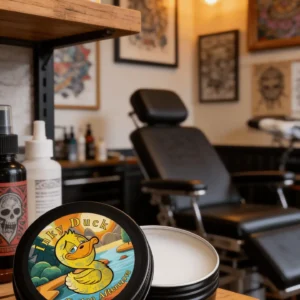
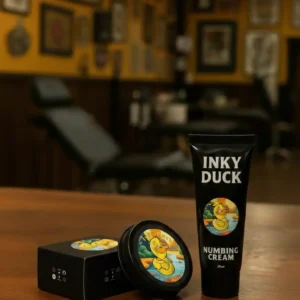
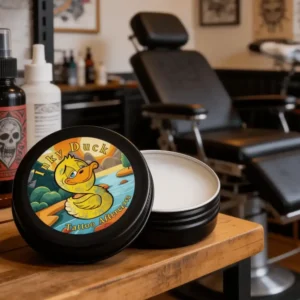
Inky Duck’s tattoo aftercare balm is built around this principle, ingredients like shea butter and jojoba oil that absorb into the skin and support its own moisture retention rather than just sitting on the surface. Applied consistently through the healing period, that kind of formulation keeps the skin in the hydrated state that supports faster, cleaner healing and better ink retention.
The Long-Term Picture
Skin hydration doesn’t stop mattering once the tattoo has healed on the surface. The deeper dermal layers continue healing for months after the surface looks settled, and the skin’s overall condition continues to affect how the ink looks over the long term.
Consistently moisturized skin holds tattoo ink more cleanly over years than skin that is chronically dry and neglected. The difference is visible, tattoos on well-maintained skin look better at the five-year mark than tattoos on skin that has been through years of dryness and inconsistent care.
Building a simple daily moisturizing habit for tattooed skin is one of the lowest-effort, highest-return things you can do for long-term ink appearance. It doesn’t require anything elaborate, just consistency with a product that actually supports skin health rather than just temporarily masking dryness.