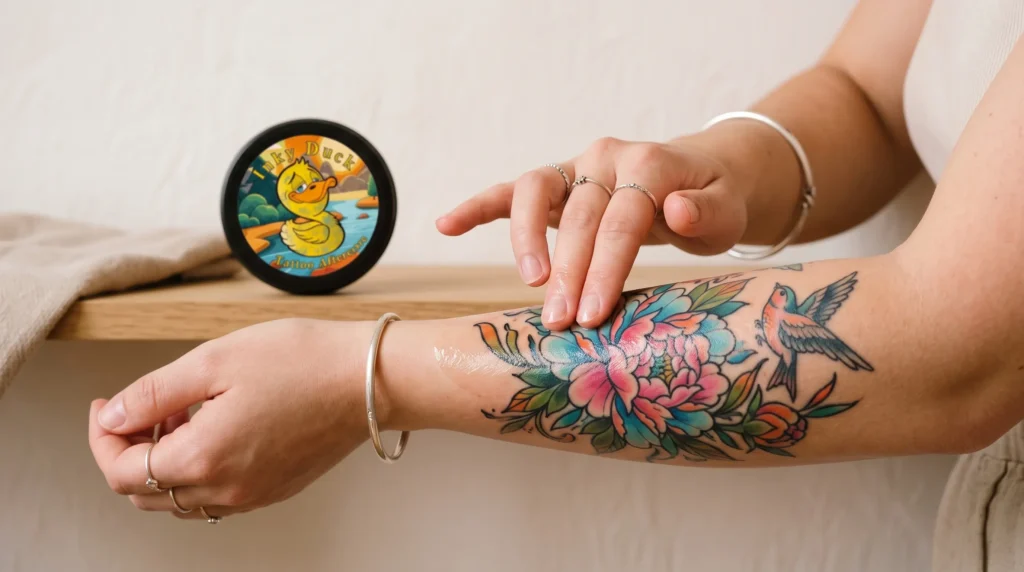
Getting a tattoo is an exciting experience—whether it’s your first piece or your fiftieth, there’s something magical about walking out of the studio with fresh ink that tells your story. But here’s what many people forget in the excitement: your tattoo journey doesn’t end when the artist puts down the machine. In fact, it’s just beginning.
What you do in the hours, days, and weeks after getting inked can make or break the final result. To help you protect your investment, we’ve compiled expert dermatologist-approved advice on how to care for your new tattoo the right way. For a broader overview, you can also check out our complete Tattoo Aftercare Guide.
Why Tattoo Aftercare Matters More Than You Think
Let’s be real for a moment. When you get a tattoo, you’re essentially getting hundreds of tiny puncture wounds filled with ink. Modern tattoo machines use multiple needles to deposit pigment into the dermis—the middle layer of your skin. That’s a controlled trauma, no matter how you slice it.
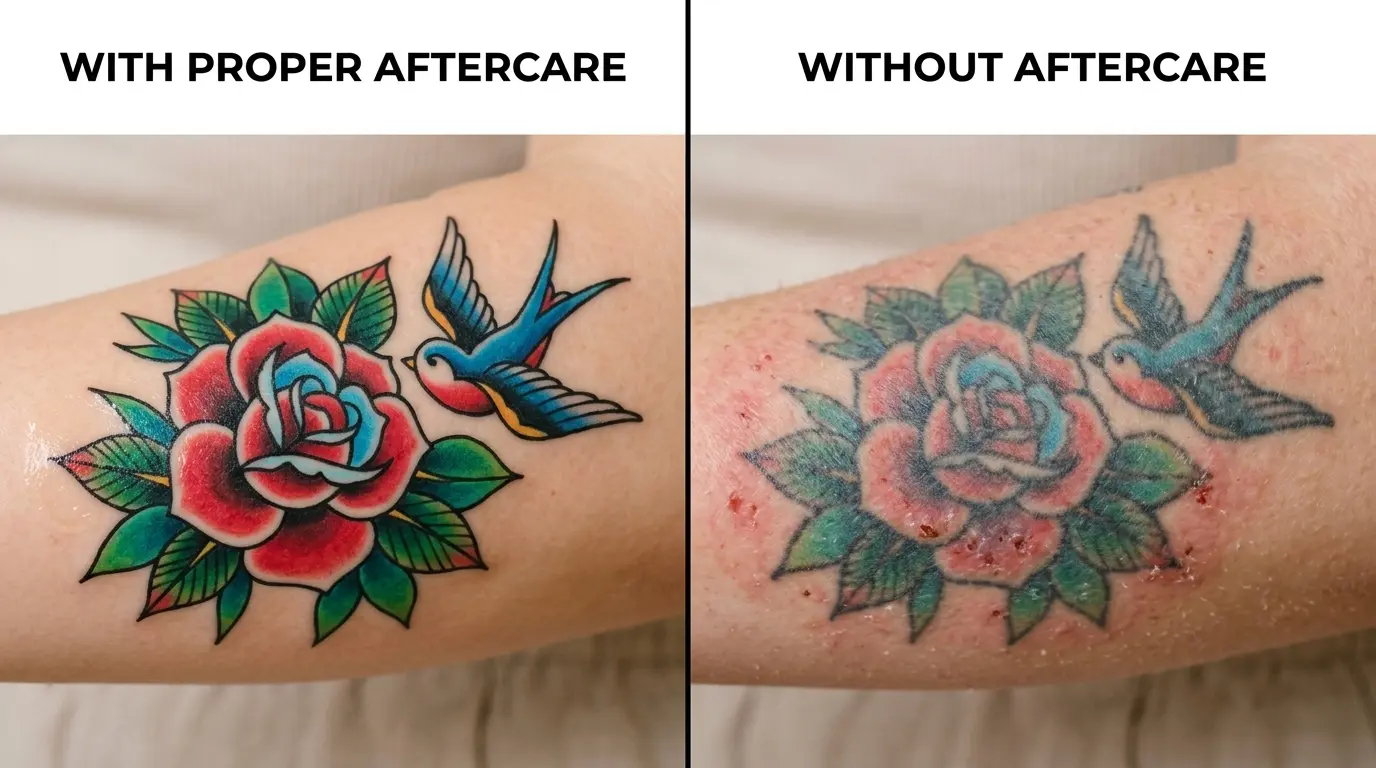
According to dermatologists at the Cleveland Clinic, tattoos are comparable to piercings—both are controlled injuries that need proper support to heal well. Skip the aftercare, and you could end up with:
- Infections that require medical treatment
- Rashes from bacteria or irritation
- Scarring that distorts your design
- Faded or smudged ink that ruins the artwork
The good news? With proper aftercare starting within the first few hours, most tattoos heal beautifully without complications. Learn more about what to use for tattoo aftercare to set yourself up for success.
Understanding the Tattoo Healing Timeline
Before diving into the “how,” let’s talk about the “how long.” Healing times vary based on:
- Size of the tattoo – Larger pieces take longer
- Location on the body – Areas with more movement heal slower
- Your overall health – Nutrition, hydration, and immune function matter
- How well you follow aftercare instructions
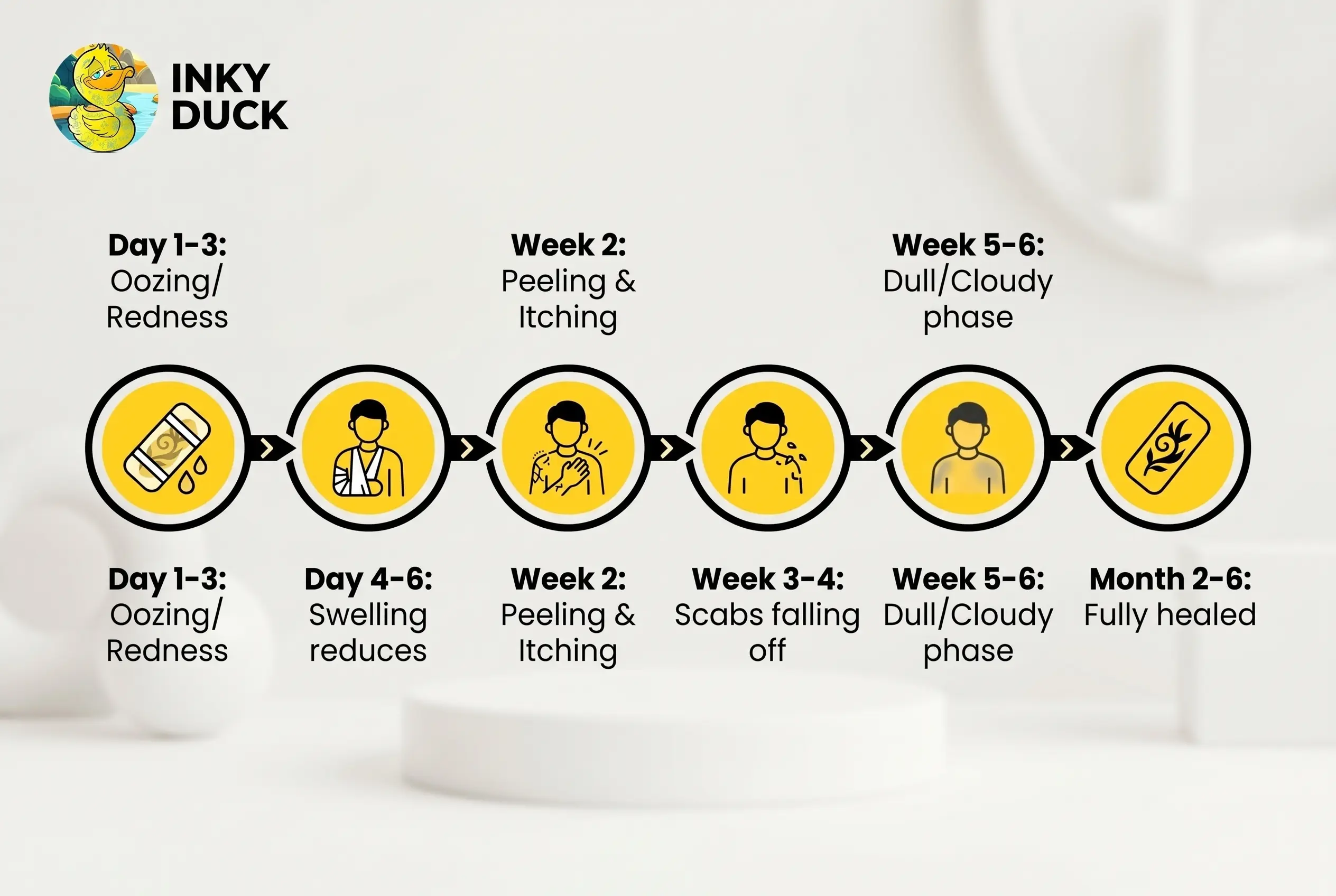
Generally, the surface of your skin heals within 2-3 weeks, but the deeper layers can take 2-6 months to fully recover. Want a deeper breakdown? Read our full guide on how long a tattoo takes to fully heal and the 6 stages of tattoo healing explained.
Step-by-Step Tattoo Aftercare Instructions
Right After Your Session (First 24 Hours)
Your tattoo artist will apply a thin layer of ointment and cover your fresh ink with a protective bandage (often a clear, breathable film). Leave this in place according to your artist’s specific instructions. Curious how these modern wraps work? Read our post on second skin bandages and how Saniderm-style wraps change aftercare.
For a detailed breakdown, check out how to care for a new tattoo in the first 24 hours.
The First Week: Foundation of Healing
This is the most critical period. Here’s your daily routine:
1. Remove the Bandage Properly
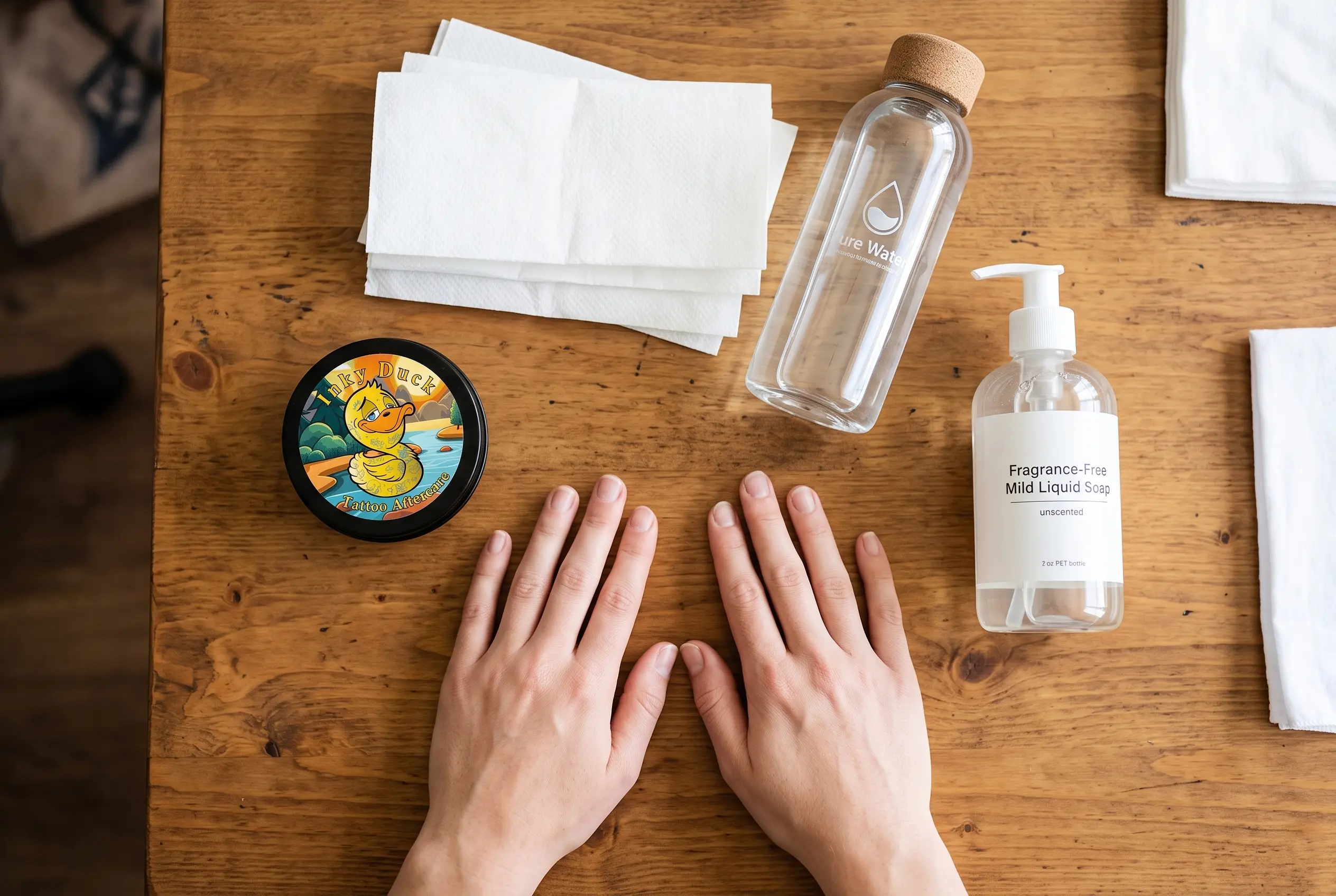
Wash your hands thoroughly first. Soak the bandage with warm water to loosen it, then gently peel it off. Never rip it away from dry skin.
2. Wash Gently (Twice Daily)
Use a mild, fragrance-free, antibacterial soap and lukewarm water. Wondering if it’s safe? See our guide on whether you can shower with a new tattoo.
3. Moisturize Thoughtfully
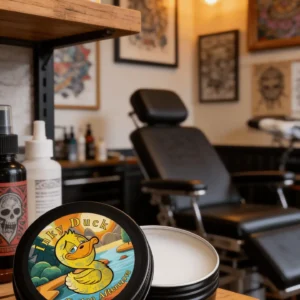
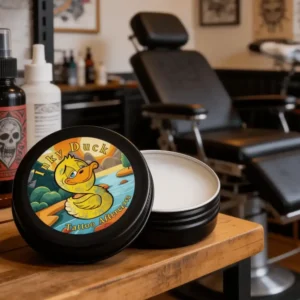
Apply a thin layer of a quality tattoo aftercare balm—like our Inky Duck Aftercare Tattoo Balm—twice daily. Not sure what to use? Compare options in our post balm vs lotion vs nothing and learn what tattoo balm does.
4. Dress for Success
Wear loose, breathable clothing over your tattoo. Tight fabrics can rub against fresh ink, causing irritation, ink loss, or scabbing complications.
Weeks Two to Four: The Itchy Phase
Around week two, expect some interesting developments. Your tattoo may start to:
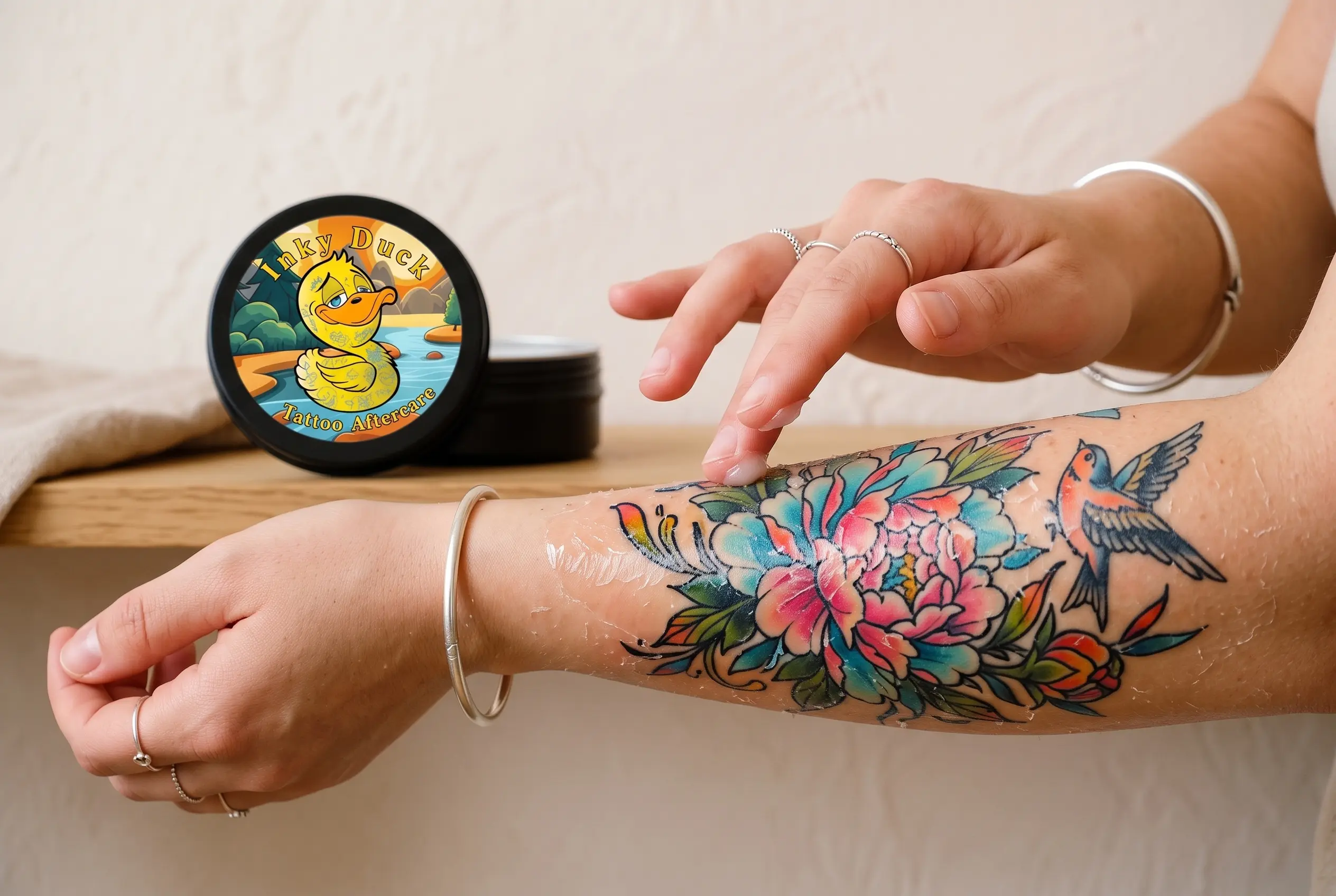
- Itch intensely – Learn how to stop your tattoo from itching
- Flake and peel – See why your tattoo is peeling and what to do about it
- Form scabs – Read about why your tattoo is scabbing so much
- Ooze slightly – normal mix of plasma, blood, and excess ink
- Look dull or cloudy temporarily
Don’t panic. This is your body doing exactly what it’s supposed to do. During this phase:
- Keep washing and moisturizing twice a day (but don’t overdo it—here’s what happens when you over-moisturize a tattoo)
- Never pick, scratch, or peel – let scabs fall off naturally
- Stay out of direct sunlight – can sun exposure ruin a healing tattoo? Absolutely.
Week Five and Beyond: Long-Term Care
Congratulations—the surface is essentially healed! However, the deeper layers of skin continue healing for several more months. During this time:
- Continue moisturizing as needed with a quality aftercare balm
- Always apply sunscreen (SPF 30+) once fully healed—learn how SPF protects tattoos
- Stay hydrated—hydration directly impacts tattoo healing
- Adopt long-term moisturizing habits to keep ink bold
The Tattoo Aftercare Don’ts
Just as important as what to do is what to avoid during healing:
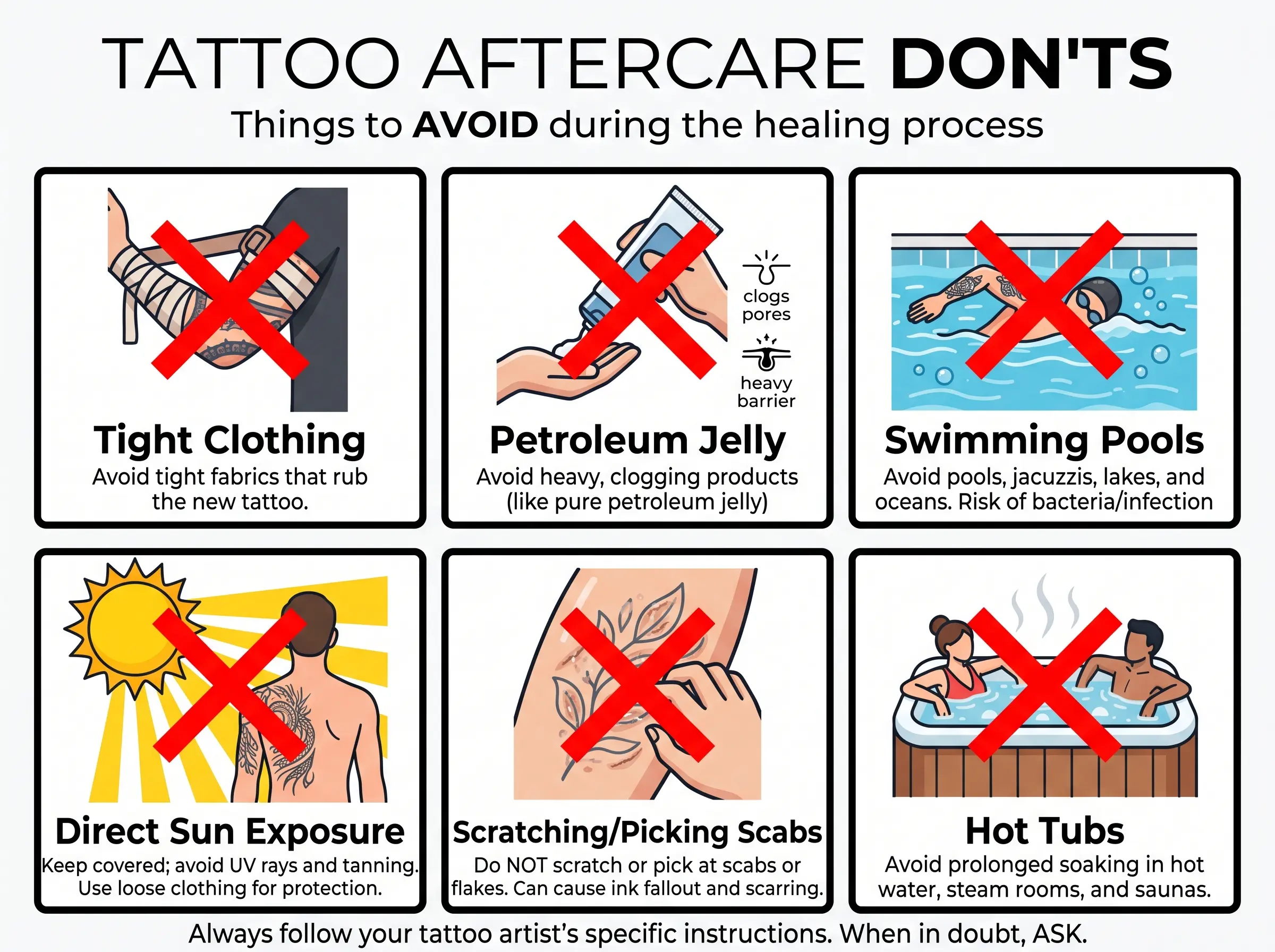
❌ Don’t wear tight or restrictive clothing – see our tips on what to wear to a tattoo appointment
❌ Don’t exfoliate the area with scrubs or harsh products
❌ Don’t use petroleum jelly – it can clog pores and trap bacteria
❌ Don’t apply sunscreen to unhealed tattoos (only after complete healing)
❌ Don’t submerge in water – no pools, hot tubs, bathtubs, or oceans
❌ Don’t shave over the tattoo until fully healed
❌ Don’t skip moisturizer – here’s what happens if you don’t moisturize a new tattoo
For sensitive skin, be extra cautious. Check out our guide to tattoo aftercare for sensitive skin and ingredients to avoid.
Special Considerations Based on Tattoo Style
Different tattoo styles have unique aftercare needs. Explore these style-specific guides:
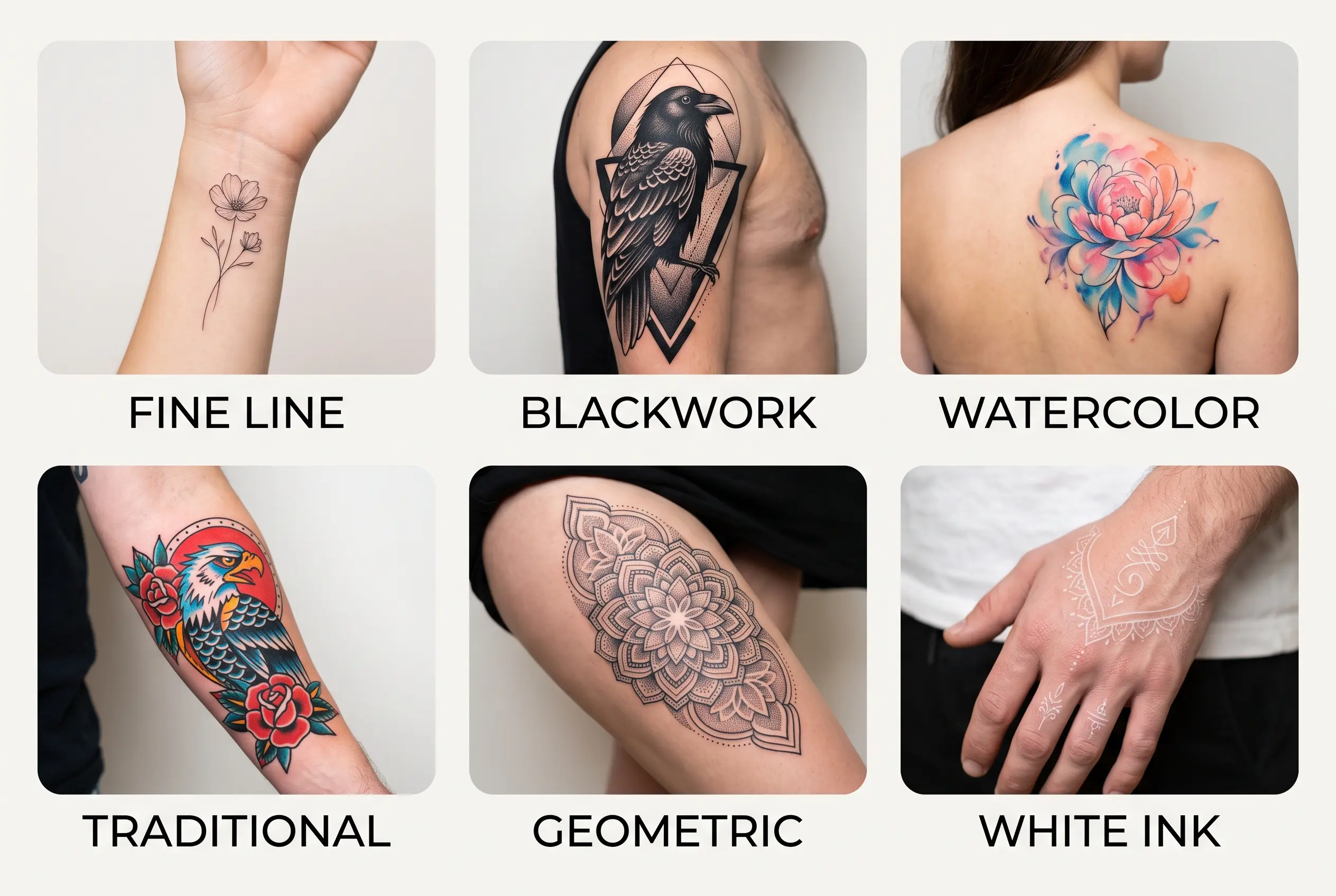
- Fine line tattoo aftercare during healing
- Blackwork tattoo healing – what to expect
- Watercolor tattoo aftercare – why they fade faster
- Traditional tattoo healing – bold line care
- Geometric tattoo aftercare for clean lines
- White ink tattoo healing challenges
- Cover-up tattoo aftercare for layered ink
Warning Signs: When to See a Doctor
While some redness, swelling, and flaking are completely normal, certain symptoms indicate something more serious. According to the American Academy of Dermatology, contact a healthcare provider immediately if you notice:
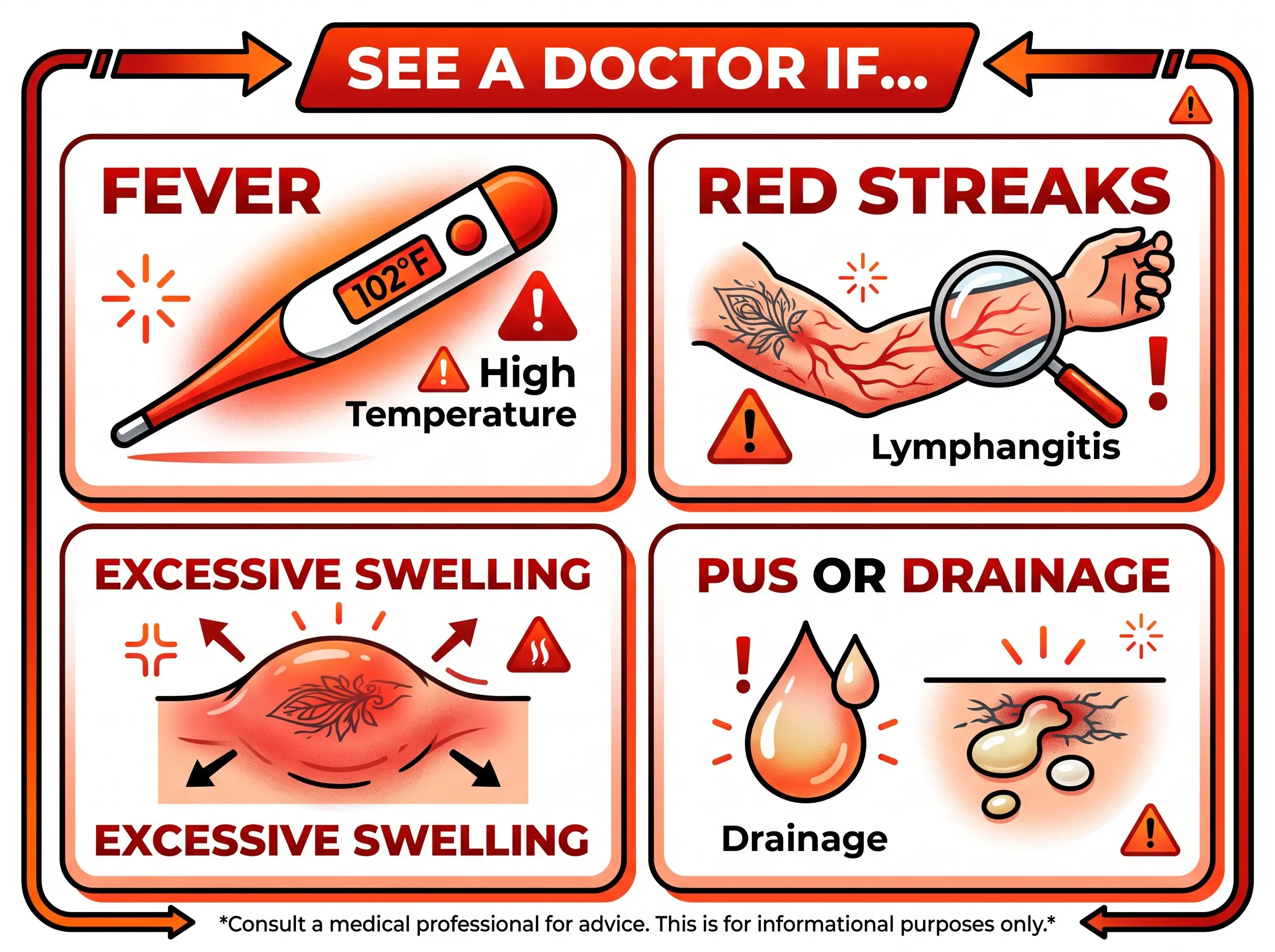
🚨 Fever or chills
🚨 Skin that feels hot to the touch
🚨 Foul odor or excessive drainage from the tattoo
🚨 Increasing pain rather than gradual improvement
🚨 Red streaks extending from the tattoo
🚨 Expanding redness beyond the tattoo edges
🚨 Bumpy rashes that could indicate ink allergies
Learn more in our dedicated posts on tattoo infection signs and when to see a doctor and allergic reactions to tattoo ink.
Choosing the Right Aftercare Products
Your aftercare is only as good as the products you use. Look for balms with natural, skin-friendly ingredients like shea butter, coconut oil, and vitamin E—here’s what each ingredient does.
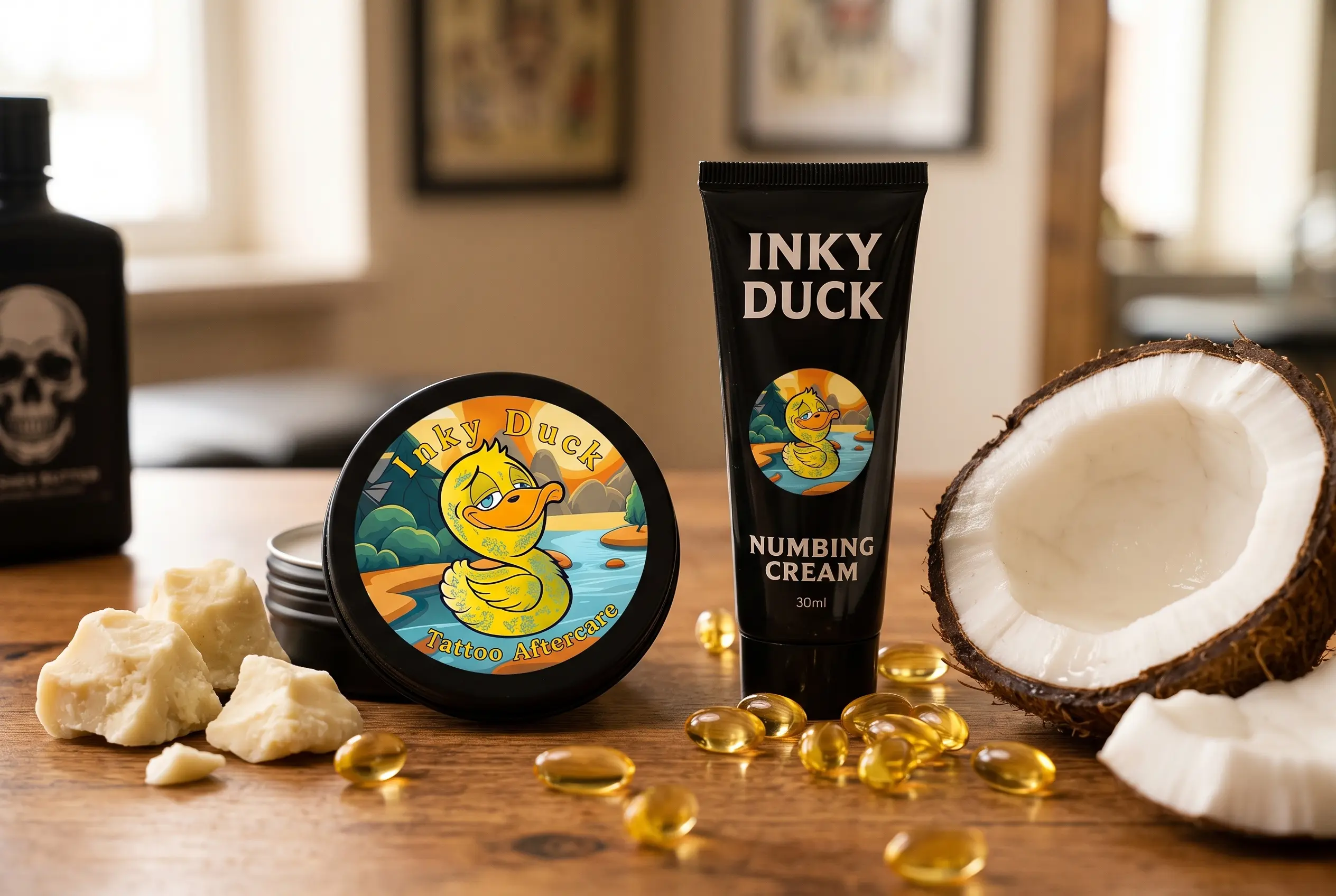
Curious about the difference between natural and chemical formulas? Read our post: Natural vs Chemical Tattoo Aftercare – What’s Safer for Your Skin?
Recommended Products from Inky Duck:
- 🦆 Inky Duck Aftercare Tattoo Balm – Made with skin-loving natural ingredients
- 🦆 Aftercare Tattoo Balm – Pack of 2 – Perfect for larger tattoos
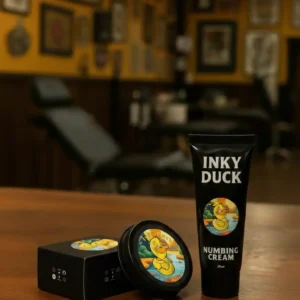
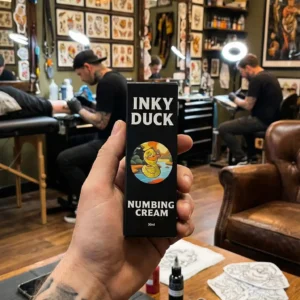
- 🦆 Tattoo Numbing Cream – For a more comfortable session
- 🦆 Complete Tattoo Supplies Bundle – Everything you need in one kit
Browse our full range of tattoo care supplies or shop by category in our aftercare balm collection and numbing cream collection.
Final Thoughts: Your Skin, Your Canvas
Your tattoo is a permanent piece of art living on the largest organ of your body. The quality of your final result depends almost as much on your aftercare as it does on your artist’s skill.
Follow these dermatologist-approved steps, be patient with the healing process, and treat your skin with the care it deserves. In a few short weeks, you’ll have a beautifully healed piece of body art that you can enjoy for a lifetime.
Have questions about tattoo aftercare products or need personalized advice? Contact us today or check out our FAQs for more information. You can also explore our full educational blog library for more expert tattoo care tips.
Disclaimer: This article is for informational purposes only and does not replace professional medical advice. If you’re experiencing symptoms of infection or complication with your tattoo, consult a qualified dermatologist or healthcare provider.